
A 34-year-old with Guillain-Barre syndrome is on the ward with progressive limb weakness, vital capacity 14 mL/kg, maximal inspiratory pressure -22 cm H2O, and intact mentation. Swallowing is weak with poor cough and a rising PaCO2 of 48 mm Hg. Which ventilation decision best manages impending neuromuscular respiratory failure?
Select an answer to reveal the explanation.
Short Explanation
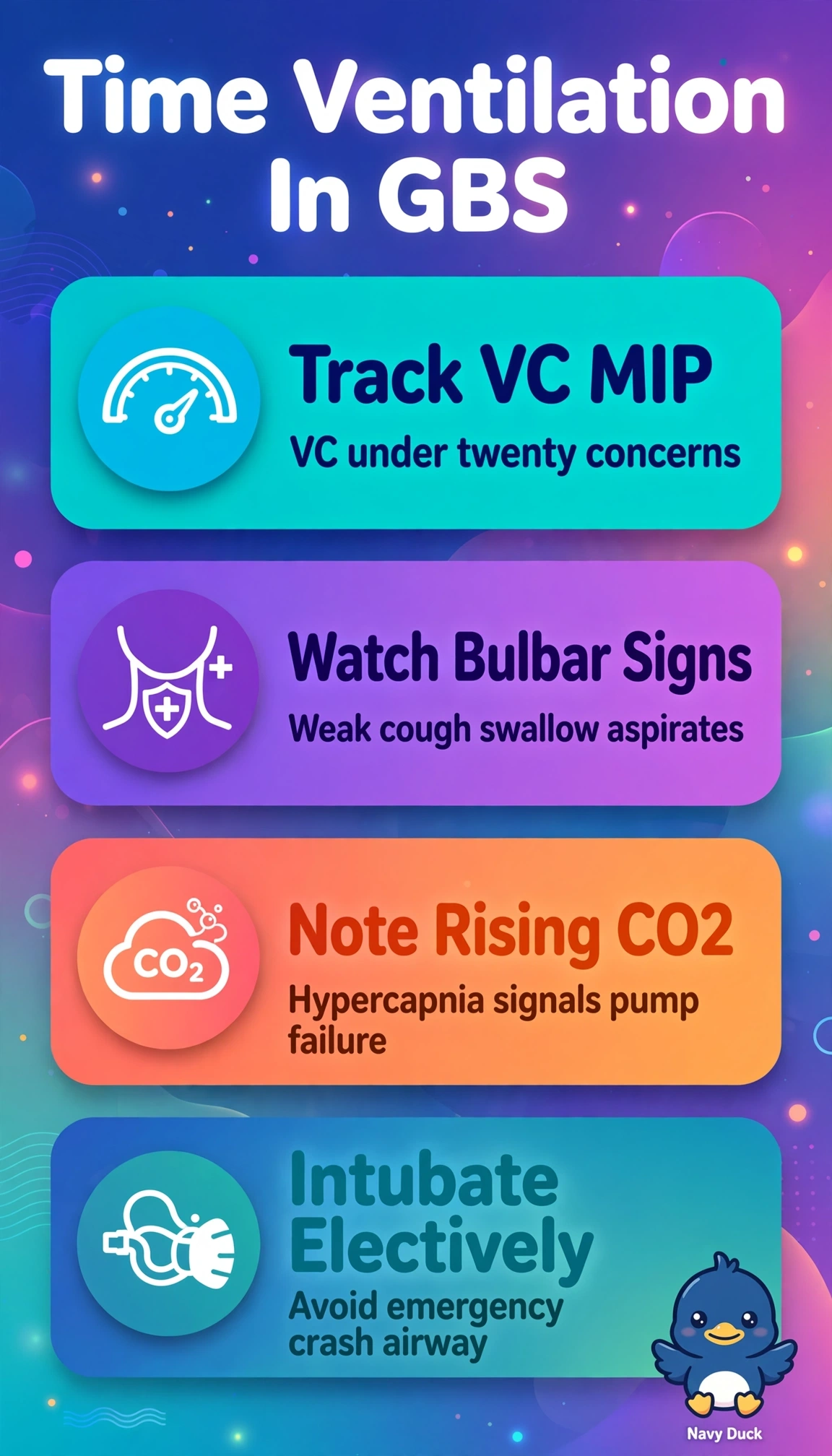
Waiting for a crash helps no one when strength is fading fast. Acting early keeps you ahead of exhaustion, so elective-intubation is the kindest and safest call here.
Full Explanation
Prompt elective intubation is required because vital capacity 14 mL/kg, inspiratory force -22 cm H2O, rising PaCO2 48 mm Hg, weak swallow and poor cough already meet criteria for impending neuromuscular failure in progressive Guillain-Barre syndrome, where fatigue, aspiration and sudden arrest are common and controlled intubation is far safer than emergency intubation after crisis. Intensive care monitoring with serial spirometry and gases is routine surveillance in early disease but fails on timing here because thresholds are already crossed, so continued observation allows fatigue and secretion retention to progress despite intact mentation. A brief monitored BiPAP trial is valuable for COPD exacerbations or stable chronic hypoventilation but fails on airway protection here because bulbar dysfunction, ineffective cough and aspiration risk contraindicate noninvasive support and it cannot guarantee secretion clearance. Supplemental oxygen with chest physiotherapy helps atelectasis and mucus retention but fails on physiology here because it does not rest failing respiratory muscles or reverse alveolar hypoventilation, and oxygen alone may mask worsening hypercapnia. Exam caveat is that preserved alertness or speech never excludes intubation when mechanical and bulbar criteria are met. Practical check is to apply the 20-30-40 rule with bedside cough, swallow, secretion pooling and PaCO2 trend to act before further decline.