
In the emergency department a 45-year-old requires urgent intubation for airway protection. The video laryngoscope powers on but the screen image is dim, flickering, and intermittently blank, while the conventional direct laryngoscope and backup airway equipment are at bedside. The blade appears seated, the room lights are bright, and no trauma to the device is reported. Which troubleshooting action should the respiratory therapist take first to restore video laryngoscope function?
Select an answer to reveal the explanation.
Short Explanation
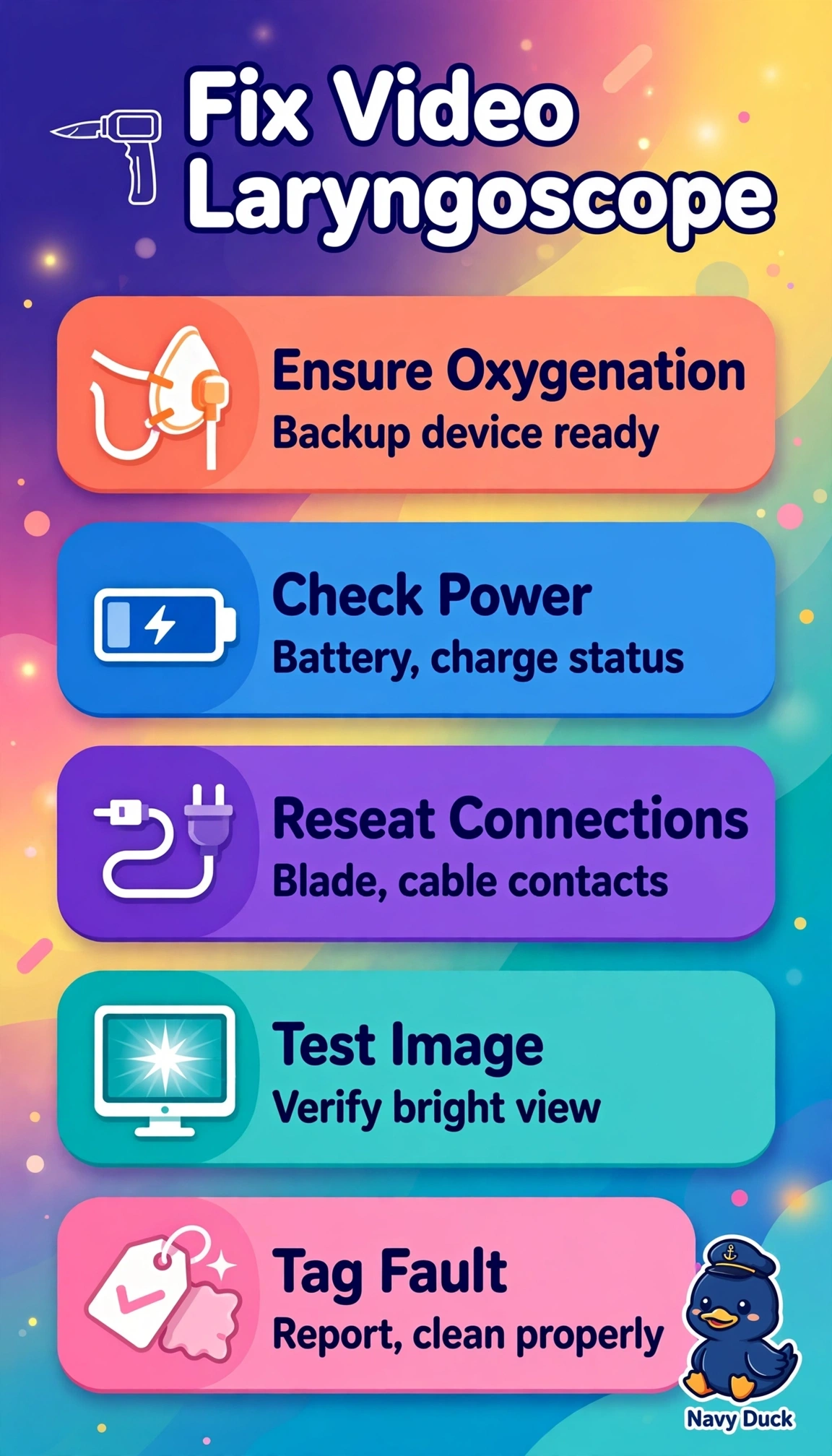
You can’t safely rely on a flickering, intermittently blank image during an urgent intubation. Check power and connections while keeping the backup device ready; that targets the likely fault without delaying airway protection.
Full Explanation
Checking battery charge, cable connections, and light source seating while switching to the backup device is the best first action: a dim, flickering image that intermittently goes blank despite power being on suggests intermittent electrical power or signal continuity, not simply poor optics or glare. Using the conventional direct laryngoscope maintains airway protection during urgent intubation without unsafe delay. Dimming the overhead lights and maximizing monitor brightness can improve contrast when bright room lights wash out the display, but cannot restore a signal during blank periods or stop flicker from a connection fault. Cleaning the camera lens and applying anti-fog solution can help with a persistently cloudy image from secretions or condensation, but soil typically causes steady blur rather than flickering image loss. Detaching and firmly re-seating the video blade may restore electrical contact when the blade is not properly seated, but the blade appears seated here, and this action alone does not check the battery, cable, or light source or ensure backup use. An exam caveat is to associate flickering and intermittent blanking with power or connection faults rather than steady optical or lighting problems, while prioritizing airway safety over prolonged troubleshooting. A practical check is to confirm the battery indicator, secure cable connection, and steady test light while keeping backup airway equipment ready before reattempting.