
A 66-year-old with severe COPD, two recent exacerbations, exertional desaturation to 86%, and anxiety about breathlessness is medically stable for discharge from a community hospital with home oxygen evaluation pending. Which outpatient plan best promotes long-term disease control, safe discharge, and rehabilitation?
Select an answer to reveal the explanation.
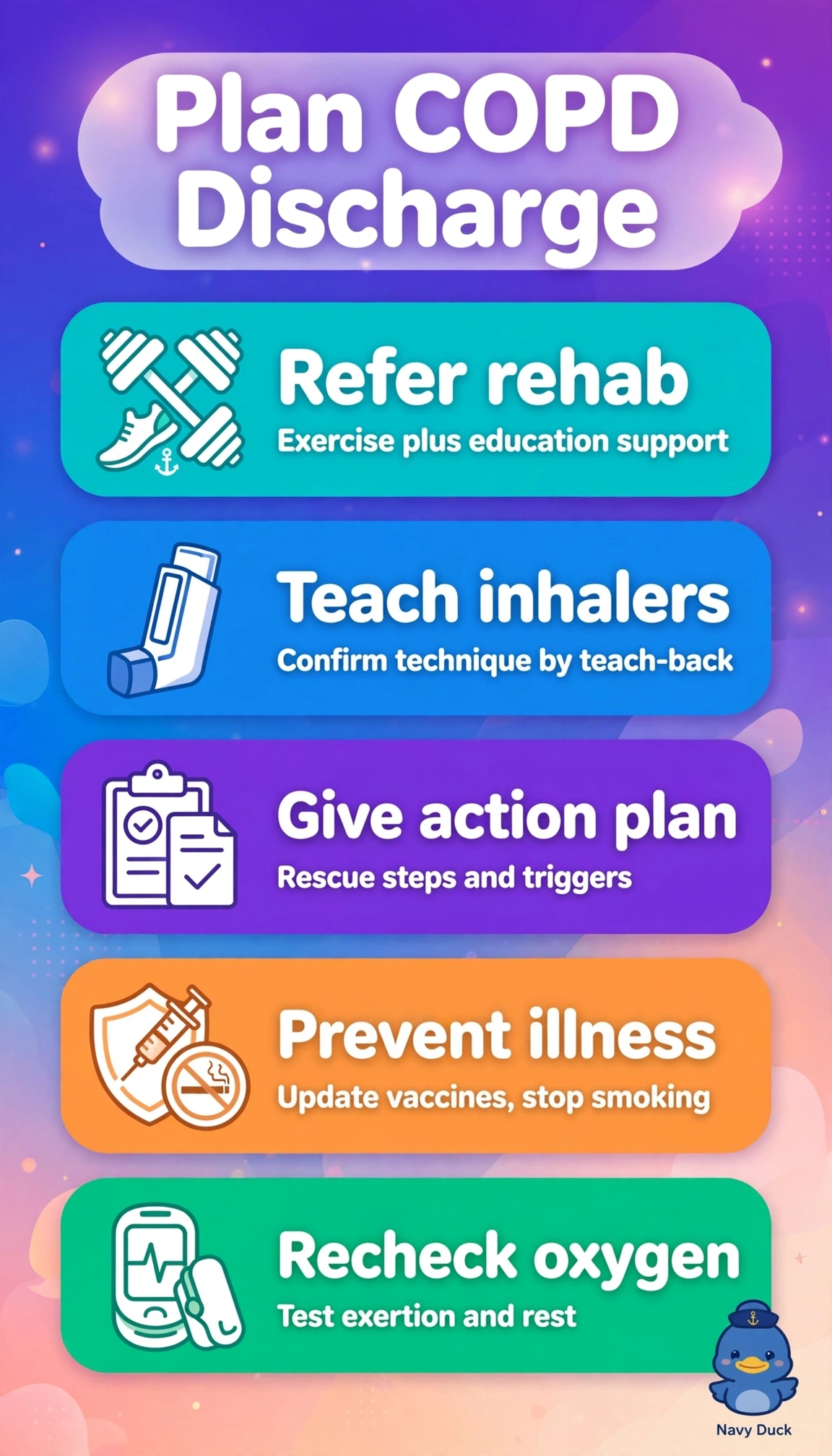
Short Explanation
You're stable for discharge, but you'll stay safer with backup in place. Pairing rehab, your action plan, inhaler coaching, vaccines, and an oxygen recheck gives you momentum like tuning up your bike, packing snacks, and checking the map before a long ride.
Full Explanation
The correct plan is right because severe COPD with recurrent exacerbations, exertional desaturation and anxiety needs combined disease control, safety-netting and conditioning: pulmonary rehabilitation improves exercise tolerance, desaturation management and confidence, a written action plan ensures early treatment after two recent exacerbations, inhaler training guarantees delivery, vaccines prevent infectious exacerbations, and prompt outpatient oxygen reassessment resolves pending evaluation under stable conditions rather than assuming permanence. An inhaler, vaccine, cessation and oxygen reassessment plan is evidence-based for maintenance but fails by omitting rehabilitation, leaving deconditioning, exertional hypoxemia strategy and fear-avoidance unaddressed which are central to safe discharge and long-term function. A rehabilitation, training, vaccine and oxygen reassessment plan supports recovery but fails by omitting an exacerbation action plan, which is essential self-management for a frequent exacerbator to reduce delay to steroids, antibiotics and review. A rehabilitation and action-plan approach with only routine oxygen review in one year fails by timing, leaving documented exertional desaturation to 86% without timely stable-state oximetry and walk-based reassessment and risking prolonged uncorrected hypoxemia. Exam caveat: a single inpatient or exertional value does not meet long-term oxygen criteria, which require clinical stability and confirmatory testing, so neither prescribe indefinite oxygen reflexively nor ignore desaturation. Practical check: confirm teach-back technique, vaccines, rehabilitation referral, booked oxygen reassessment, and written safety-netting.