
A 66-year-old with pulmonary fibrosis on 2 L/min nasal cannula reports dyspnea climbing stairs, resting SpO2 94%, exercise SpO2 84% after 320 meters on a 6-minute walk, and rapid recovery to 92% with rest. Which interpretation of oxygen titration and walk results should the therapist document?
Select an answer to reveal the explanation.
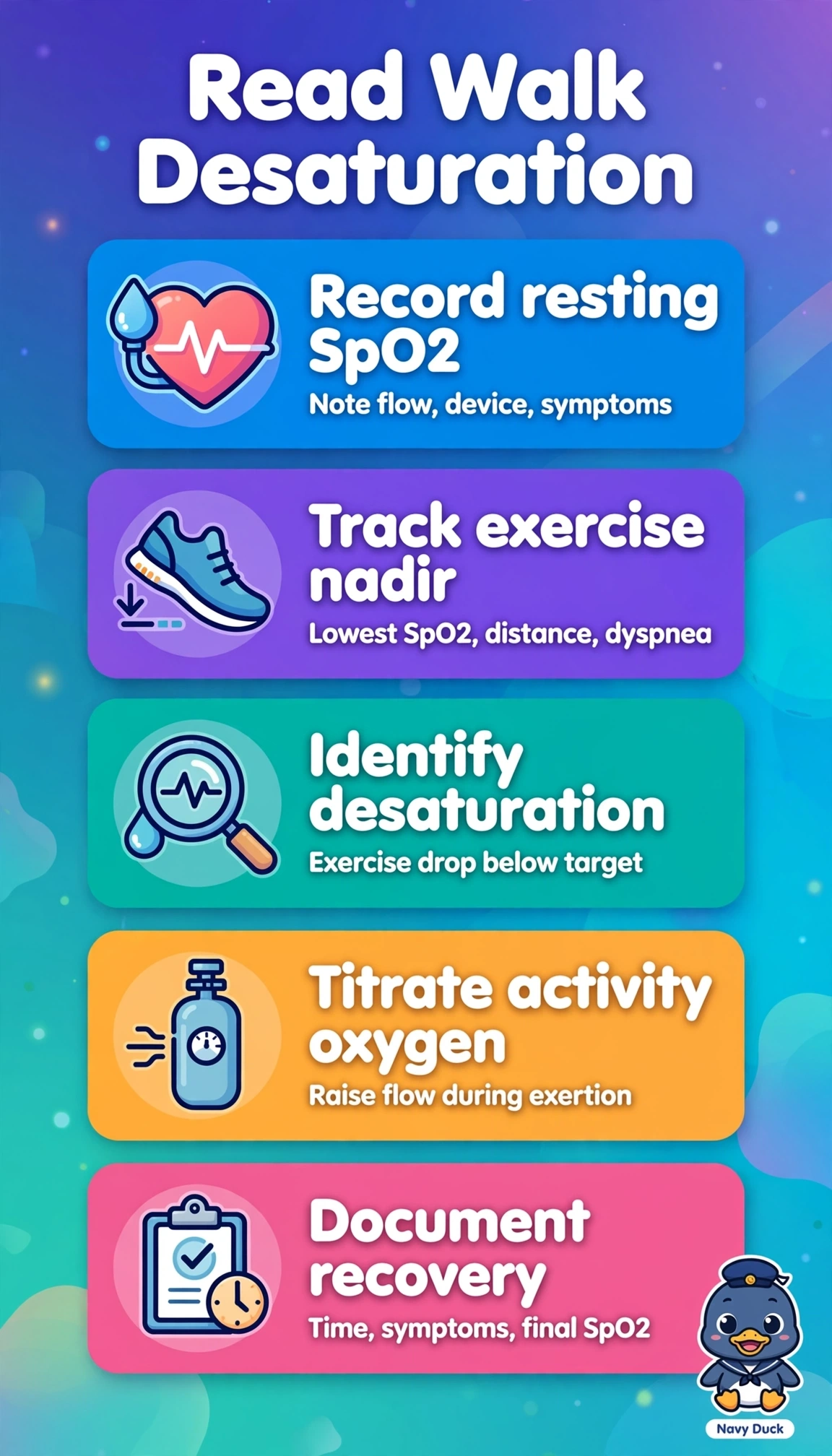
Short Explanation
You are reading what happens during effort, not just at rest. A sharp exercise drop reveals exertional desaturation needing activity oxygen, like headlights that only flicker on hills.
Full Explanation
Oxygen titration and six-minute walk interpretation must integrate resting saturation, nadir with exercise, distance, symptoms, and recovery pattern, and a fall to the mid-80s with dyspnea and limited distance demonstrates clinically significant exertional desaturation and functional impairment despite acceptable rest values, supporting increased flow or activity-based prescription and further evaluation. Calling the response normal based on resting saturation ignores titration physiology because rest values do not predict exercise needs in interstitial disease and the purpose of the walk is to uncover activity requirements. Labeling the test a failure from distance alone and prescribing bed rest misuses walk methodology because distance must be interpreted with saturation, heart rate, dyspnea scores, and stops, and deconditioning without oxygen worsens function. Calling rapid recovery adequate conditioning confuses recovery with tolerance because quick rebound after stopping does not negate profound desaturation during effort or associated pulmonary hypertension and symptom burden. Exam caveat is that NBRC expects titration to maintain target saturation during activity and sleep, not rest alone, and practical check is to repeat walk with titrated oxygen, monitor continuous SpO2, dyspnea scale, heart rate, and distance, and document flow, device, and recovery time.