
A 67-year-old with COPD receives a first albuterol-ipratropium nebulizer and within minutes develops severe bronchospasm with silent chest, SpO2 81%, hypotension, and widespread hives after an antibiotic change. The mask is still running. Which care plan action best terminates treatment for this severe adverse event?
Select an answer to reveal the explanation.
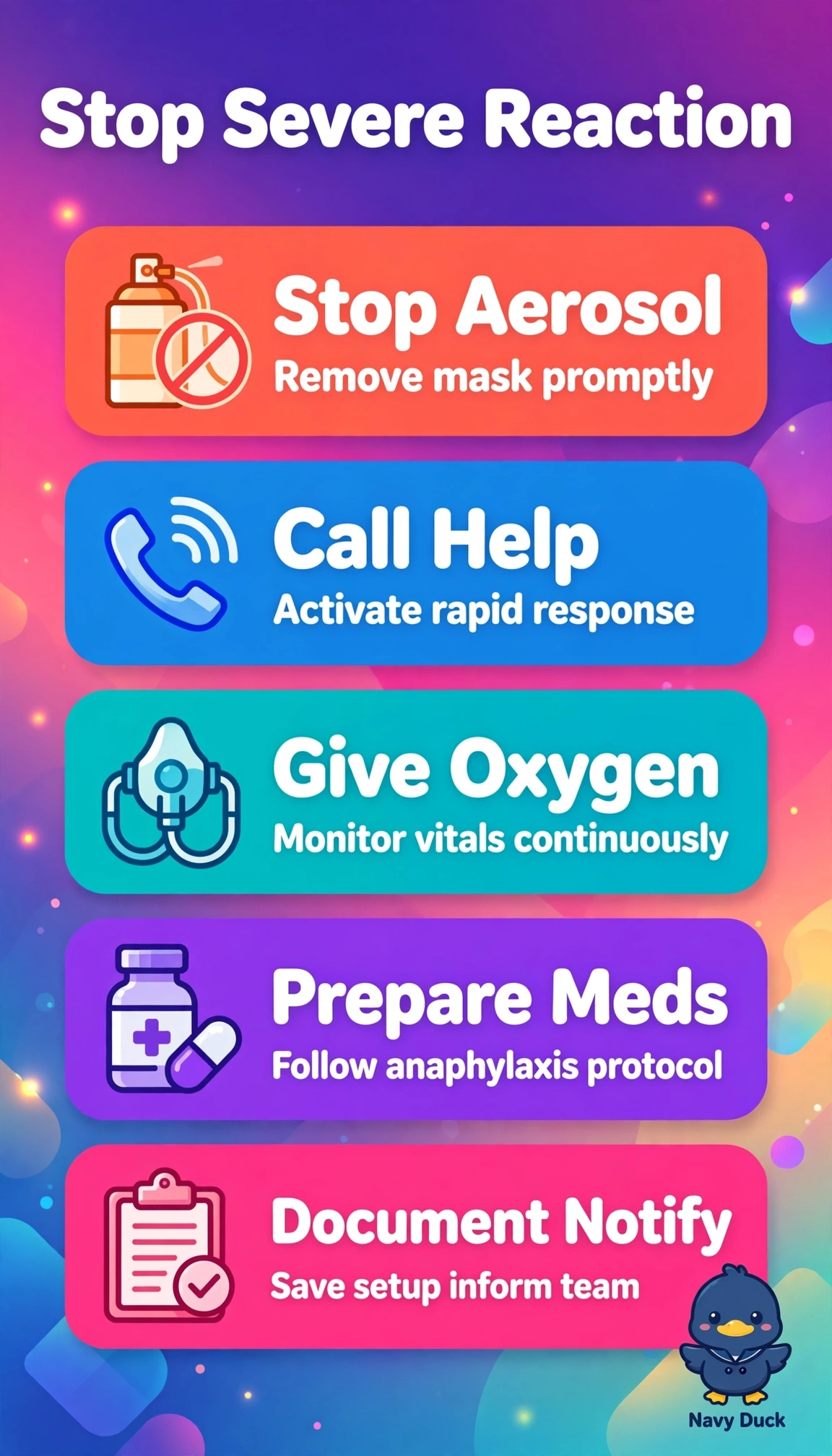
Short Explanation
You're stopping exposure first because breathing and circulation are failing together. Immediate termination plus emergency help gives medications a chance to work.
Full Explanation
The correct response addresses anaphylaxis with airway, breathing and circulation collapse indicated by abrupt silent-chest bronchospasm, SpO2 81%, hypotension and widespread hives minutes after a new drug and aerosol exposure with the mask still delivering, so simultaneous source termination, calling for help, oxygen administration and emergency activation is required rather than stepwise routine care. Maintaining oxygen and sitting upright while preparing prescribed epinephrine reflects appropriate anaphylaxis support and positioning but fails source control because the antigenic aerosol continues while attention shifts to medication preparation. Stopping the nebulizer and providing high-flow oxygen with close monitoring achieves exposure termination and corrects hypoxemia initially but fails escalation because profound desaturation with hypotension and silent chest cannot be safely observed without additional staff and emergency resources. Stopping the trigger and summoning assistance while documenting the reaction captures termination and communication but fails immediate physiologic rescue because detailed charting does not improve oxygenation, perfusion or airway patency during rapid deterioration. An exam caveat is that sudden hives plus hypotension plus bronchospasm or stridor shortly after a new medication, food or latex should be read as severe hypersensitivity rather than COPD worsening, paradoxical bronchospasm alone, or anxiety, even when wheeze dominates the presentation. A practical check is to switch off and remove the nebulizer, keep oxygen on, keep the patient monitored and generally supine unless breathing or emesis dictates otherwise, activate help and the emergency system aloud, and prepare to state time of onset, vitals, suspected trigger and actions taken.