
A 29-year-old with severe traumatic brain injury has an ICP monitor reading 24 mm Hg, MAP 88 mm Hg, PaCO2 48 mm Hg on assist-control ventilation after suctioning with head flat and neck flexed. Pupils are equal and reactive. Which ventilation strategy best manages brain injury and intracranial pressure effects on ventilation?
Select an answer to reveal the explanation.
Short Explanation
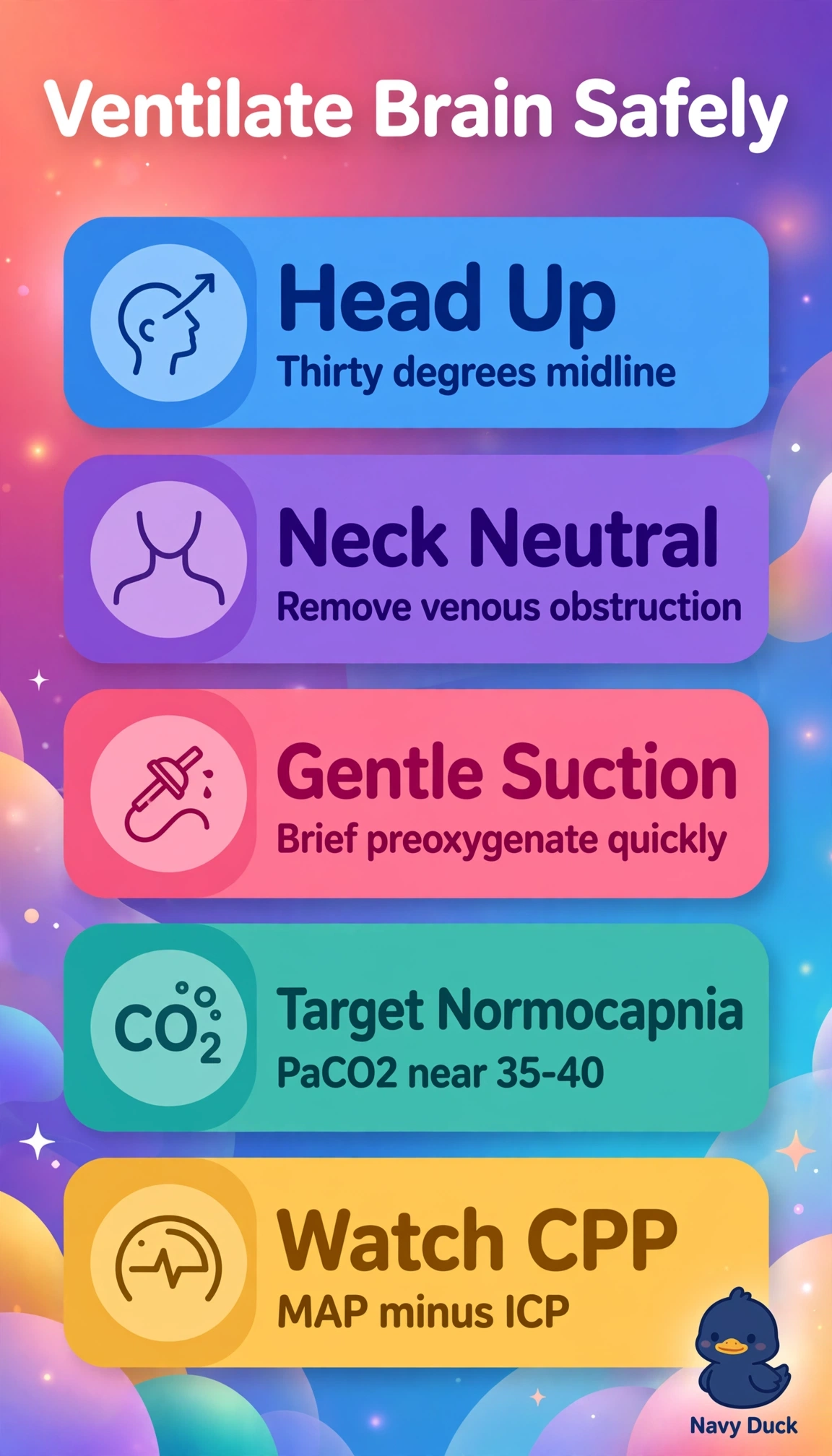
You're restoring venous drainage and normal CO2 so the brain gets perfusion without squeeze. Steady normocapnia keeps vessels calm and pressure stable.
Full Explanation
Elevated PaCO2 dilates cerebral arterioles and increases cerebral blood volume, which raises ICP when compliance is poor, while head flat, neck flexion, and prolonged suction impair venous drainage and transiently spike ICP, so correcting position and suction technique plus adjusting minute ventilation toward PaCO2 about 35-40 mm Hg preserves cerebral perfusion pressure without ischemia. Prophylactic sustained hyperventilation to 26 mm Hg causes intense vasoconstriction that can drop cerebral blood flow and cause ischemia, reserved only as a brief bridge for acute herniation while definitive treatment is mobilized. Lowering the head and raising tidal volume increases intrathoracic pressure, impedes venous return, and risks high plateau pressures and hypercapnia effects that further elevate ICP. Permissive hypercapnia protects lungs in ARDS but directly conflicts with the stated intracranial hypertension because acidosis-driven vasodilation worsens brain swelling. Exam caveat is to maintain normoxia, normocapnia, normothermia, adequate sedation and CPP targets while avoiding routine hyperventilation, and practical check is to reassess ICP, MAP/CPP, capnography, ABGs, head position, and suction need after each ventilator change.