
A 48-year-old on mechanical ventilation develops sudden pleuritic pain, unilateral absent breath sounds, hypotension, tracheal shift, and serum sodium 128 mEq/L with fluid overload from excess hypotonic fluids. Which care plan change best addresses pneumothorax, fluid balance and electrolytes together?
Select an answer to reveal the explanation.
Short Explanation
You spotted tension physiology where minutes matter and fluids worsen the picture. Relieving pressure first while stopping hypotonic fluids stabilizes both chest and chemistry, like opening a valve before refilling a tank.
Full Explanation
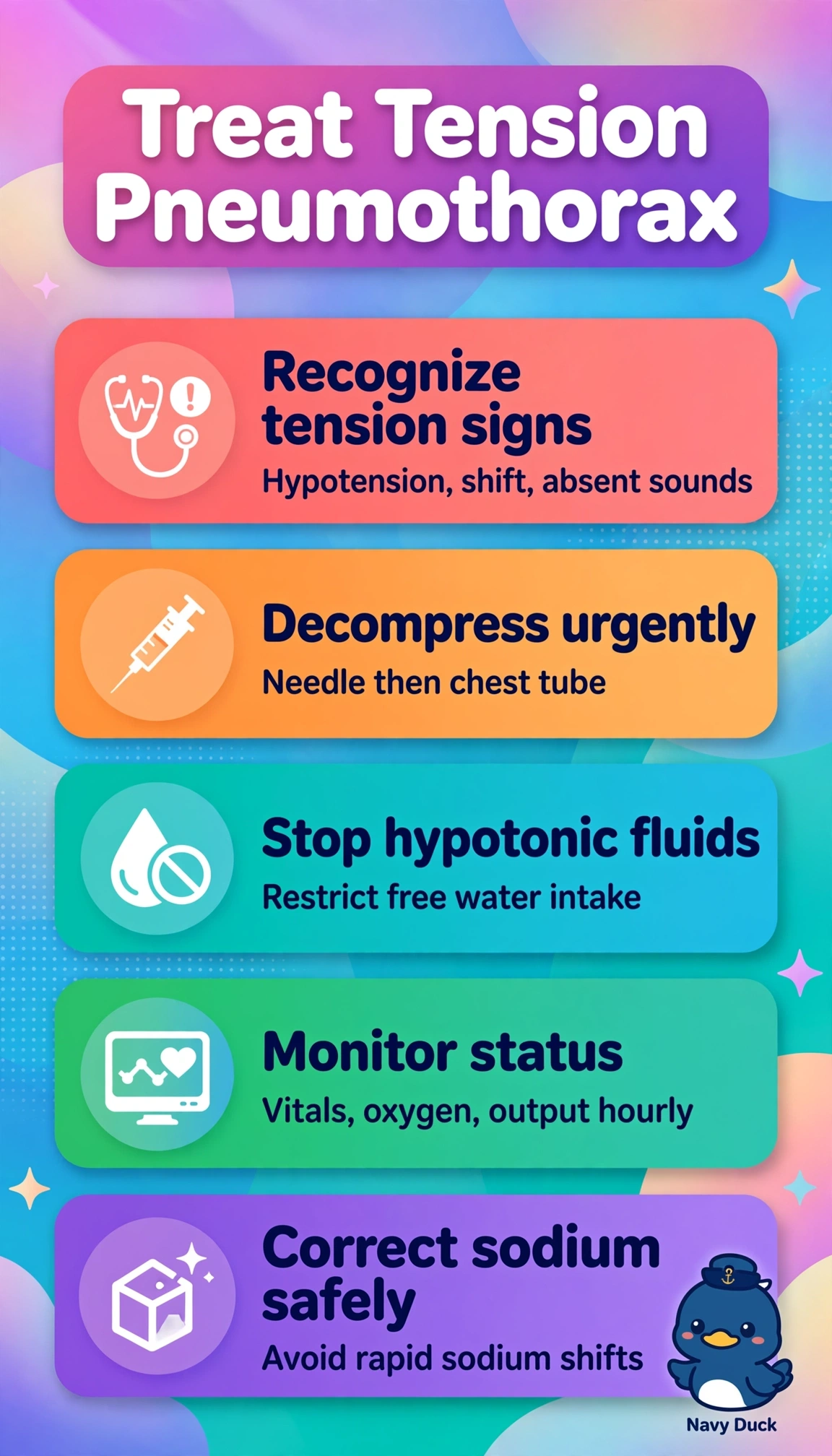
Sudden unilateral absent breath sounds with pleuritic pain, hypotension, and tracheal shift during positive-pressure ventilation indicates tension pneumothorax causing obstructive shock, which requires urgent decompression and definitive chest drainage, while concurrent hypo-osmolar hyponatremia with overload indicates excess free water that mandates restriction of hypotonic fluids and reassessment of sodium management rather than further dilution. Rapid hypertonic saline with higher tidal volume misapplies both therapies because aggressive hypertonic correction risks osmotic demyelination and higher volumes worsen barotrauma and tension physiology instead of relieving pleural pressure. Trendelenburg positioning with rapid isotonic infusion misinterprets obstructive shock as hypovolemic shock because fluids cannot overcome impaired venous return from mediastinal shift and delay definitive pleural decompression. Serial radiographs with continued hypotonic fluids fails urgency and chemistry because tension physiology requires immediate action without waiting for imaging and ongoing free water worsens hyponatremia and overload. Exam caveat is that NBRC prioritizes life-threatening pneumothorax decompression over laboratory correction when both coexist, and practical check is to notify physician and surgery immediately, prepare decompression kit and chest tube tray, stop hypotonic infusions, monitor vitals, oxygenation, and strict intake-output.