
A tachyarrhythmic adult in the ICU is scheduled for synchronized cardioversion, and in the next room a family has chosen withdrawal of life support with comfort measures only. Respiratory therapy is asked to assist both teams today. Which assistance action best supports safe cardioversion readiness?
Select an answer to reveal the explanation.
Short Explanation
Sync and sedation make cardioversion safe, and your setup seals the deal. Nailing the checklist gives you readiness like a pit crew fueling and torquing before the green flag.
Full Explanation
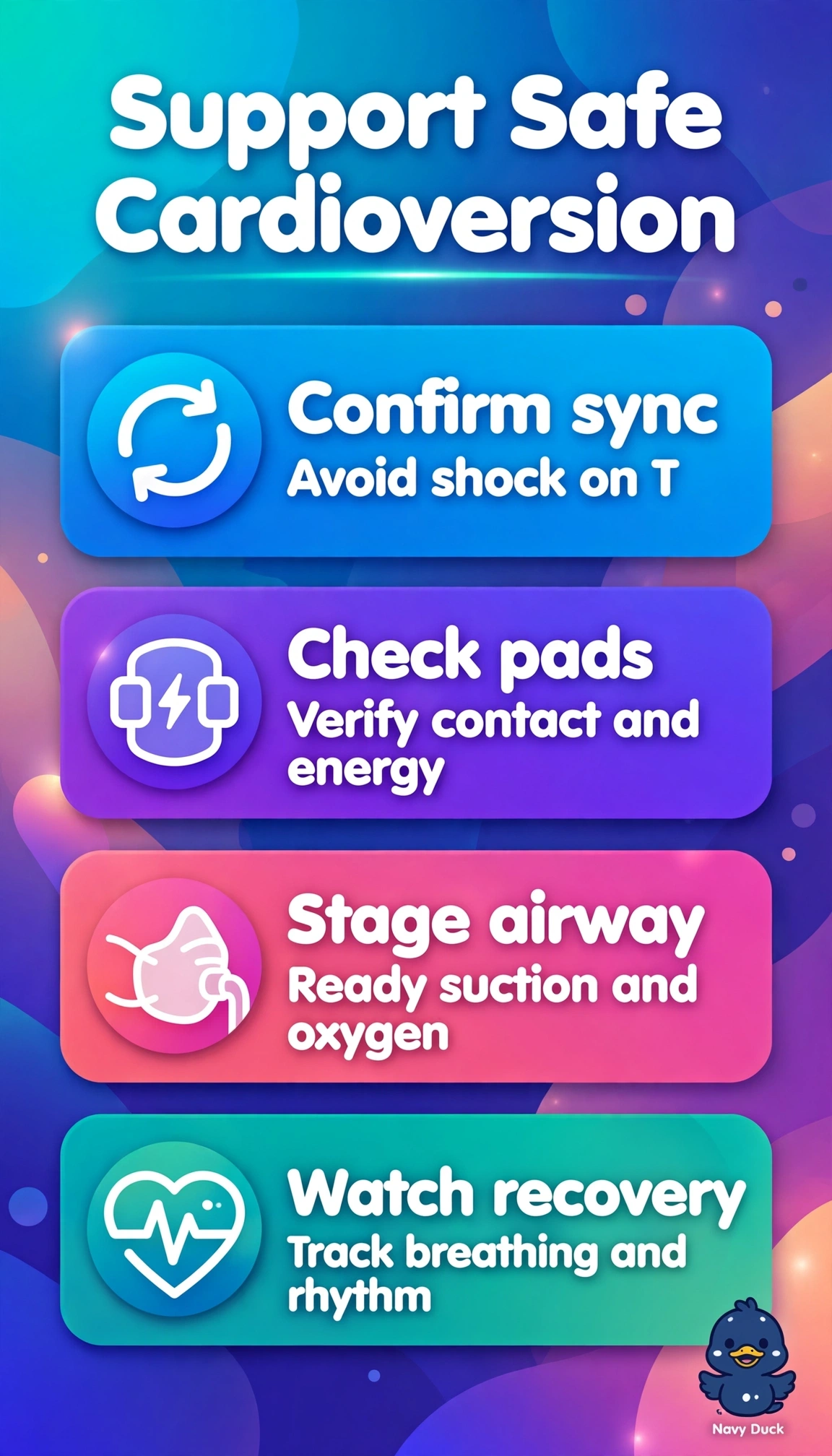
Safe synchronized cardioversion for a perfusing tachyarrhythmia requires energy timed to the R wave to avoid R-on-T ventricular fibrillation, so verifying synchronized mode and pad contact is essential, while sedation depresses drive and airway tone so having suction and oxygen ready with close ventilation monitoring afterward prevents hypoventilation, hypoxemia, and aspiration. Preparing an unsynchronized defibrillator for immediate VF arrest is correct resuscitation for pulseless VF or pulseless VT where delay for synchronization worsens survival, but it fails here by synchronization concept because elective cardioversion of a perfusing rhythm must be synchronized. Titrated oxygen with gentle suction for withdrawal support is appropriate comfort-focused care that eases dyspnea under comfort-only orders, but it fails here by priority concept because the stem asks for cardioversion readiness rather than palliation next door. Preparing demand transcutaneous pacing for symptomatic bradycardia is standard backup for unstable bradycardia or block, but it fails here by rhythm concept because tachyarrhythmia needs synchronized shock, not pacing. An exam caveat is that synchronized versus unsynchronized and tachy versus brady reverse the device setup. A practical check is to confirm flashing sync markers, tested suction, working oxygen, and a dedicated observer for ventilation with a clear-all pause.