
A 72-year-old with acute decompensated heart failure has bilateral crackles, SpO2 88% on 4 L cannula, respiratory rate 30, and a chest film showing pulmonary edema without infiltrate. Blood pressure is 178/102 mm Hg and the patient cannot tolerate lying flat. Which respiratory intervention best manages acute cardiogenic pulmonary edema while medical therapy starts?
Select an answer to reveal the explanation.
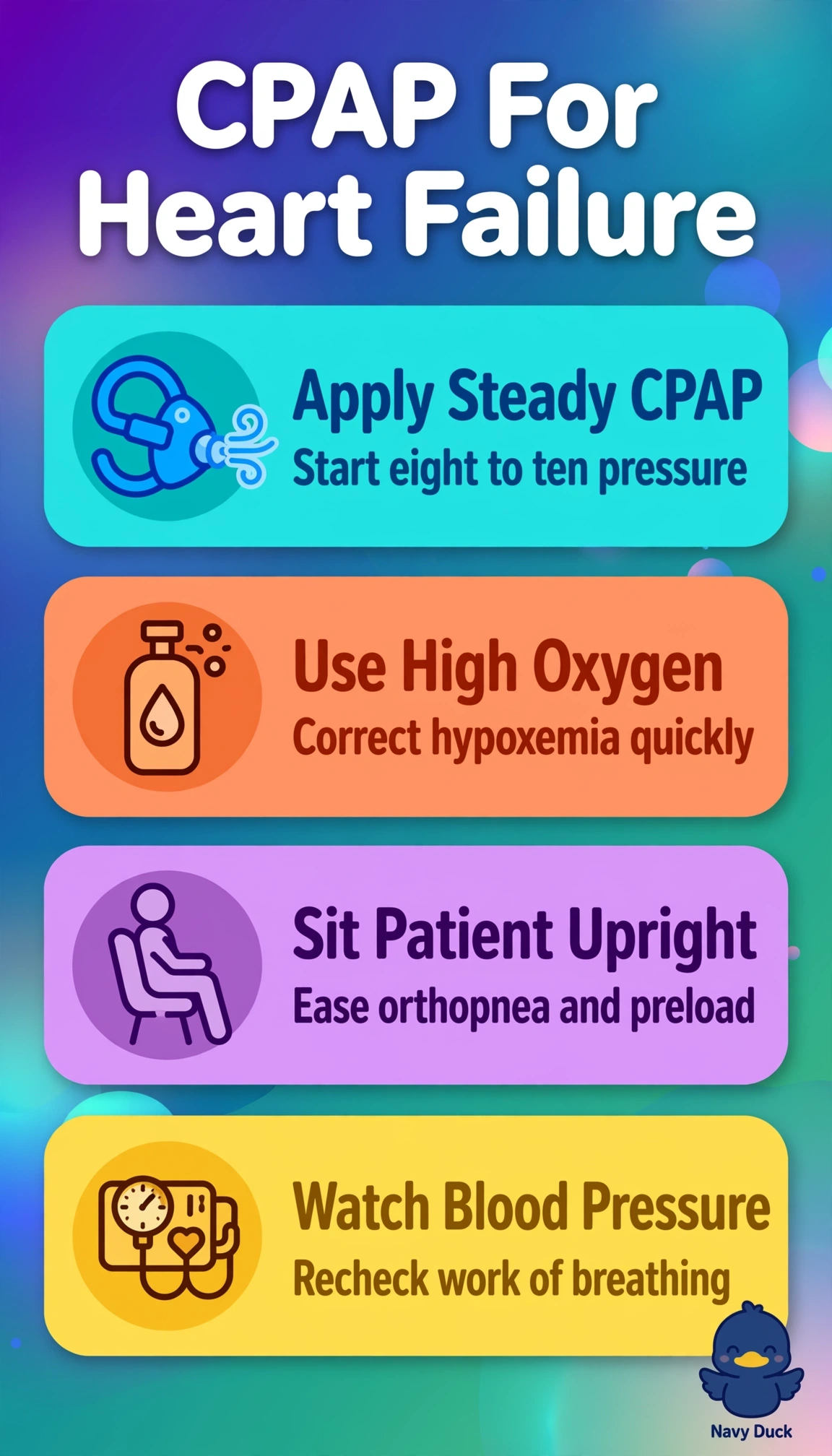
Short Explanation
You’re supporting oxygenation while easing the heart’s workload as medical therapy begins. A steady splint of pressure works well for this hypertensive pulmonary edema, so CPAP is your go-to move.
Full Explanation
Acute cardiogenic pulmonary edema from left heart failure floods the alveoli as left atrial pressure rises. CPAP at 8–10 cm H2O with high FiO2 recruits flooded lung units, improves functional residual capacity and oxygenation, reduces preload and afterload, and decreases work of breathing. This fits the patient’s hypertension, orthopnea, tachypnea, and hypoxemia while diuretics and vasodilators take effect. High-flow nasal cannula at 60 L/min as sole therapy can improve oxygenation and provide modest PEEP, but it offers less reliable alveolar recruitment and afterload reduction than mask CPAP in frank edema with severe hypertension. BiPAP with low EPAP and high pressure support overemphasizes ventilation and large tidal volumes; in a non-hypercapnic patient, this may worsen dyspnea and risk hypotension without adequate expiratory recruitment. Low-flow oxygen alone provides no positive pressure, and placing the patient supine conflicts with the orthopnea constraint, risking worsening edema and desaturation. Exam caveat: hypotension, altered mentation, or inability to protect the airway may favor intubation rather than delaying escalation for positive pressure. Practical check: refit the CPAP mask for leaks and reassess lung sounds, SpO2, blood pressure, and work of breathing within minutes.