
A 55-year-old admitted with fever, productive cough, tachypnea, and pleuritic chest pain has WBC 18,000 with neutrophilia and left shift, hemoglobin 9.1 g/dL, potassium 3.0 mEq/L, INR 1.1, D-dimer mildly elevated, and troponin mildly elevated with tachycardia and hypotension. Which integrated CBC, electrolyte, coagulation, and cardiac biomarker interpretation best explains the respiratory relevance?
Select an answer to reveal the explanation.
Short Explanation
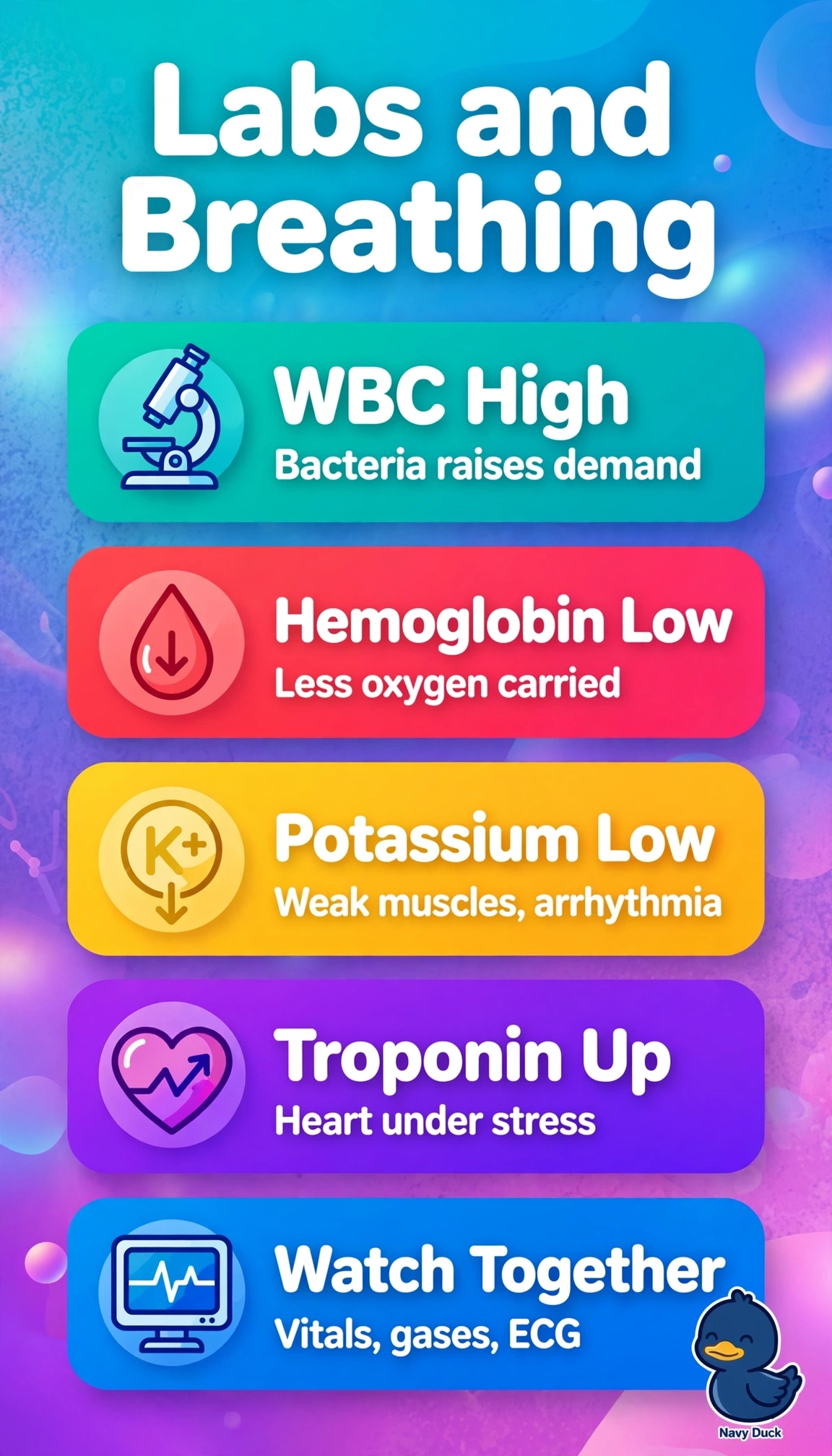
You connected the systems beautifully: bacterial infection, anemia, and low potassium can all make breathing harder, while the troponin reflects cardiac stress. Oxygen delivery depends on enough hemoglobin and effective respiratory muscles, especially when your heart is under strain.
Full Explanation
The febrile productive cough, tachypnea, pleuritic pain, WBC 18,000 with neutrophilia and left shift, and tachycardia with hypotension favor bacterial infection with sepsis physiology and increased work of breathing. Hemoglobin 9.1 lowers arterial oxygen content and delivery when gas exchange is impaired; potassium 3.0 can weaken respiratory muscles and increase arrhythmia risk, while mildly elevated troponin reflects cardiac stress from hypoxemia, anemia, and sepsis. Normal INR argues against disseminated coagulopathy. Viral pneumonia is less consistent with the neutrophilic leukocytosis and left shift. Treating the anemia as incidental overlooks how moderate anemia reduces oxygen-delivery reserve during tachypnea and hypotension. Mild anemia and hypokalemia with a demand-related troponin rise captures some effects, but misses that anemia is clinically relevant to oxygen delivery. A mildly elevated D-dimer with pleuritic pain does not confirm pulmonary embolism: D-dimer is nonspecific in infection and inflammation, and normal INR does not establish or exclude thrombosis. Exam caveat: neither an elevated troponin alone nor a raised D-dimer alone establishes infarction or embolism; consider ischemic features, ECG changes, validated pretest probability, and imaging. Practical check: correlate sputum culture and imaging with arterial blood gas, trend potassium and ECG, correct hypokalemia and hypoxemia, reassess transfusion threshold in light of cardiac stress, and investigate alternatives if the patient fails to improve despite antibiotics.