
A 54-year-old after a motor vehicle crash has right-sided rib fractures 4-8, paradoxical chest motion, respiratory rate 30/min, SpO2 89% on 4 L/min, and severe pain on inspiration with splinting and weak cough. Chest X-ray shows pulmonary contusion without large pneumothorax, blood pressure is stable, and arterial blood gas shows hypoxemia with normocapnia. Which flail chest management strategy should the therapist prioritize to restore ventilation?
Select an answer to reveal the explanation.
Short Explanation
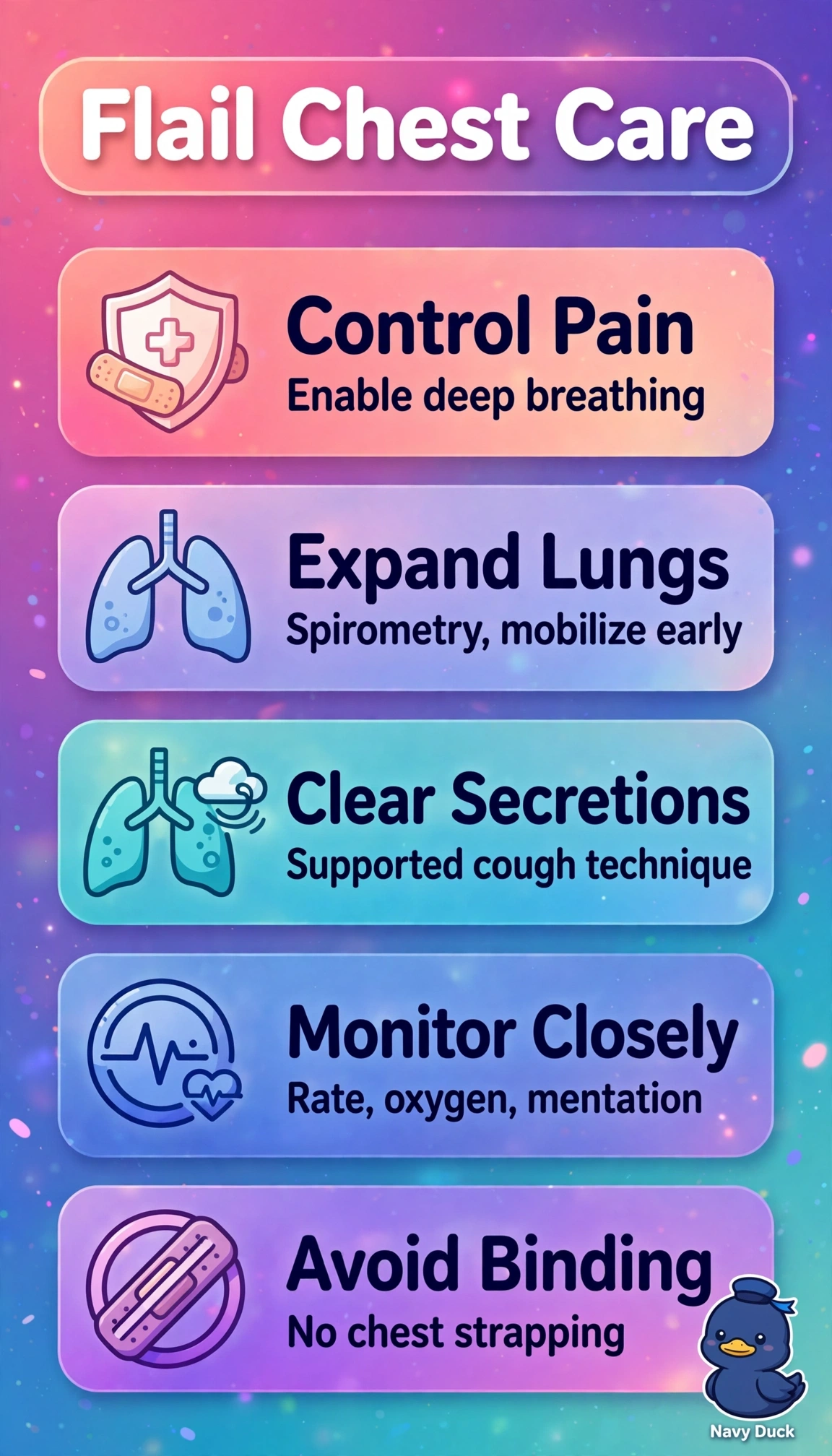
You have got to free up breathing before anything else improves. Good pain relief plus lung expansion works like loosening a tight belt so deep breaths return. Success here depends on pain-limited-ventilation management rather than rigid fixation.
Full Explanation
This flail segment with pulmonary contusion produces hypoxemia from contusion-related shunt, atelectasis from painful splinting, and impaired clearance rather than hypercapnic pump failure, as blood pressure is stable, no large pneumothorax requires drainage, and gases show hypoxemia with normocapnia despite tachypnea and desaturation on low-flow oxygen. Multimodal analgesia plus lung expansion and secretion clearance with close respiratory monitoring is prioritized because severe inspiratory pain prevents deep inspiration and effective cough, and controlling pain restores tidal volumes, recruits atelectatic lung, improves ventilation-perfusion matching, and enables assisted clearance for weak cough, while monitoring is essential because contusions may worsen over 24-72 hours. Titrated oxygen with upright positioning, coached deep breathing and early mobilization improves oxygenation in uncomplicated fractures but fails by omitting analgesia, so splinting continues to limit volumes and clearance. Monitored noninvasive bilevel ventilation to unload respiratory muscles and correct hypoxemia fails by prioritizing pressure support over secretion management in weak cough, risking mucus retention, infection, and obscured deterioration. Operative rib fixation with postoperative physiotherapy restores stability in selected unstable flail but fails as the immediate priority because medical optimization of pain, ventilation, and secretions must precede surgery in a stable normocapnic patient without surgical emergency. The exam caveat is to distinguish correctable hypoxemia with preserved carbon dioxide clearance from fatigue, hypercapnia, or instability requiring escalation. Practically confirm response by reassessing inspiratory pain scores, respiratory rate, SpO2, incentive volumes, cough strength, sputum volume, and serial gases and examination.