
A 68-year-old with COPD on 2 L/min by nasal cannula has resting SpO2 93%, heart rate 88/min, and no chest pain. The physician orders a 6-minute walk test with exercise oxygen titration to evaluate exertional desaturation. The corridor is 30 meters, turnaround cones are placed, and continuous pulse oximetry is available. Which exercise oxygen titration procedure should the therapist follow during the 6-minute walk test?
Select an answer to reveal the explanation.
Short Explanation
You are keeping safety and science together on this walk. Staying on baseline oxygen while you watch the monitor is like keeping headlights on during a road test. The whole point is continuous-titration to match exertional need without masking data.
Full Explanation
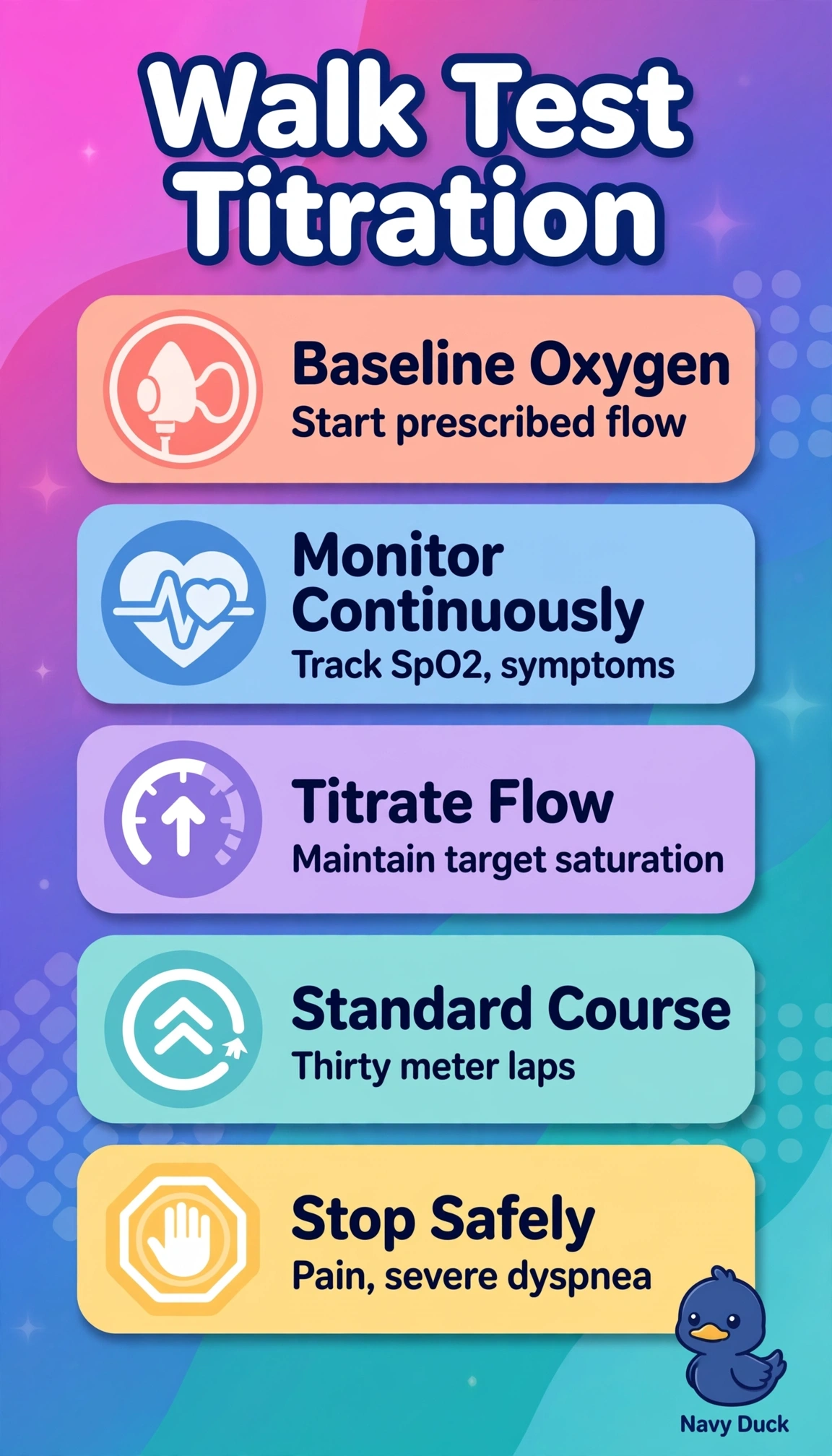
The correct procedure starts the titration walk on the prescribed 2 L/min because resting SpO2 93% and stable vitals do not justify changing baseline before exercise, and continuous pulse oximetry is then used to observe exertional desaturation moment to moment and increase flow as needed to maintain the physician protocol target, which directly fulfills the order to evaluate and manage desaturation during effort in a standard 30 meter corridor. The fixed flow approach with only post test adjustment describes a valid assessment walk for measuring distance and desaturation on a constant dose, but it fails the titration concept because flow must be adjusted during the walk when SpO2 falls rather than held constant for later comparison. The minute by minute spot check approach uses accepted oximetry and cone turnaround technique and correctly starts on current oxygen, but it fails the monitoring concept because brief intermittent samples can miss rapid nadirs during turns and continuous data are available and required for safe titration. The two walk room air versus 2 L/min comparison is a commonly used method to document oxygen benefit, but it fails the titration concept and the baseline fact because the patient already requires 2 L/min and the order is to titrate upward during exercise to keep SpO2 at target, not to withdraw oxygen for comparison. An exam caveat is to distinguish a 6 minute walk for assessment on constant oxygen from a 6 minute walk for exercise oxygen titration with dynamic adjustment, since wording about titration and continuous monitoring signals active management. A practical check is to confirm a secure nasal cannula, a well placed oximeter probe with good waveform through motion and turns, the target SpO2 range posted, extra oxygen and titration increments available, and clear stop criteria before starting.