
A 58-year-old former smoker reports progressive exertional dyspnea for 18 months, morning cough with sputum, two bronchitis episodes last winter, and spirometry shows persistent airflow limitation with reduced FEV1/FVC after bronchodilator. Which evaluation step best confirms a new diagnosis of chronic lung disease in this patient?
Select an answer to reveal the explanation.
Short Explanation
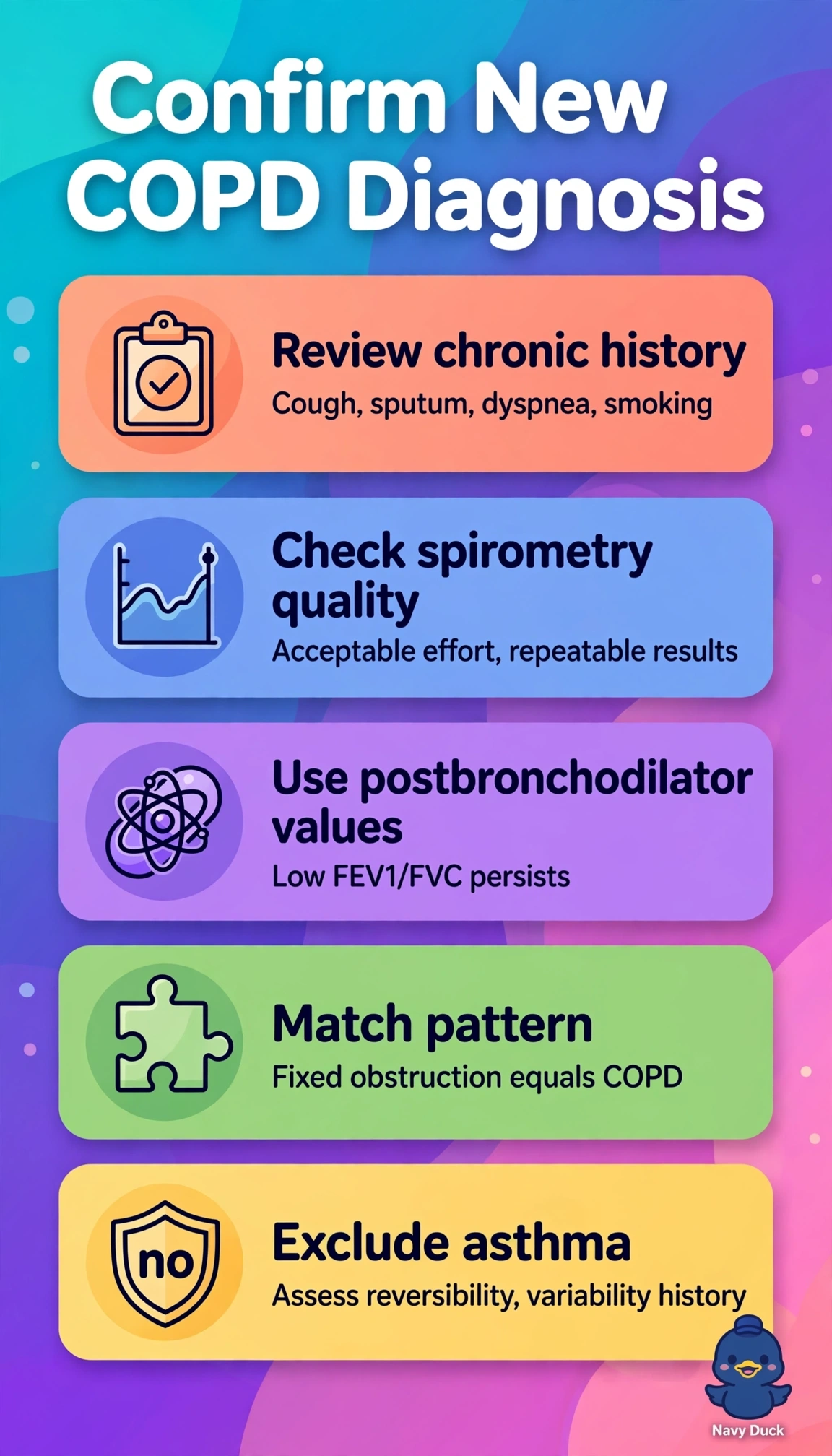
You are connecting symptoms plus numbers rather than chasing one test. Persistent obstruction after bronchodilator seals the COPD pattern, much like a fingerprint matching the story you already heard.
Full Explanation
A new diagnosis of chronic obstructive lung disease requires demonstration of persistent airflow limitation that does not fully reverse after bronchodilator, correlated with chronic cough, sputum, dyspnea progression, smoking exposure, and recurrent bronchitis, which together distinguish COPD from asthma and acute processes. Chest radiograph alone fails because hyperinflation and flattened diaphragms are supportive but neither sensitive nor specific and cannot quantify obstruction or reversibility required for diagnosis. Peak flow variability testing misunderstands physiology because high diurnal variability suggests asthma with reversible obstruction, whereas COPD is defined by fixed limitation best shown by spirometry, so prolonged peak flow monitoring answers the wrong question. Resting arterial blood gases fail because hypoxemia or hypercapnia reflect severity or gas exchange consequences but do not establish obstructive pathophysiology and can be normal in early disease. Exam caveat is that NBRC emphasizes post-bronchodilator FEV1/FVC as the diagnostic anchor for adult chronic lung disease, and practical check is to verify test quality, bronchodilator dose and timing, smoking history in pack-years, and exclusion of asthma features before labeling COPD.