
In the ICU a team is placing a radial arterial line and starting moderate sedation for a dyspneic adult needing frequent gases, with continuous pulse oximetry, cardiac monitoring, and nasal cannula oxygen in place. The physician asks respiratory therapy to assist the sterile procedure and sedation. Which assistance action best supports safe arterial catheter insertion with moderate sedation?
Select an answer to reveal the explanation.
Short Explanation
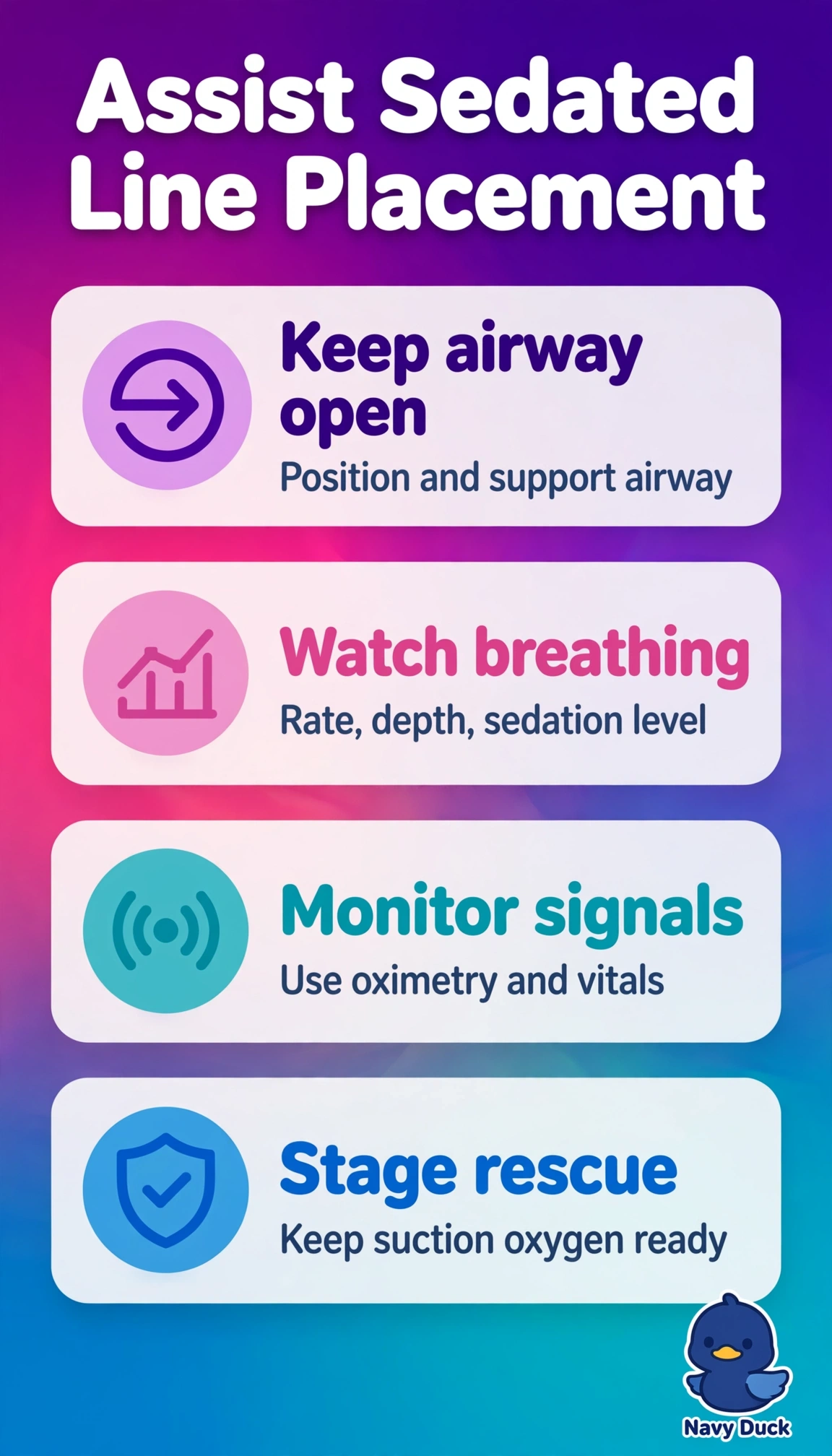
You’re the airway guardian while the team focuses on the vessel. Keeping suction close and watching breathing preserves vigilance, like a co-pilot watching altitude during landing.
Full Explanation
Maintaining airway patency, monitoring ventilation and sedation depth, and keeping suction and oxygen ready reflects respiratory therapy’s core sedation role during radial line insertion. In a dyspneic adult, moderate sedation can depress respiratory drive, reduce airway tone, and worsen hypoxemia while the physician focuses on vascular access. This support, alongside the existing pulse oximetry, cardiac monitoring, and nasal cannula, helps preserve gas exchange for the frequent blood gases. Preparing the sterile field, opening supplies, and handling flush solution support sterility and cannulation, but address setup rather than ongoing sedation surveillance, so a dangerous ventilation change could go undetected. Monitoring pulse oximetry and cardiac rhythm and charting vital signs are routine sedation tasks, but they do not replace direct assessment of ventilation and airway patency; supplemental oxygen can mask hypoventilation. Positioning the wrist in extension, applying pressure, and securing the dressing support post-procedure hemostasis and stabilization, but not safety during sedation, when vulnerability peaks. Exam caveat: distinguish assisting with sterility from performing puncture, advancement, or suturing, and favor airway-and-ventilation support when dyspnea and sedation are present. Practical check: before draping, confirm the airway plan, tested suction, oxygen titration, an assigned continuous observer, and a sedation scale.