
An adult with pneumonia is on heated high-flow nasal cannula at 60 L/min, FiO2 0.60, set temp 37C, in a cool step-down room. The circuit has dependent-loop rainout, the chamber water is full, and the display shows low airway temperature with cool mist. Which troubleshooting action best restores heated high-flow humidification performance?
Select an answer to reveal the explanation.
Short Explanation
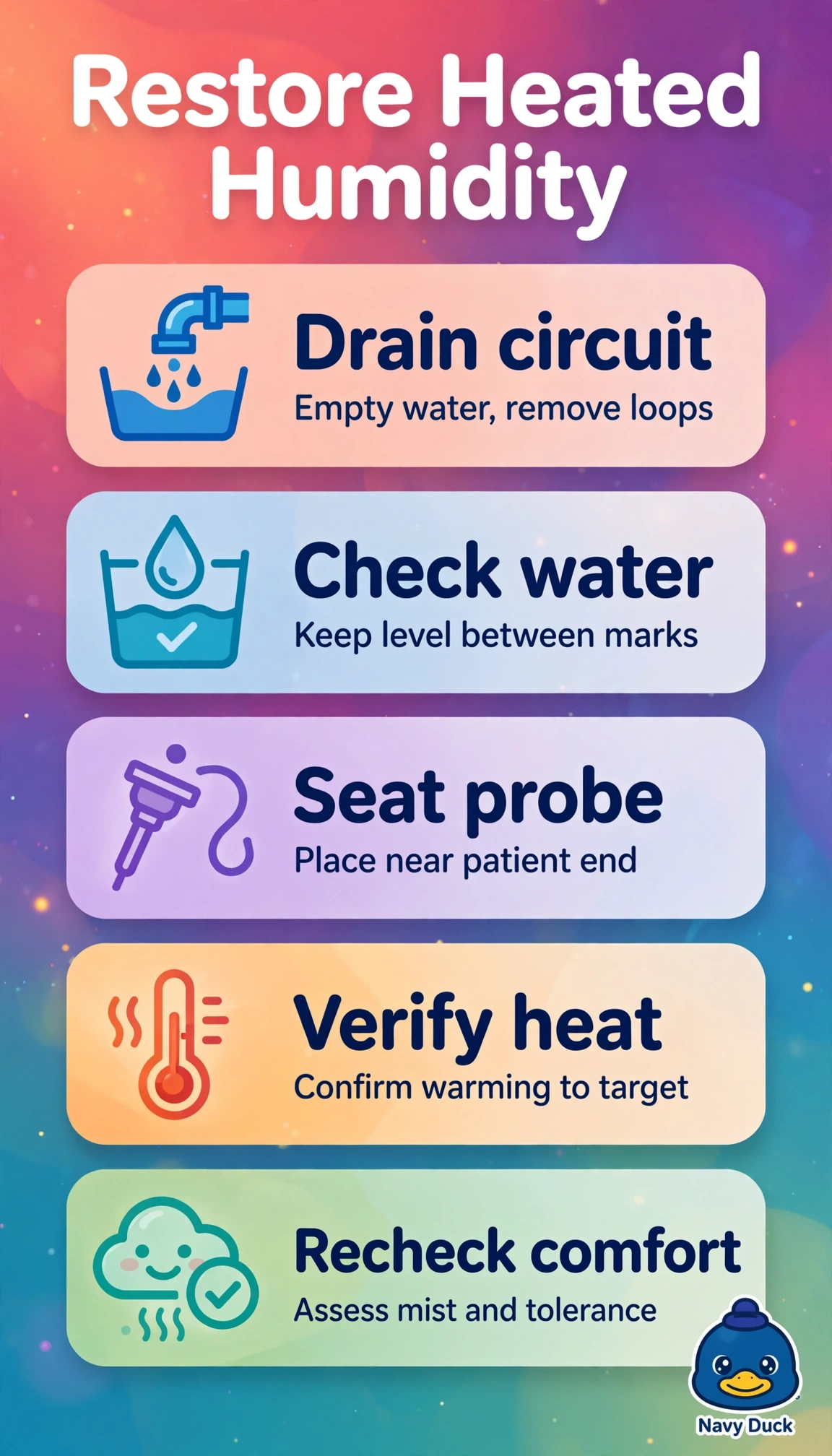
You’re seeing heat loss and pooled water that cool the gas. Draining the condensate, removing dependent loops, and reseating the probe restore rainout-free delivery, like unkinking a garden hose for steady flow.
Full Explanation
Draining condensate, removing dependent loops, and reseating the probe address both delivery and sensing, explaining the low airway temperature and cool mist despite a full chamber. Condensate can impair flow, cool delivered gas, and promote microbial growth; a supported tubing slope without dependent loops prevents water from pooling in low points. Placing the probe close to the patient restores accurate distal feedback so servo control can maintain 37°C and near-full saturation needed for mucociliary function at 60 L/min. Lowering the heater set temperature to 34°C may reduce condensation, but delivers cooler, less saturated gas below the 37°C target and leaves pooled water and probe position uncorrected. Lowering flow may lessen rainout, but sacrifices dead-space washout, FiO2 stability, and airway pressure needed with pneumonia, while leaving the condensate and probe issue unresolved. Replacing the full chamber and checking the heater plate addresses a possible supply failure, but the full chamber indicates adequate water; the problem is downstream sensing and drainage, so replacement causes unnecessary interruption. An exam caveat is to consider probe position, tubing slope, and condensate when airway temperature is low before changing FiO2 or exceeding the set range. As a practical check, drain with precautions, secure tubing without dips, confirm the probe is dry and seated, then verify warming mist, rising temperature, and stable SpO2.