
A 68-year-old in the emergency department is on bilevel NPPV with an oronasal mask for cardiogenic edema, with persistent high unintentional leak, eye irritation, and falling tidal volumes despite adequate pressure settings and an awake cooperative patient. Which mask interface correction should the therapist prioritize to control unintentional leak during NPPV?
Select an answer to reveal the explanation.
Short Explanation
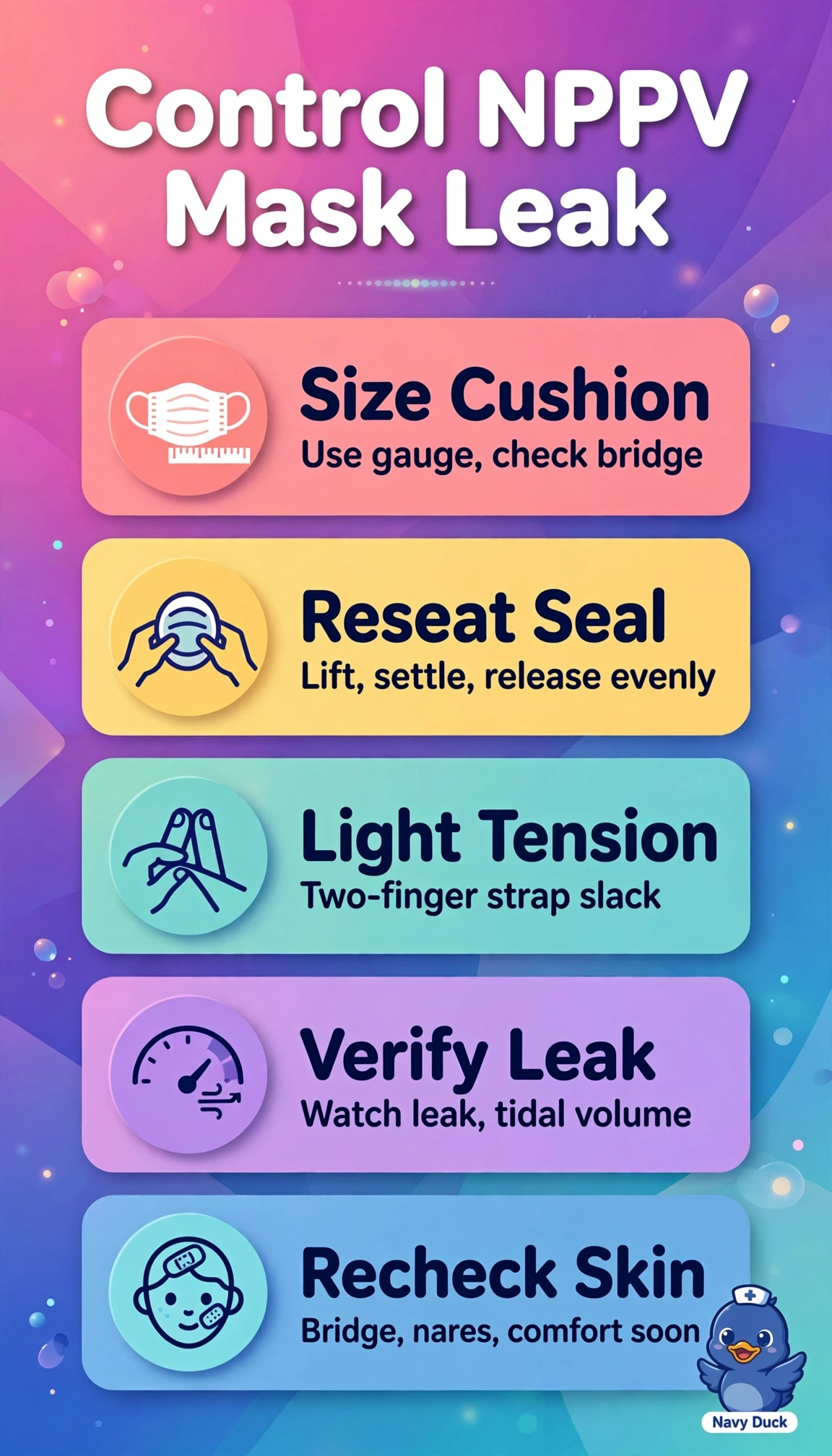
You’ve got this once you see the leak as a fit problem, not a strap problem. Overtightening can fold the cushion, like trying to patch a tire by squeezing it harder. Reseating a right-sized cushion with light tension restores the seal without pressure injury.
Full Explanation
The priority is correcting seal geometry: persistent unintentional leak, eye irritation, and falling tidal volumes despite adequate pressures in an awake, cooperative patient point to a mis-sized or poorly seated oronasal cushion leaking upward. Refit with the properly sized cushion, reseat it with the blower on, and use minimal strap tension; this restores contact without deforming the seal, redirects flow away from the eyes, preserves volume and synchrony, and limits skin injury. A fitted nasal mask with a chin strap may improve comfort and reduce dead space and claustrophobia, but acute cardiogenic edema may require oronasal containment; an open mouth can cause a large oral leak and worsen volume loss. A silicone bridge pad with tighter straps may help prevent nasal bridge injury, but padding cannot correct an incorrect size, and excess tension can distort the seal, raise ulcer risk, and worsen upward leak. Heated humidity and circuit support can reduce dryness, rainout, and circuit drag, but tolerance and pull are secondary when size and seating are the problem, so the leak persists. Exam caveat: distinguish intentional exhalation-port flow from unintentional leak, and do not raise EPAP to compensate, since higher flow can worsen leak and aerophagia. Practical check: size with a gauge, reseat with the blower on, then loosen and snug the straps only enough to control leak, leaving two-finger slack; confirm leak falls, eye irritation resolves, volumes and waveforms improve, and reassess the skin.