
A 19-year-old with cystic fibrosis is admitted with increased purulent sputum, SpO2 91% on room air, and fatigue with manual chest physiotherapy. The patient has weak expiratory effort, cannot sustain a huff cough, and peak cough flow is 140 L/min. Vital signs are stable and there is no hemoptysis or pneumothorax. Which airway clearance modality should the therapist select to provide insufflation-exsufflation support?
Select an answer to reveal the explanation.
Short Explanation
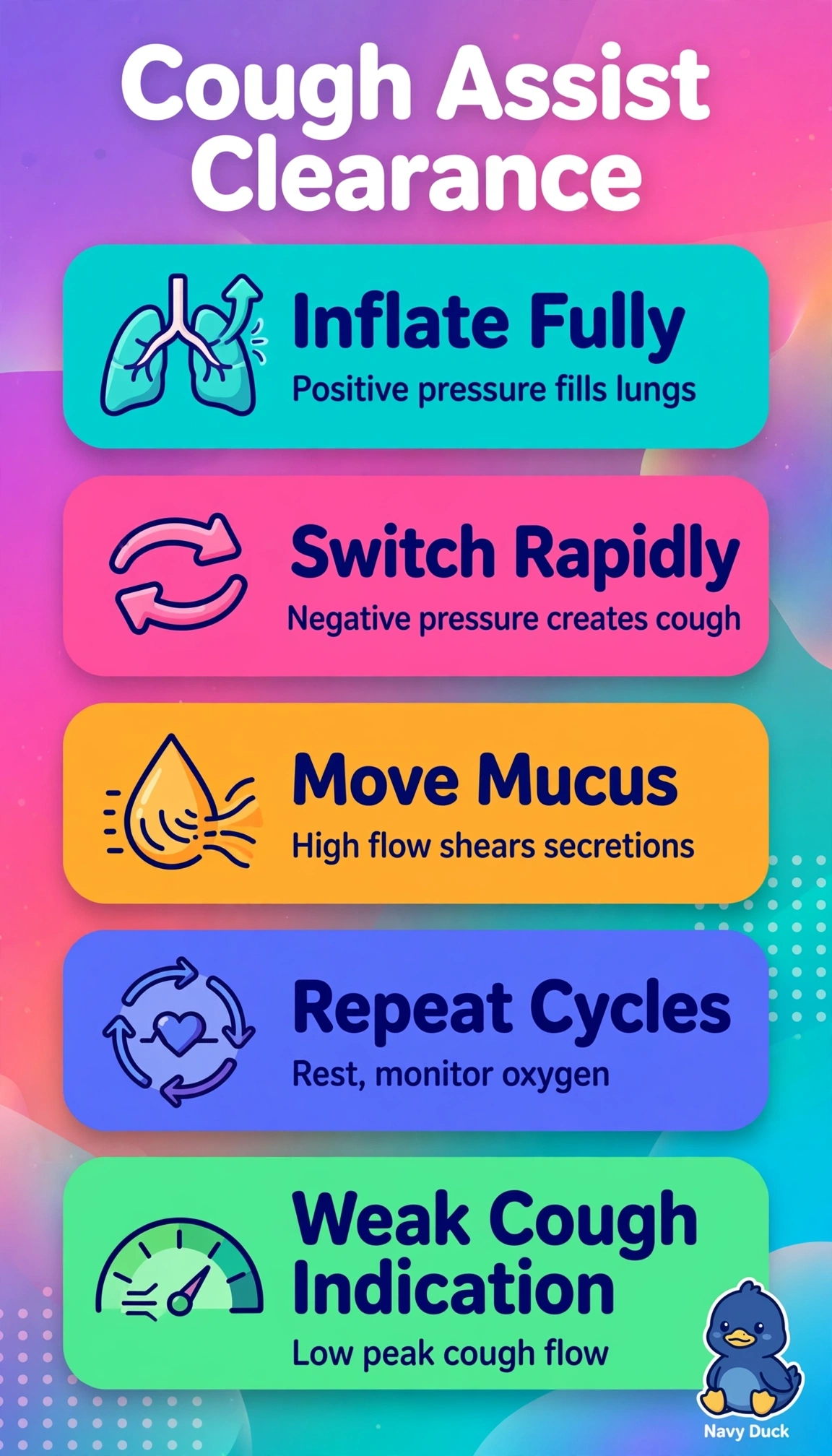
You spotted that weak cough is the real bottleneck here. A cough machine does the heavy lifting for you, like a spotter on a bench press, by driving air in then snapping it out fast. Your pick hinges on cough-augmentation when flows fall too low to clear mucus.
Full Explanation
Mechanical insufflation-exsufflation is indicated because weak expiratory effort, unsustainable huff and peak cough flow 140 L/min confirm ineffective cough below the effective threshold, combined with fatigue during manual physiotherapy, purulent retention and hypoxemia in stable cystic fibrosis without hemoptysis or pneumothorax; programmed positive pressure inflates toward inspiratory capacity then rapid negative pressure creates high expiratory flow that mimics cough to shear and expel secretions. Noninvasive pressure-support ventilation fails because it augments inspiration and rests fatigued muscles but provides no rapid exsufflation to raise cough peak flow. High-frequency chest wall oscillation fails because transmitted oscillations mobilize peripheral mucus but do not compensate for inspiratory deficit or expiratory weakness. Oscillatory positive expiratory pressure fails because stenting airways with expiratory oscillations still requires adequate inspiration and a forceful sustained huff that the patient cannot perform. Exam caveat is to separate mobilization from cough augmentation and choose insufflation-exsufflation when cough flow is low and expiratory force is inadequate despite stable vitals. Practical check is to confirm seal, titrate pressures to visible chest rise without discomfort, synchronize cycles, monitor SpO2 and sputum yield, allow rest, and reassess cough effectiveness and breath sounds.