
A 27-year-old with severe traumatic brain injury has elevated intracranial pressure, headache, hypertension, bradycardia, PaCO2 48 mm Hg, and PaO2 72 mm Hg on current ventilation. The team wants both brain and lung protection. Which ventilation strategy best controls intracranial pressure effects while maintaining cerebral perfusion?
Select an answer to reveal the explanation.
Short Explanation
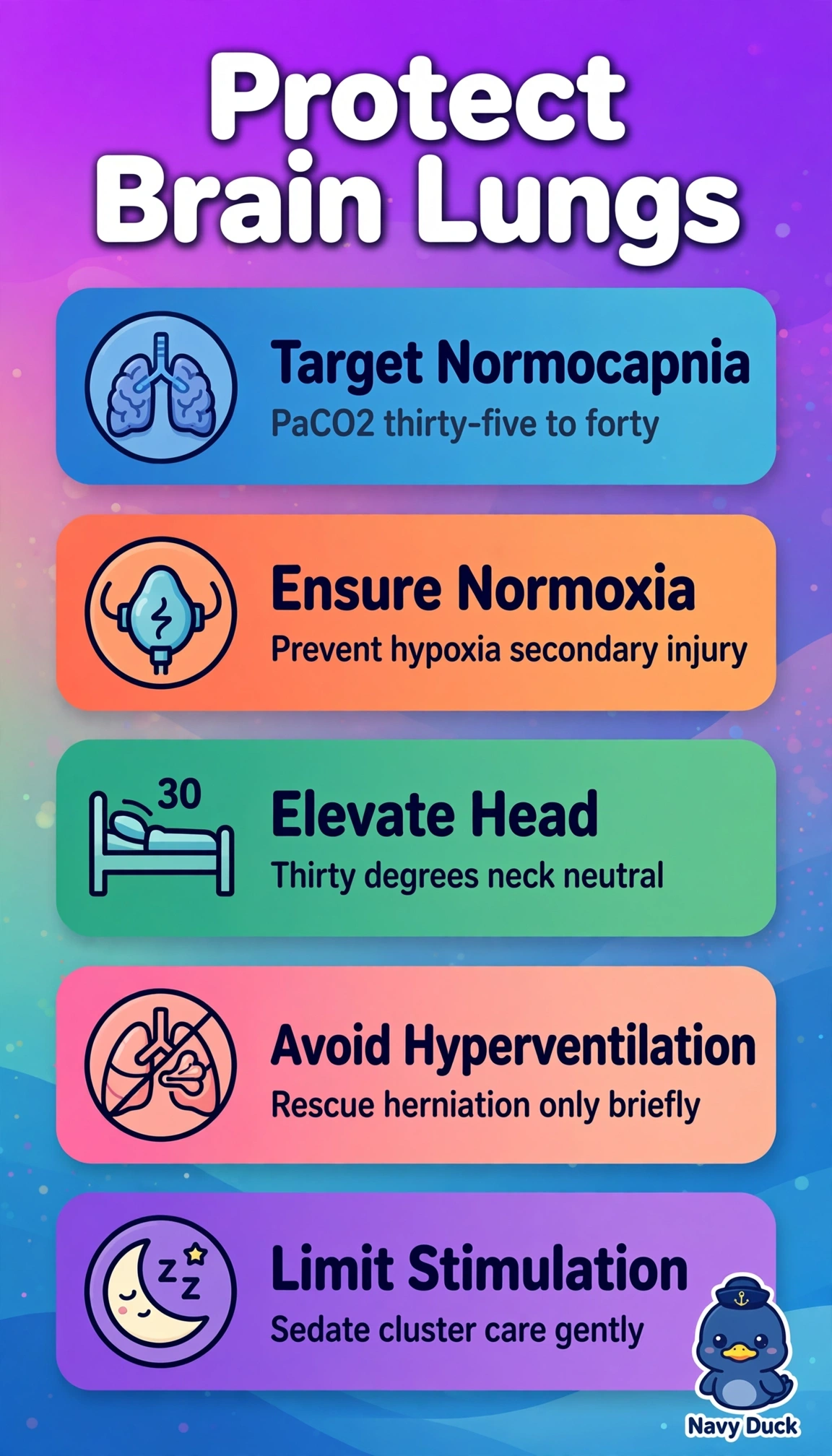
You can protect both the injured brain and lungs by keeping carbon dioxide and oxygen in the normal range, with the head elevated and sedation maintained. Avoid routine hyperventilation; reserve it for a brief rescue if herniation is looming.
Full Explanation
Maintaining normocapnia and normoxia addresses both threats: PaCO2 of 48 mmHg dilates cerebral arterioles, increasing cerebral blood volume and intracranial pressure, while PaO2 of 72 mmHg worsens secondary injury. Head elevation with a neutral neck promotes venous drainage, and sedation lowers metabolic demand and prevents dyssynchrony-related pressure surges; avoiding prophylactic hyperventilation preserves cerebral blood flow and perfusion. Low tidal volumes with permissive hypercapnia can limit plateau pressure, as in isolated ARDS, but retained CO2 causes cerebral vasodilation and can directly raise pressure after severe brain injury. Sustained hyperventilation to PaCO2 30–35 mmHg causes hypocapnic vasoconstriction that may transiently reduce cerebral blood volume, but prolonged use lowers cerebral blood flow and risks ischemia. Normocapnia and normoxia with higher PEEP while nursed flat may improve alveolar recruitment and oxygenation, but flat positioning and raised intrathoracic pressure can impede jugular drainage and transmit pressure to the intracranial compartment. Exam caveat: brief hyperventilation is a temporizing rescue for acute herniation while definitive therapy is arranged, not continuous control. Practical check: nurse the patient at 30 degrees with the head midline, correlate end-tidal CO2 with arterial gases to keep PaCO2 at 35–40 mmHg while ensuring adequate oxygenation, and track intracranial pressure, perfusion pressure, sedation, and triggers such as pain, fever, or suctioning.