
A 63-year-old with moderate COPD, 40 pack-year history, two exacerbations last year, SpO2 93% on room air, and limited exercise tolerance is ready for discharge from a suburban 80-bed hospital to home with a spouse caregiver. Which outpatient management, discharge, and rehabilitation plan best reduces future exacerbations?
Select an answer to reveal the explanation.
Short Explanation
You’re building a safety net, not just a goodbye packet. Pulmonary rehabilitation is like a toolkit plus coach: you build exercise capacity while catching flare-ups early.
Full Explanation
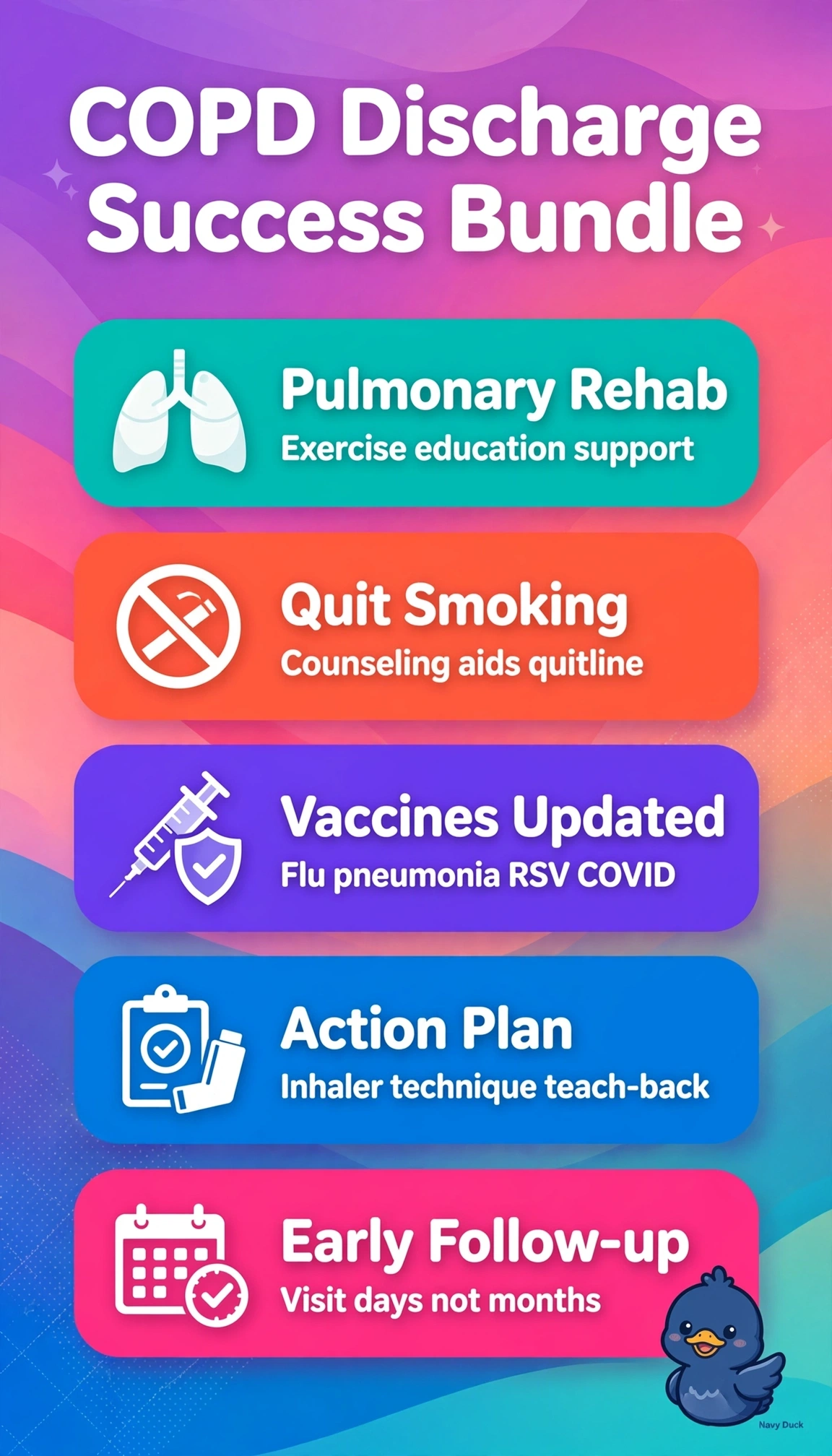
The comprehensive plan fits a frequent exacerbator with moderate COPD, a 40 pack-year history and limited exercise tolerance. Pulmonary rehabilitation improves exercise tolerance and self-management; smoking cessation reduces decline and exacerbation frequency; respiratory vaccines help prevent infectious triggers; a written action plan supports early rescue treatment; inhaler training ensures maintenance medicines are delivered correctly; and early follow-up allows reassessment, medication reconciliation and caregiver planning. A plan with cessation, vaccines, an action plan, inhaler training and early review but no pulmonary rehabilitation misses structured exercise and self-management, which can help break the dyspnea-inactivity cycle when exercise tolerance is limited. A plan that includes rehabilitation and education but schedules review in six months delays transition-of-care assessment: after an exacerbation, reassessment within 1–2 weeks can check recovery, adherence, oxygenation trends and whether escalation is needed. Adding home oxygen to the full plan is not justified by SpO2 of 93% on room air; long-term oxygen is generally reserved for severe resting hypoxemia and does not itself prevent exacerbations. Exam caveat: two exacerbations in the prior year indicate high risk even with moderate COPD, so prioritize comprehensive prevention. Practical check: confirm the quit plan and vaccine record, have the patient and spouse teach back inhaler use and the action plan, verify rehabilitation referral acceptance, and arrange a visit within two weeks with red-flag guidance.