
A 45-year-old after a motor vehicle crash has right-sided rib fractures with paradoxical chest movement, severe splinting pain, hypoxemia, and small pneumothorax on imaging. Which management strategy best stabilizes chest trauma with rib fractures and flail chest while preventing complications?
Select an answer to reveal the explanation.
Short Explanation
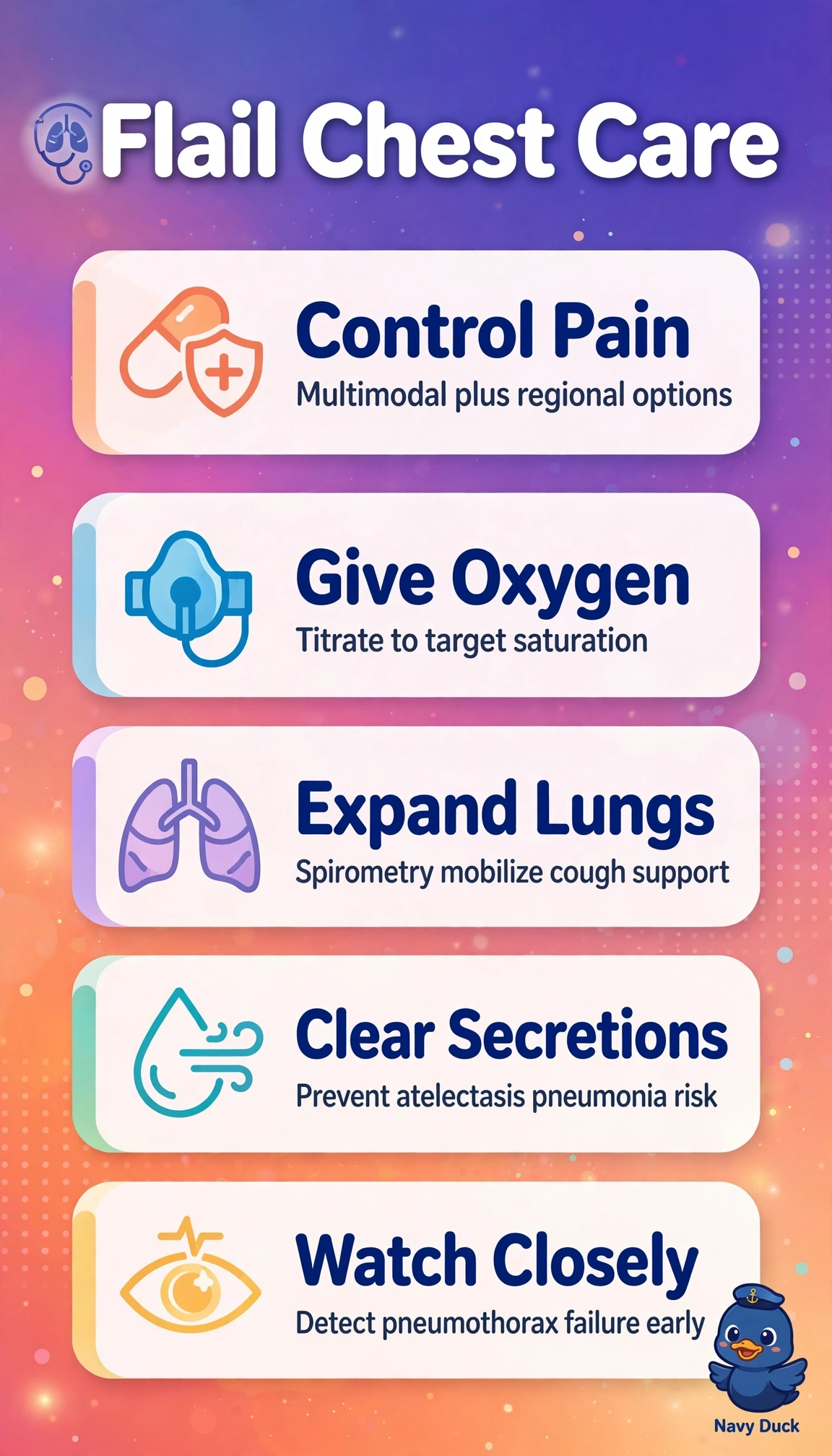
Pain can make you take tiny breaths and raise your risk of pneumonia. Multimodal analgesia, oxygen, lung expansion, and close monitoring help you breathe and cough effectively while catching deterioration early.
Full Explanation
Multimodal pain control, oxygen, lung expansion, and monitoring are appropriate because flail chest mechanics and splinting pain reduce tidal volume and cough effectiveness, while hypoxemia signals impaired oxygenation. Analgesia supports chest excursion and cooperation; titrated oxygen treats desaturation and reduces work of breathing; deep breathing, incentive spirometry, mobilization, and secretion clearance help prevent atelectasis and pneumonia. Monitoring vital signs, oxygen saturation, examination findings, and repeat imaging can detect an enlarging pneumothorax, bleeding, or fatigue early. Strict bed rest and cough suppression fail because limiting mobilization and suppressing cough impede lung recruitment and secretion clearance, increasing atelectasis and pneumonia risk despite pain control and oxygen. Lung expansion and monitoring on room air fail to correct the documented hypoxemia, risking decompensation when respiratory reserve is already limited. Routine chest tube drainage fails because a small, stable pneumothorax without tension, instability, or positive-pressure ventilation can be observed; drainage adds procedural pain and complications without stabilizing the chest wall. Exam caveat: paradoxical movement alone does not mandate intubation, surgery, or tube thoracostomy; escalation depends on respiratory failure, enlarging pneumothorax, tension physiology, or instability. Practical check: confirm tolerable pain with a strong cough, target saturation on minimal oxygen, adequate spirometry volumes with ambulation, and promptly reassess respiratory rate, effort, and imaging if the patient worsens.