
A 62-year-old with chronic hypercapnic COPD, morning headaches, and daytime sleepiness tolerates an acute illness recovery but retains PaCO2 55 with nocturnal desaturation, and is reluctant about tracheostomy or intubation. Which chronic management plan best combines noninvasive ventilation and medical treatment for stable disease?
Select an answer to reveal the explanation.
Short Explanation
You're resting night breathing while keeping daytime medicines working. Chronic CO2 retention is like a tired night shift — backup support plus tune-ups help, and your nocturnal rest resets drive and sleep.
Full Explanation
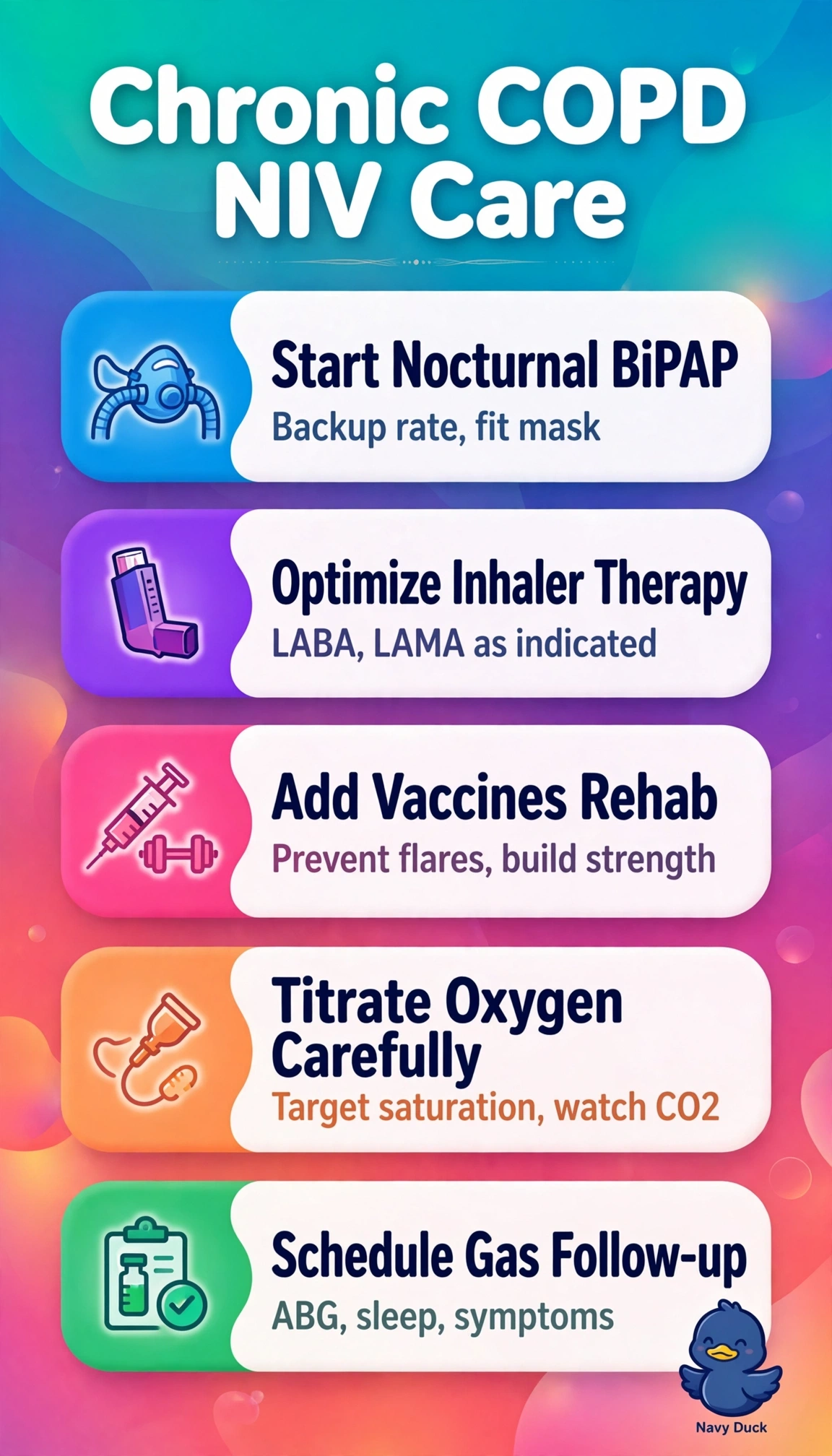
The correct plan fits stable chronic hypercapnic COPD with sleep hypoventilation shown by morning headaches, daytime sleepiness, persistent PaCO2 55 after acute recovery and nocturnal desaturation by pairing nocturnal bilevel support with medical optimization and objective reassessment while honoring reluctance toward tracheostomy or intubation. Nocturnal BiPAP with backup rate unloads inspiratory muscles, augments alveolar ventilation, improves nocturnal hypoventilation and sleep quality, and lowers daytime CO2, while optimized inhalers reduce airflow limitation and exacerbations that perpetuate hypercapnia, and scheduled sleep review with arterial blood gas permits titration of pressures, rate and carefully controlled oxygen. A spontaneous bilevel approach without backup rate fails on ventilatory assurance because COPD with nocturnal hypoventilation needs timed support to sustain ventilation during periods of reduced drive and prevent prolonged hypopnea with CO2 retention. Pressure support with CPAP alone fails on carbon dioxide clearance because continuous pressure can stent the airway and improve oximetry yet provides no inspiratory assistance or assured ventilation to correct established hypercapnia. Omitting planned CO2 reassessment fails on longitudinal control because home ventilation requires verification of symptoms, adherence, gas exchange, mask effectiveness and oxygen strategy to adjust therapy safely. Exam caveat is to separate stable hypercapnic COPD criteria from acute exacerbation ventilation or isolated sleep apnea where thresholds and devices differ. Practical check is to review repeat daytime blood gas, overnight oximetry with capnography, inhaler technique, mask fit, adherence downloads and a titrated oxygen prescription at follow-up.