
A 52-year-old with bronchiectasis has coarse crackles and heavy sputum localized to both lung bases, weak spontaneous cough, and stable vitals. The provider orders airway clearance for lower lobe segments. Which postural drainage position with percussion and vibration best targets lower lobe secretions?
Select an answer to reveal the explanation.
Short Explanation
Think of drainage as helping secretions move downhill. You tip the bases upward so gravity helps, then use percussion to loosen thick mucus where you need it.
Full Explanation
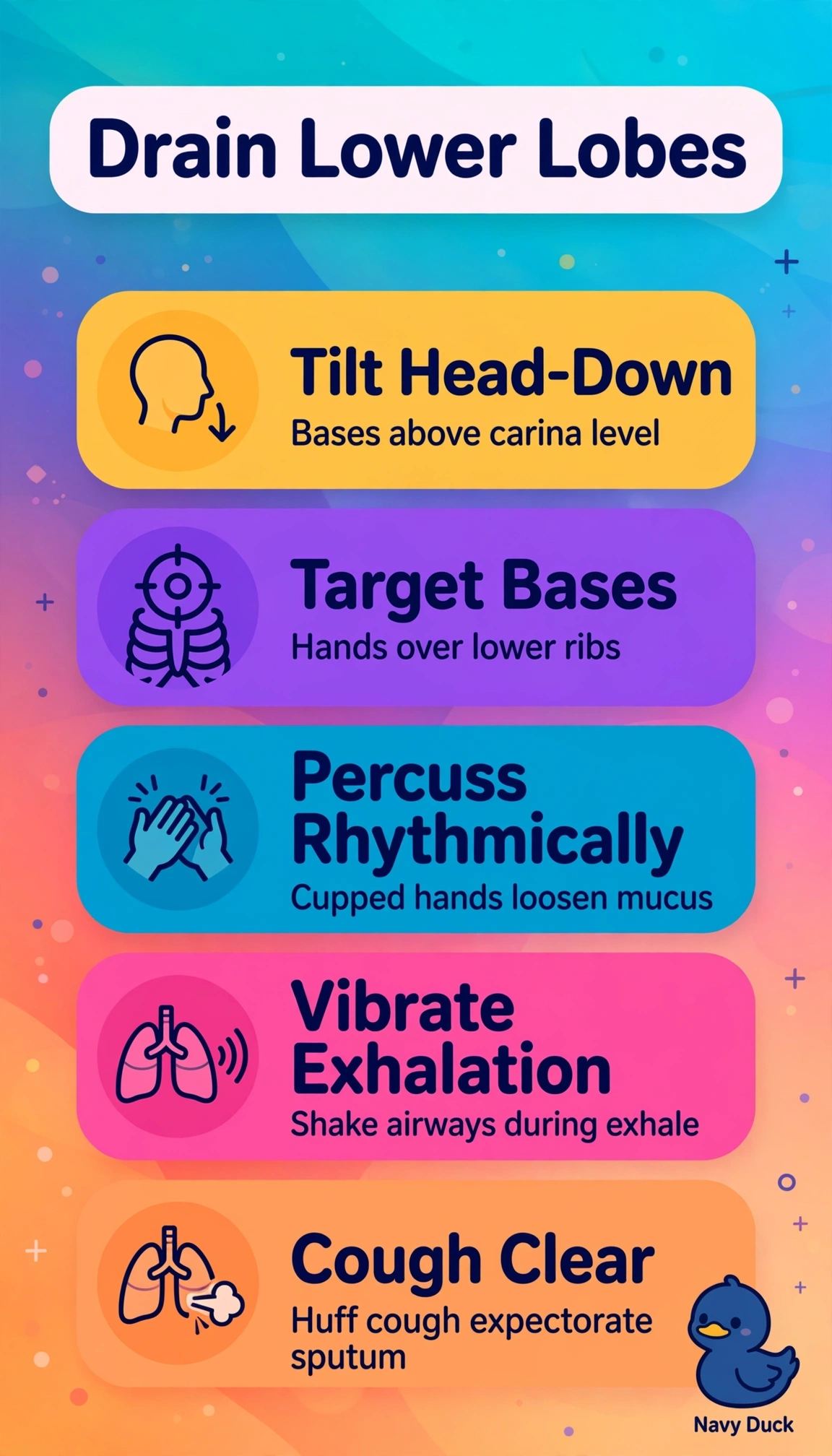
Placing the lower lobes uppermost in a head-down position uses gravity to move thick basal secretions toward the central bronchi, where a weak cough can clear them. Percussion loosens adherent mucus, and vibration during exhalation augments airflow to advance it centrally; this targets both bases in bilateral bronchiectasis, and stable vital signs permit the tilt. Treating only the right lower-lobe base leaves the left basal secretions untreated, despite using the appropriate gravity and technique; unilateral drainage suits strictly localized disease. Applying percussion and vibration during deep inhalation conflicts with clearance mechanics: vibration should coincide with exhalation to increase expiratory shear and move mucus centrally, while force during deep inhalation can oppose clearance and increase work of breathing. Sitting upright and leaning forward keeps the lower lobes dependent, so secretions remain pooled at the bases despite bilateral coverage and expiratory timing. Exam caveat: modified upright drainage may be needed when head-down tilt is contraindicated by reflux, dyspnea, heart failure, or elevated intracranial pressure; avoid percussion over fractures, skin breakdown, or with bleeding risk or unstable vital signs. Practical check: afterward, reassess basilar crackles, sputum volume and ease of expectoration, oxygen saturation, and tolerance to judge whether clearance improved.