
A 68-year-old with known COPD presents with severe exacerbation, drowsiness, ABG pH 7.22 with PaCO2 78, and accessory-muscle fatigue despite maximal bronchodilators, steroids, and BiPAP with worsening mentation. Which management decision best addresses COPD exacerbation requiring intubation and invasive ventilation?
Select an answer to reveal the explanation.
Short Explanation
You're rescuing a tired pump before it stops, then ventilating gently. Severe COPD is like an overinflated balloon — slow emptying wins, and your timing plus low stretch prevents trap and harm.
Full Explanation
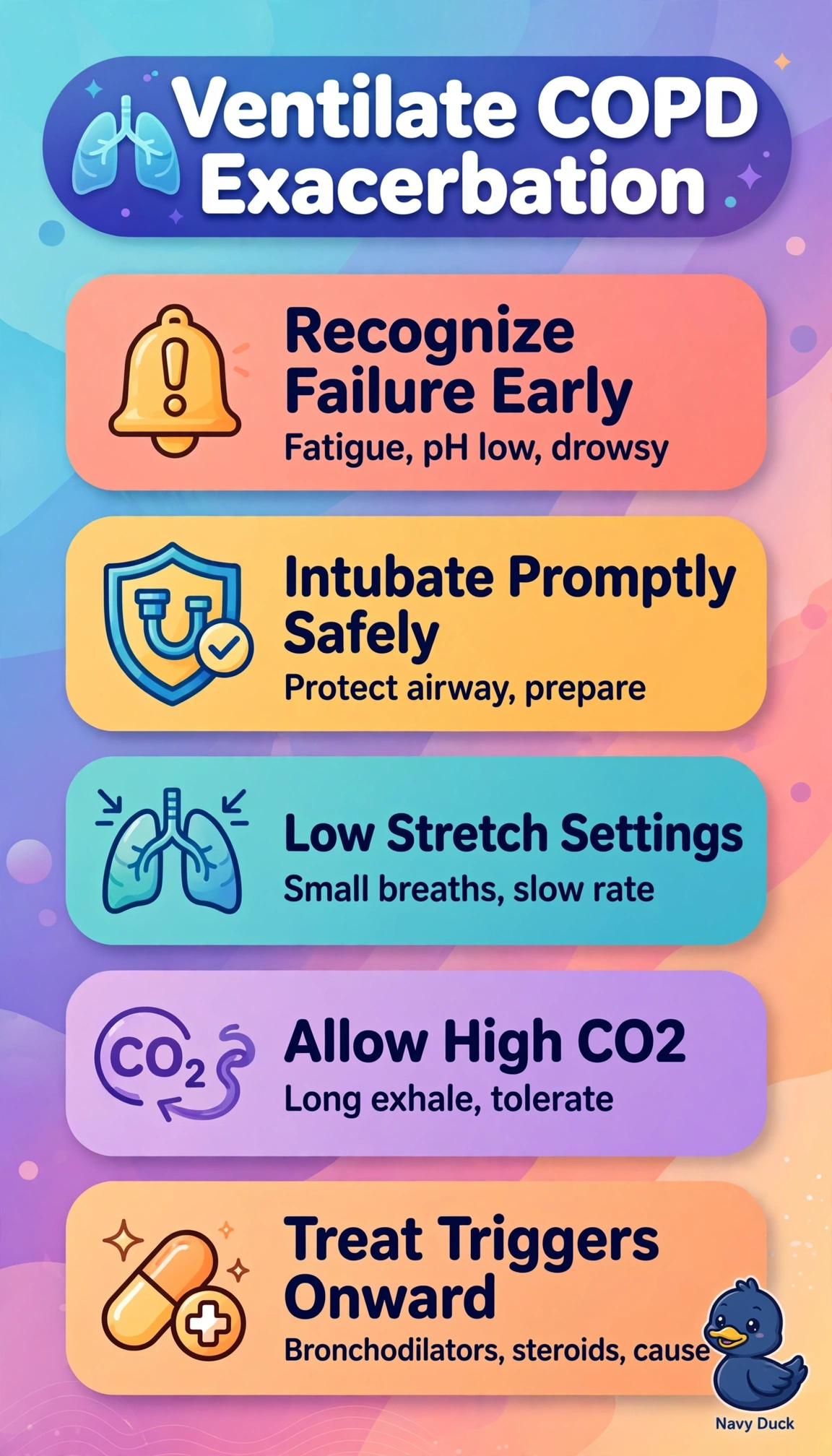
The correct response fits because pH 7.22, PaCO2 78, drowsiness, accessory-muscle fatigue and worsening mentation despite maximal bronchodilators, steroids and BiPAP define noninvasive failure with fatigue and airway risk, requiring prompt intubation, while low tidal volumes, low rate with prolonged expiration and permissive hypercapnia avoid dynamic hyperinflation, auto-PEEP and barotrauma in obstructive physiology, and concurrent treatment of infection, pneumothorax, heart failure or nonadherence removes the precipitant. Persisting with optimized BiPAP and serial gases is normally preferred to avoid intubation, but it fails by delayed escalation since depressed consciousness, fatigue and severe acidemia prohibit safe noninvasive continuation and raise arrest risk. Securing the airway with protective hypercapnic strategy while delaying trigger workup gives good ventilatory support but fails by incomplete care because steroids, antibiotics when indicated and precipitant reversal determine recovery. Normalizing gases quickly with higher minute ventilation seems corrective for acidosis but fails by obstructive mechanics because forced clearance shortens expiration and worsens trapping and auto-PEEP. An exam caveat is not to confuse compensated chronic retention with acute acidemia plus mental status change and fatigue that mandates escalation. A practical check is to track mentation and ABG trajectory, prepare hemodynamically for intubation, set prolonged expiratory time while monitoring auto-PEEP and plateau pressure, and promptly obtain imaging, cultures, ECG and drug history.