
After a failed emergency intubation with hypoxemia that resolved, the interprofessional team is shaken and blaming each other in the hallway. Which debriefing leadership approach best promotes learning, safety culture, and team recovery after this adverse event?
Select an answer to reveal the explanation.
Short Explanation
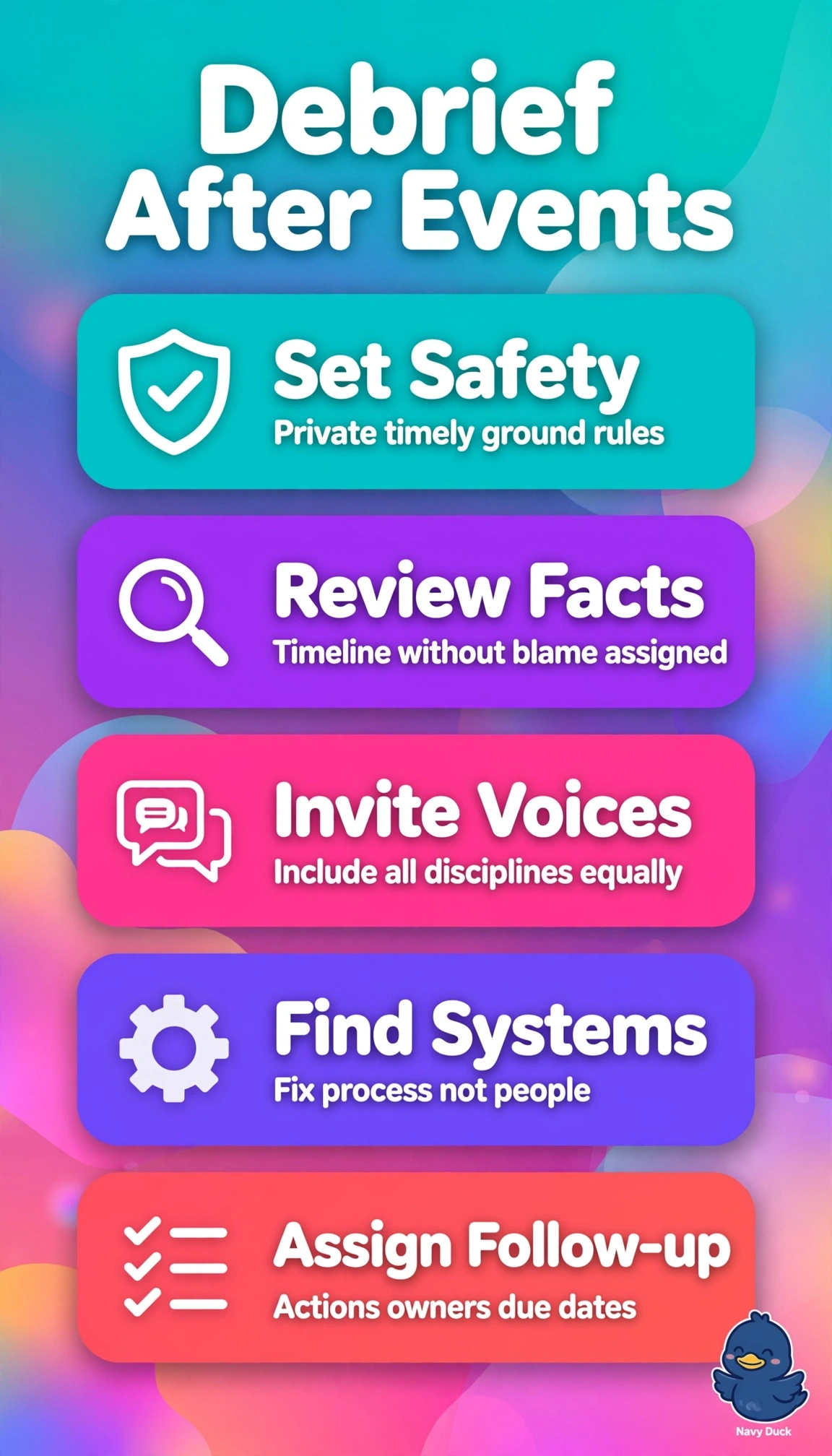
You've just been through a scare, and your team needs a reset, not a blame game. You'll get more healing and learning from a quick structured debrief where you set ground rules, review the facts together, and choose fixes — like a sports huddle that turns a fumble into a better next play.
Full Explanation
The correct approach works because timeliness, structure, psychological safety, factual reconstruction, and action planning together meet the simultaneous needs of a shaken interprofessional team after resolved hypoxemia: stopping hallway blame, supporting recovery, and creating systems learning. Promptness preserves recall and signals support, ground rules replace blame with respect and confidentiality, facts review builds a shared mental model distinct from assumptions, and improvement actions translate insight into safety culture. The timely interprofessional facts-and-actions review without ground rules fails on psychological safety concept because a blaming distressed team without explicit norms and emotional validation cannot speak candidly, so speaking up is suppressed and second-victim recovery stalls. The complete but next-week review fails on timeliness concept because while delayed analysis is standard for quality committees, it leaves immediate distress unsupported and allows inaccurate blame narratives to harden during the highest-risk window. The timely structured review limited to airway operators fails on systems inclusivity concept because excluding nurses and other witnesses loses critical observations and prevents repair of interprofessional trust. Exam caveat is to prioritize culture-plus-process answers over pure technical answers when the stem emphasizes blame and distress. Practical check is to relocate promptly to private space, invite all involved, state ground rules, briefly acknowledge emotions, reconstruct timeline, then assign owners and follow-up with support offers.