
In a pulmonary clinic a 66-year-old with stable severe COPD on daily inhalers reports two recent exacerbations, exertional dyspnea, continued smoking, and incomplete inhaler technique with no current hypoxemia at rest. Which outpatient management, discharge, and rehabilitation plan best prevents future events?
Select an answer to reveal the explanation.
Short Explanation
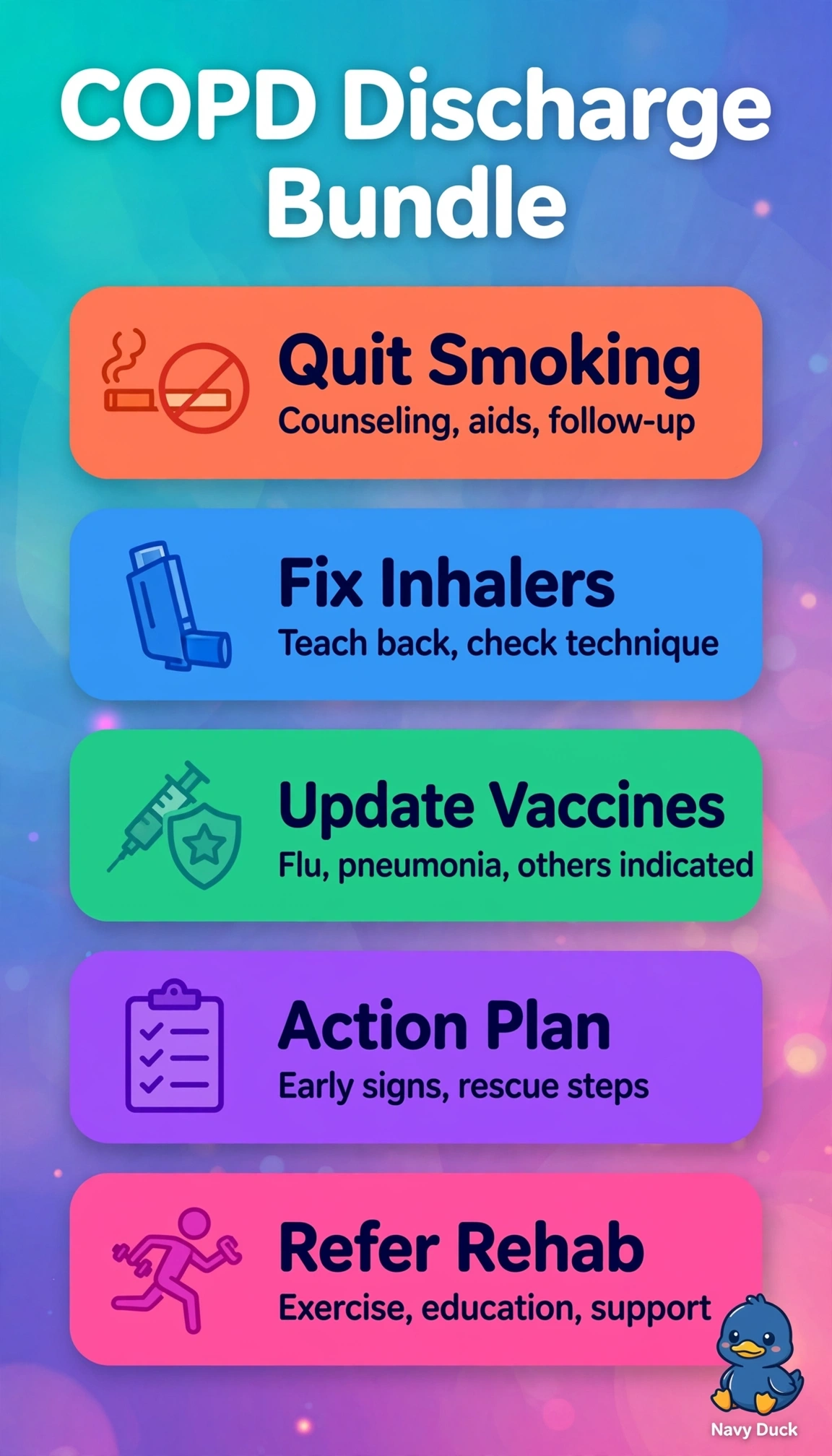
When you're stable but flaring, your lungs need a full tune-up like a car before a long road trip. You'll cut future flare-ups by quitting smoking, fixing your inhaler technique, staying up to date on vaccines, and joining rehabilitation with a clear action plan.
Full Explanation
The correct comprehensive strategy provides guideline-concordant secondary prevention for stable severe COPD with frequent exacerbations. Smoking cessation slows decline and lowers exacerbation and mortality risk, retraining corrects observed poor technique to ensure lung deposition, vaccines prevent infectious triggers, a written action plan enables early rescue treatment, and pulmonary rehabilitation improves dyspnea, exercise capacity and readmissions. The triple-therapy escalation without cessation fails on disease modification because ongoing smoke exposure sustains inflammation, blunts drug responsiveness and drives progression despite optimal pharmacotherapy. The intensified inhaler plan without retraining fails on delivery because poor coordination or inspiratory flow leaves drug in the oropharynx, so added doses cannot reduce events until technique is taught and rechecked. The home-oxygen plan for exertional dyspnea without resting hypoxemia fails on selection criteria because survival benefit requires documented severe resting hypoxemia, while dyspnea alone does not qualify and active smoking creates fire hazard. An exam caveat is to keep stable prevention separate from acute exacerbation care and not prescribe oxygen, antibiotics or systemic steroids from symptoms alone when stability and normal resting saturation are stated. Practically, confirm smoking status, observe inhaler use, verify vaccines and action-plan understanding, record resting oximetry, and confirm rehabilitation referral.