
A 66-year-old with chronic hypercapnic COPD and frequent exacerbations presents to a 30-bed ward with increased dyspnea, PaCO2 58, pH 7.32, alert mentation, and ability to cooperate and protect the airway. Which noninvasive ventilation and medical treatment combination best manages this chronic lung disease presentation?
Select an answer to reveal the explanation.
Short Explanation
You're boosting tired bellows without taking over completely, plus meds. This bilevel teamwork is like training wheels with medicine — support plus treatment steadies breathing.
Full Explanation
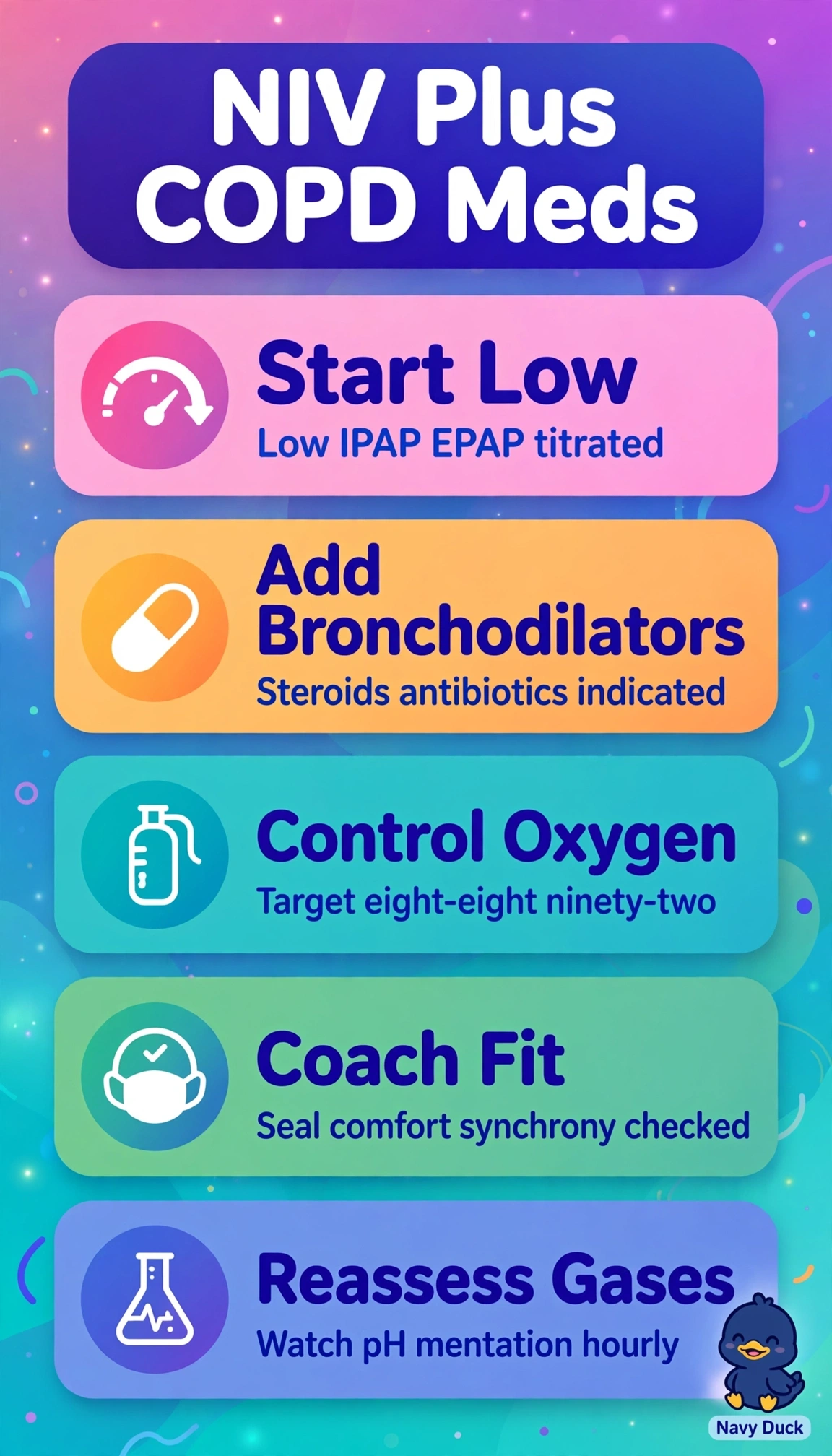
In this alert cooperative COPD exacerbation with respiratory acidosis pH 7.32 and PaCO2 58 low-pressure bilevel support is indicated because inspiratory assistance augments tidal volume and alveolar ventilation while expiratory pressure offsets intrinsic PEEP, reducing work of breathing and facilitating CO2 clearance, complemented by bronchodilators for airflow obstruction, steroids to resolve inflammation, and controlled oxygen at 88-92% to avoid worsening hypercapnia. The high inspiratory pressure strategy fails because abrupt normalization of CO2 increases leak, intolerance, gastric insufflation, barotrauma and hyperinflation, while evidence supports starting low and titrating to comfort, pH and gases. The 94-98% saturation strategy fails because that liberal target, appropriate for pneumonia or sepsis without CO2 retention, worsens V/Q mismatch, Haldane effect and drive suppression in chronic retainers, raising PaCO2 and acidosis. The continuous airway pressure strategy fails because expiratory pressure alone improves oxygenation and stenting but provides no ventilatory assistance to increase minute ventilation, leaving hypercapnia uncorrected. Exam caveat is NIV requires protecting airway, stable hemodynamics, no vomiting, obstruction, facial trauma or copious secretions, otherwise intubation is required. Practical check is reassess mask fit, tolerance, respiratory rate, mentation and repeat gases in one to two hours with escalation plan.