
A 52-year-old with six months of progressive exertional dyspnea, chronic productive cough, wheezing, and 20 pack-year smoking history has normal cardiac exam and no acute infection. Which diagnostic evaluation best establishes a new diagnosis of chronic lung disease and its severity?
Select an answer to reveal the explanation.
Short Explanation
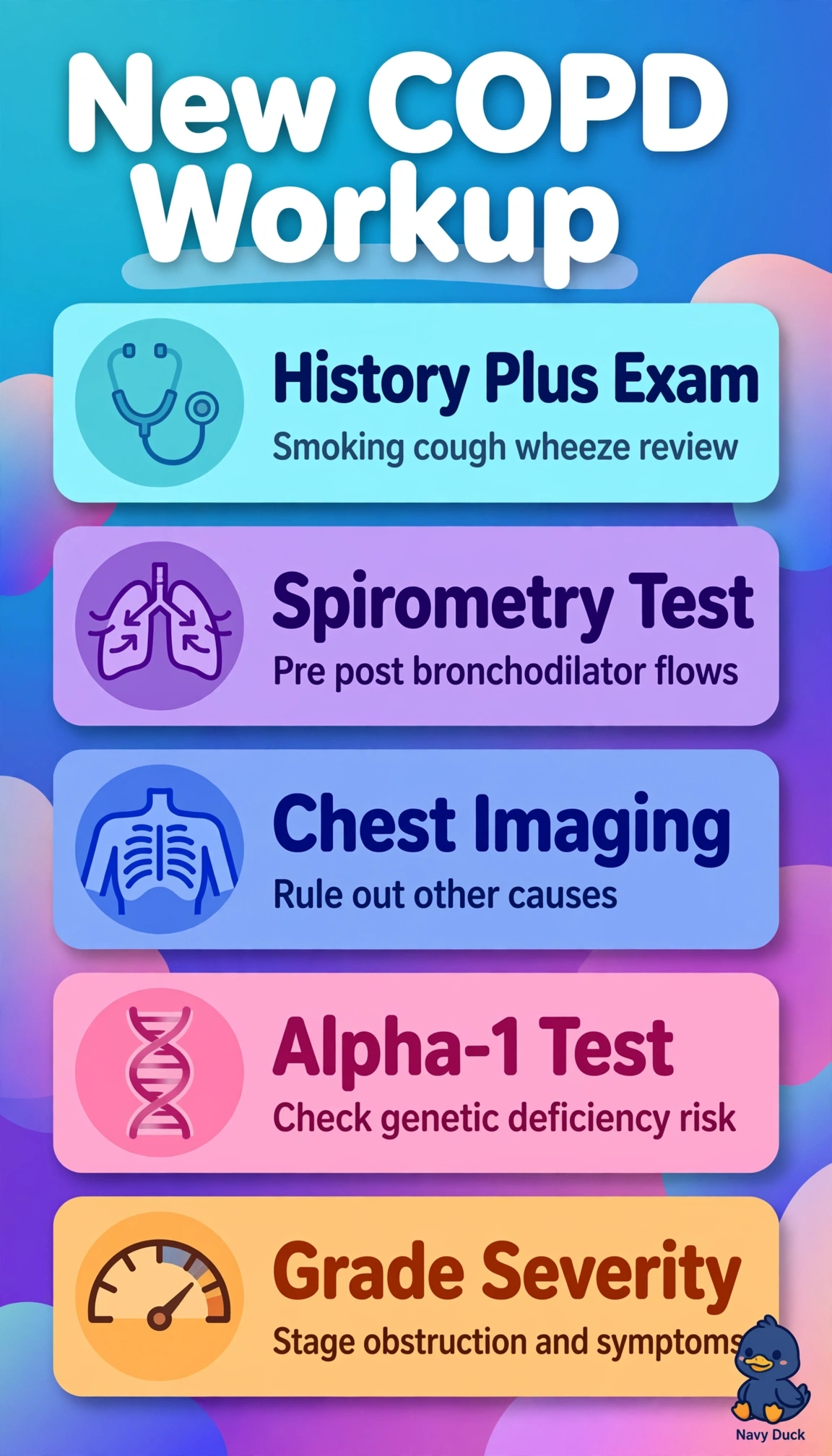
Your symptoms paint a COPD picture, but you'll need numbers to make it official — spirometry is like a report card for your lungs. It confirms persistent airflow blockage and grades how severe it is when you add your history, imaging, and alpha-1 testing.
Full Explanation
Chronic productive cough, progressive exertional dyspnea, wheezing and 20 pack-year exposure in a 52-year-old with normal cardiac exam and no acute infection strongly favors new COPD, which requires pre- and post-bronchodilator spirometry showing persistent obstruction to confirm disease with FEV1 percent predicted to define severity, supplemented by history to quantify symptoms, exposures and exacerbations, chest imaging to exclude mimics and define phenotype, and one-time alpha-1 antitrypsin testing recommended for all COPD to detect a heritable treatable cause. Thorough reversibility spirometry with smoking history and imaging to stage disease is otherwise complete but fails etiologic evaluation by omitting alpha-1 testing, leaving heritable risk unaddressed. Baseline prebronchodilator spirometry with history, imaging and alpha-1 testing captures initial obstruction but fails persistence testing by concept, since GOLD staging requires post-bronchodilator values to separate COPD from asthma. Complete reversibility spirometry with history and alpha-1 testing while deferring imaging achieves physiologic and genetic workup but fails structural assessment, missing mimics that alter prognosis. An exam caveat is that normal cardiac exam without infection does not replace confirmation, since stems test persistence after bronchodilation. A practical check is to confirm documented post-bronchodilator FEV1/FVC and FEV1 percent predicted, reviewed imaging, symptom history, and resulted alpha-1 level.