
In a telemetry unit an adult with a new tracheostomy is gurgling with visible secretions, SpO2 89%, coarse rhonchi, and weak cough but is alert with intact gag and no nasal obstruction or bleeding. Which suctioning approach best clears the airway while limiting harm?
Select an answer to reveal the explanation.
Short Explanation
You're spot-on to go right through your trach tube — it's like clearing a straw instead of fishing around it. You'll lift that mucus quickly when you keep passes brief, sterile, and gentle with limited suction.
Full Explanation
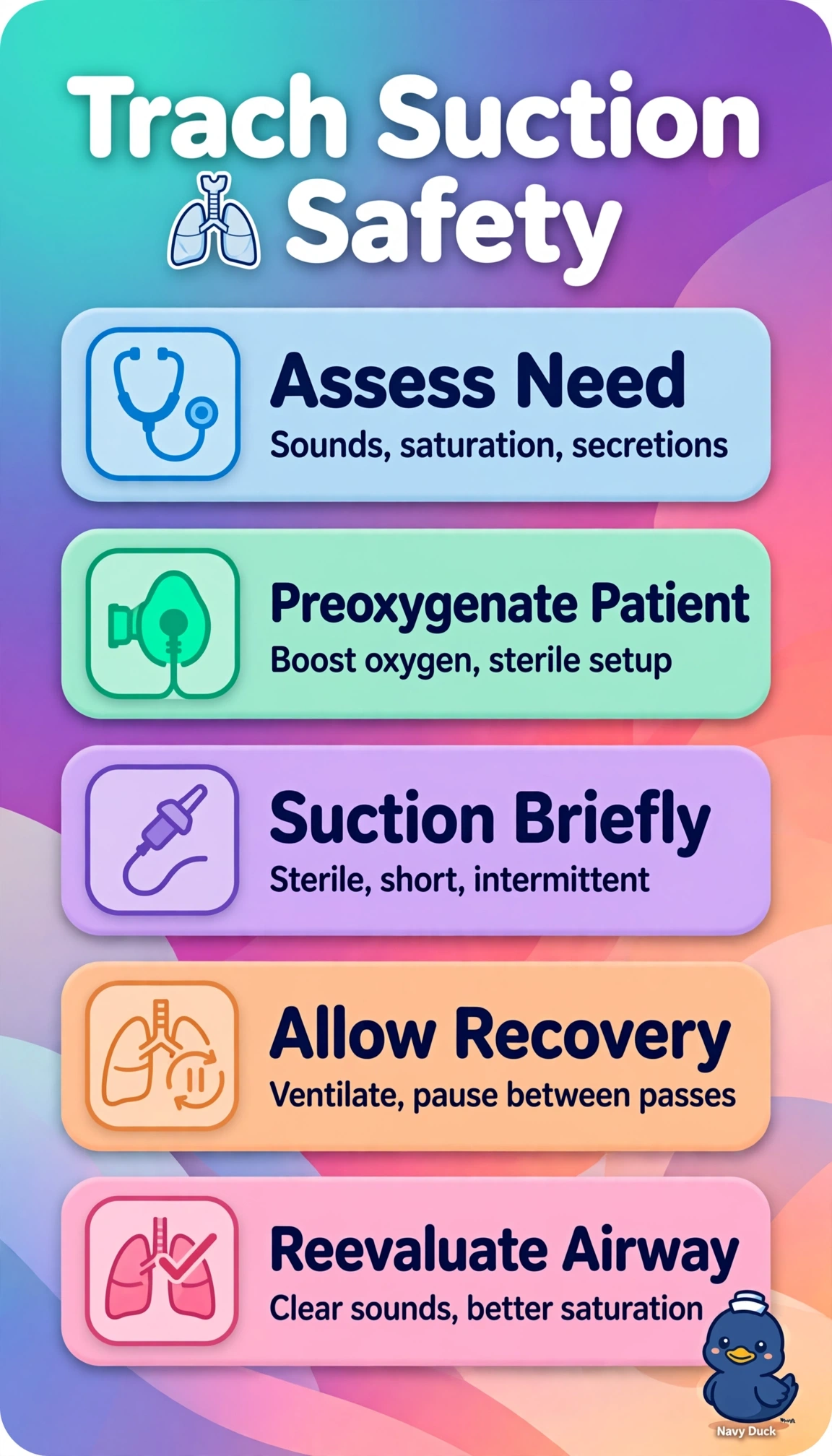
The direct tracheostomy route with sterile technique, limited pressure, and brief passes is indicated because gurgling, visible secretions, SpO2 89%, coarse rhonchi, and weak cough signal lower-airway obstruction that needs direct clearance, and the new stoma demands strict asepsis while low pressure and short intermittent passes reduce mucosal injury, hypoxia, and vagal response. Nasotracheal suctioning performed with sterile technique and brief passes fails on route selection because it is an accepted method when no artificial airway exists, yet here it adds unnecessary nasal and pharyngeal trauma and is less direct and effective when tracheal access is already present. Oropharyngeal suctioning performed with sterile technique and brief passes fails on anatomical reach because it is ideal for oral-pharyngeal secretions in an alert patient with intact gag, yet it cannot clear tracheal and bronchial secretions responsible for desaturation and rhonchi. Tracheostomy suctioning performed with clean technique fails on infection control because clean technique is standard for chronic home tracheostomy care, yet a new hospital tracheostomy requires sterile technique to protect the fresh wound and lower airway. A key exam caveat is to link sterility to wound age and setting rather than to stability alone, and a practical check is to preoxygenate, monitor saturation and rhythm, limit each pass to 10 to 15 seconds with rest between passes, and reassess breath sounds and secretion clearance.