
A newly admitted older adult with pneumonia has a chart showing penicillin allergy, home metoprolol and apixaban, a new order for ceftriaxone, a signed DNR bracelet note, and missing influenza and pneumococcal vaccine records. Which record evaluation best reconciles history, orders, medications, code status, and vaccines?
Select an answer to reveal the explanation.
Short Explanation
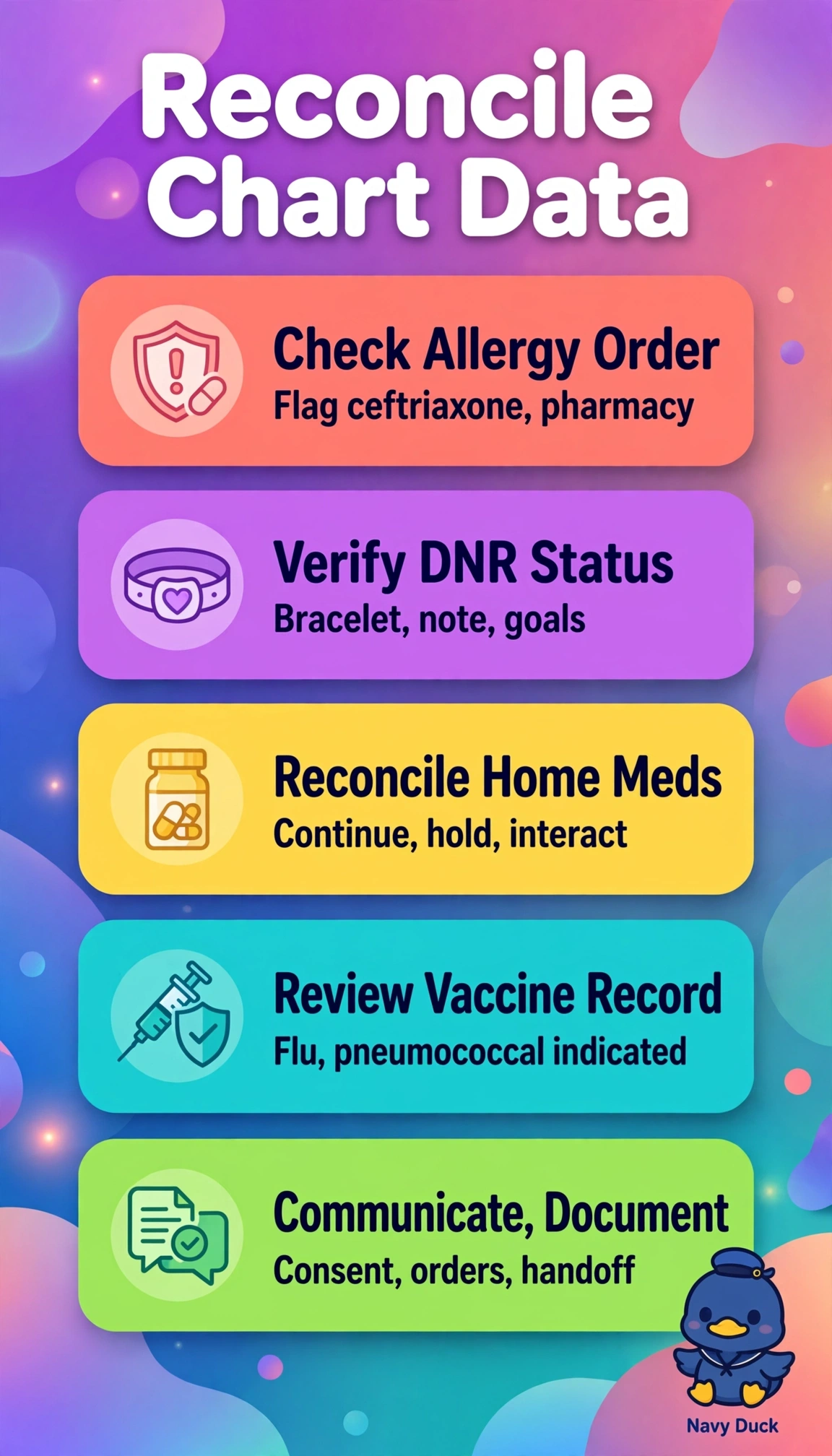
You’re connecting allergy, medication, code-status, and vaccine records before a gap causes harm. Think of chart review as a preflight check: your reconciliation helps keep each part of the plan safe.
Full Explanation
The response that flags the ceftriaxone–allergy concern, verifies DNR status and the anticoagulant plan, and addresses missing vaccines best integrates the record. A penicillin allergy requires clarification before ceftriaxone: cross-reactivity with third-generation cephalosporins is low, about 1 to 2 percent, but the reaction’s type and severity guide safety and whether the prescriber should consider alternative coverage. Apixaban requires reconciliation for continuation, bleeding risk, and acute-illness adjustments; the signed DNR bracelet note must be checked against valid orders and the patient’s goals, with team communication. Missing influenza and pneumococcal records call for assessment and counseling based on age and risk. Charting vaccines as current without evidence overlooks preventive care and makes the record inaccurate. Reconciling metoprolol and apixaban, confirming DNR documentation, and counseling about missing vaccines does not resolve the allergy concern before starting ceftriaxone. Clarifying the penicillin allergy, reviewing metoprolol with apixaban, and ordering vaccines covers those issues but omits DNR verification, leaving resuscitation preferences unconfirmed. Exam caveat: a response may address several domains yet still miss a safety-critical gap. Practical check: confirm the allergy reaction, compare home medications with active orders, verify the signed code-status order with the patient or surrogate, and check the vaccine registry before documenting status or ordering vaccines.