
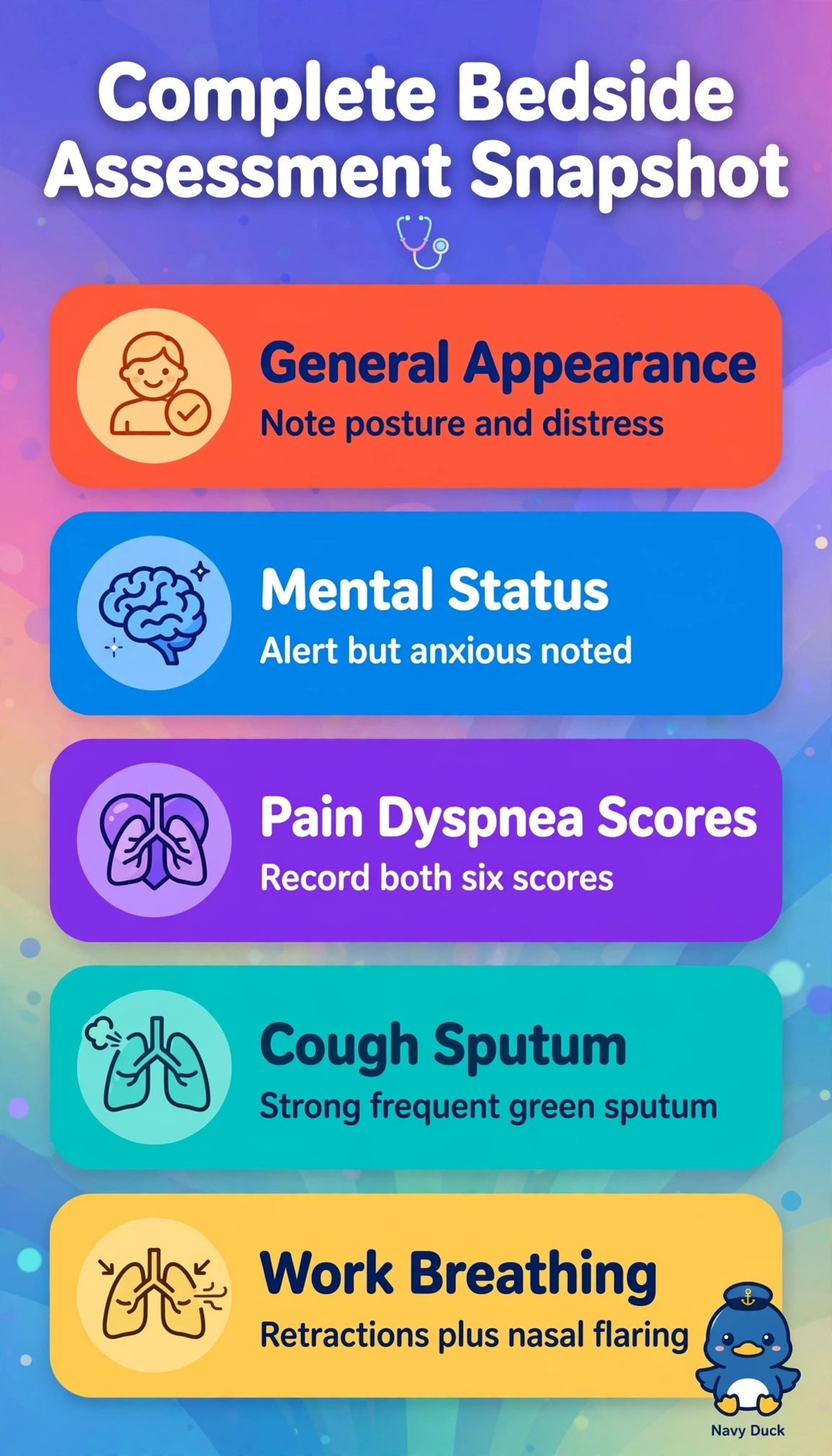
A respiratory therapist assesses a 72-year-old patient with community-acquired pneumonia on a medical-surgical unit. The patient sits upright leaning forward, alert but anxious, reports pleuritic chest pain 6/10 and dyspnea 6/10, has a frequent strong cough with greenish sputum, and shows intercostal retractions with nasal flaring. Which assessment summary best documents general appearance, mental status, pain, dyspnea, cough, sputum, and work of breathing?
Select an answer to reveal the explanation.
Short Explanation
You're piecing together a full bedside snapshot, not just one vital sign. Your note clicks when work-of-breathing clues line up with pain, dyspnea scores, cough, and sputum like instruments in the same band.
Full Explanation
Accurate clinical assessment requires integrating posture and distress with neurologic status, quantified symptoms, cough effectiveness, sputum character, and objective signs of respiratory muscle load, because leaning forward with retractions and flaring reflects increased work of breathing and impending fatigue, anxiety reflects sympathetic response and hypoxemia-related distress while remaining alert, numeric dyspnea and pleuritic pain scores track severity and response to therapy, and a frequent strong cough with greenish sputum indicates intact clearance with purulent lower airway infection. Documenting denial of chest pain fails by pain assessment concept because pleuritic pain modifies breathing pattern, splinting, and differential diagnosis and cannot be omitted when present. Documenting clear thin sputum fails by sputum assessment concept because color, thickness, and volume distinguish infection, inflammation, and edema and change airway clearance and antibiotic decisions. Documenting relaxed posture without retractions fails by work-of-breathing assessment concept because accessory muscle use, retractions, flaring, and position signal increased load and severity even when dyspnea scores overlap. For the exam, do not substitute a single dyspnea number for the full appearance, mental status, cough, and breathing pattern picture, and at the bedside verify posture, alertness, pain and dyspnea scores, cough strength and frequency, sputum color and consistency, and retractions or flaring before charting.