
A 34-year-old asthmatic in an outpatient clinic develops severe wheezing, stridor, chest pain, SpO2 86%, tachycardia 132, and hypotension minutes after starting a nebulized medication with tachyphylaxis unrelieved by repositioning. Which care-plan change best addresses termination for severe adverse events?
Select an answer to reveal the explanation.
Short Explanation
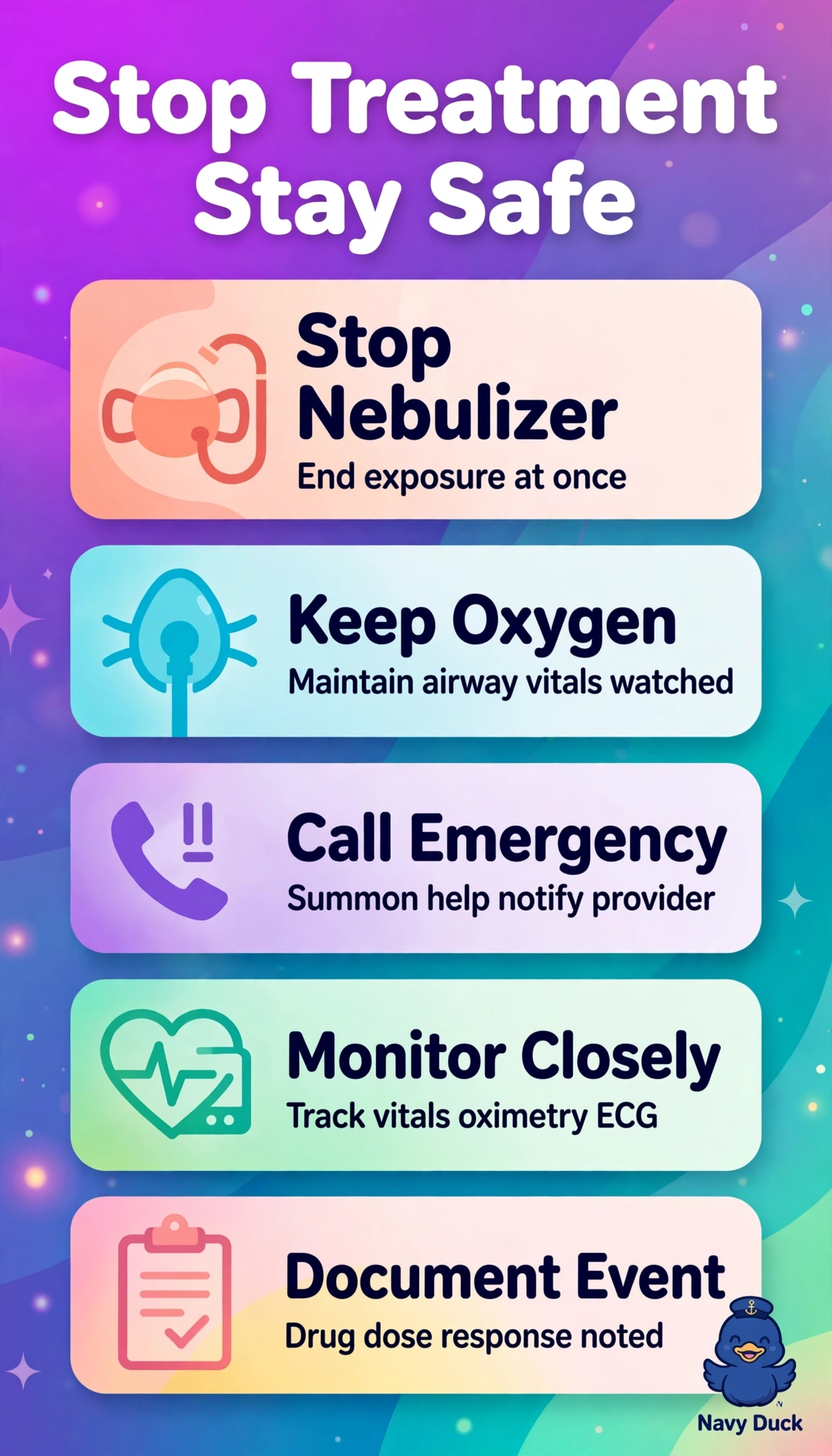
You’re seeing severe airway and circulatory warning signs, so stopping the medication matters more than finishing treatment. This termination response means you stop the nebulizer, call emergency help, and watch the patient closely.
Full Explanation
The correct response is to terminate the nebulized medication, maintain oxygen, summon emergency response, and monitor the airway and vital signs. Stridor, refractory wheezing, chest pain, SpO2 of 86%, tachycardia of 132, and hypotension after a nebulized drug indicate severe airway and circulatory compromise; full cessation and emergency mobilization help prevent arrest. Briefly pausing the medication while maintaining oxygen, summoning help, and monitoring may fit mild, transient intolerance or positional desaturation, but not multisystem instability with tachyphylaxis unrelieved by repositioning: a pause permits re-exposure rather than ending treatment. Terminating the medication, maintaining oxygen, and monitoring while only notifying the provider urgently misses the needed emergency escalation; provider notification may fit order issues or stable deterioration, but outpatient stridor with hypoxemia and hypotension calls for immediate emergency activation. Terminating the medication, maintaining oxygen, and summoning help while preparing for prompt transfer instead of monitoring misses the immediate need for continuous airway and vital-sign assessment to guide resuscitation; transfer preparation follows stabilization. Exam caveat: severity thresholds matter, so do not use pause, rate reduction, or provider-notification strategies for life-threatening compromise. Practical check: confirm the nebulizer is off and disconnected, keep oxygen on, and assign continuous observation of breathing, SpO2, heart rate, and blood pressure until the emergency team takes over.