
A heated high-flow nasal cannula at 50 L/min alarms for low airway temperature with heavy condensate in the circuit and cool aerosol. The reservoir has low water, the probe is dislodged, and the circuit sags below the bed. Which troubleshooting sequence best restores heated high-flow humidifier performance?
Select an answer to reveal the explanation.
Short Explanation
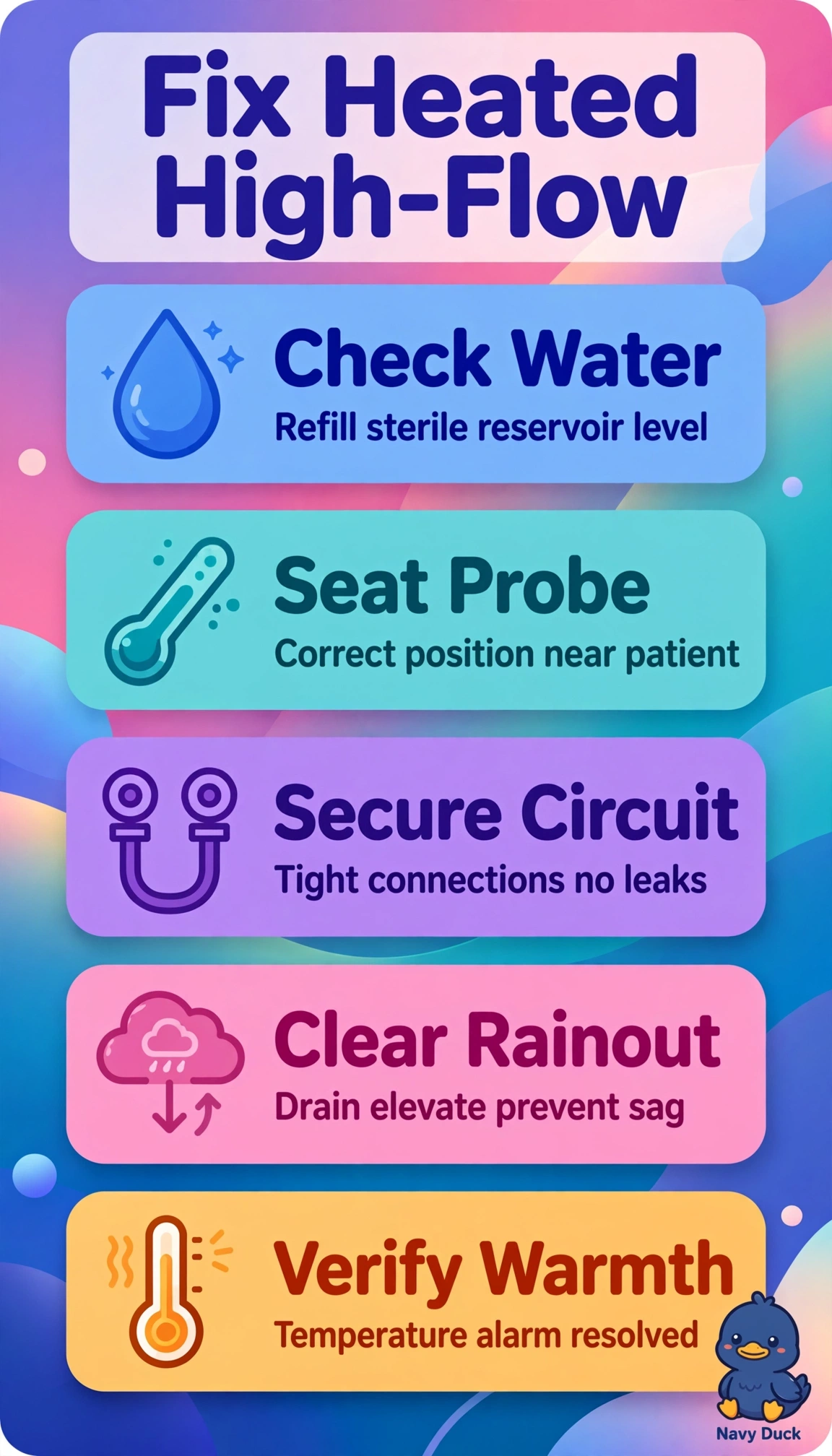
You’re dealing with a chilly, sagging hose full of puddles, so refill the sterile water, reseat the probe, secure the connections, drain the condensate, and lift the circuit to remove low loops. That clears the rainout and helps restore warm, humid gas for your patient.
Full Explanation
Heated high-flow performance depends on adequate sterile water, accurate temperature feedback, secure circuit connections, and effective condensate drainage. Refilling the reservoir, reseating the dislodged probe, securing connections, draining condensate, and repositioning the circuit below the bed addresses each fault: it restores water supply and sensing, supports heat transfer, removes pooled water, and prevents dependent loops that encourage cooling and rainout. Reseating the probe, securing connections, draining condensate, repositioning the circuit, and increasing the set temperature leaves the low-water reservoir uncorrected; more heat cannot replace water needed for humidification and may stress the heater. Refilling the reservoir, securing connections, draining condensate, repositioning the circuit, and checking heater settings leaves the probe dislodged, so inaccurate temperature feedback can continue to cause low airway temperature despite adequate water and power. Refilling the reservoir, reseating the probe, securing connections, draining condensate, and monitoring flows leaves the sagging circuit in place; condensate can collect again, cooling aerosol and contributing to resistance and alarms. An exam caveat is to correct water supply, probe position, and circuit routing before changing temperature settings or flow. At the bedside, confirm a steady chamber water level, a seated probe with proximal temperature rising toward target, warm humidified gas, no gurgling, and a drained circuit routed without low loops.