
On a medical floor a 45-year-old with retained secretions in the left lower lobe is alert with stable vitals, adequate hydration, and no hemoptysis, fractures, or increased intracranial pressure. Which postural drainage, percussion, and vibration technique best clears this lobe?
Select an answer to reveal the explanation.
Short Explanation
Gravity is your free assistant when mucus sits low. Tipping the target lung up lets secretions drain like syrup — drainage plus shaking loosens them for cough.
Full Explanation
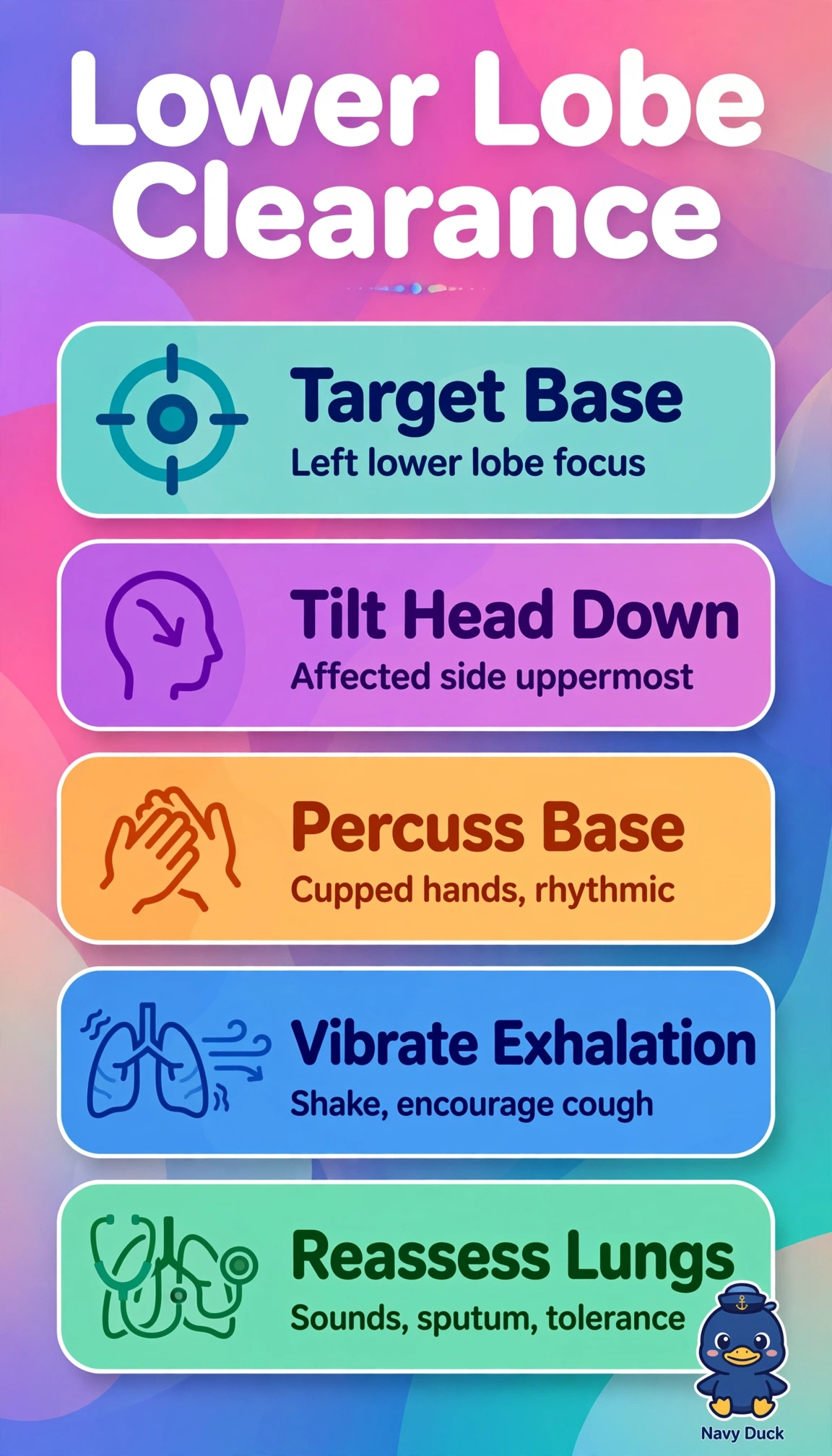
Correct clearance requires gravity-assisted drainage with affected lung uppermost and head-down tilt because left lower lobe basal segments drain superiorly toward the hilum, so right side-lying with left side elevated and Trendelenburg lets secretions flow centrally where cupped percussion over posterior left base loosens adherent mucus and expiratory vibration propels it cephalad for expectoration, safe here because the patient is alert, hydrated, stable, and has no hemoptysis, fractures, or raised intracranial pressure. Left-side-dependent head-down positioning fails by dependency concept because a dependent involved lung is compressed with reduced excursion and segments remain below the carina, preventing gravity flow despite correct tilt and hand forces, a setup used to drain the opposite lung. Percussing and vibrating over the right base fails by site concept because the retained secretions are in the left lower lobe, so manual techniques over the unaffected lung do not mobilize them and only add patient burden. Upright sitting leaning forward with posterior percussion fails by gravity concept because upright posture places basal segments dependent below the hilum opposing drainage, a modification reserved for intolerance to Trendelenburg from dyspnea, reflux, raised intracranial pressure, or instability, none present here. Exam caveat is to distinguish upright apical drainage from Trendelenburg basal drainage and confirm segments by imaging and auscultation. Practical check is to verify Trendelenburg tolerance, ensure hydration, percuss with cupped hands avoiding spine, vibrate only on exhalation, then prompt huff cough and reassess sounds and sputum.