
On a busy medical unit a supervisor asks a new therapist to chart a bronchodilator treatment as given when it was missed because of staffing, saying quality scores will suffer and no harm occurred since the patient is stable. The patient has capacity and expects accurate records. Which medical ethics reasoning should guide the therapist response to the charting request?
Select an answer to reveal the explanation.
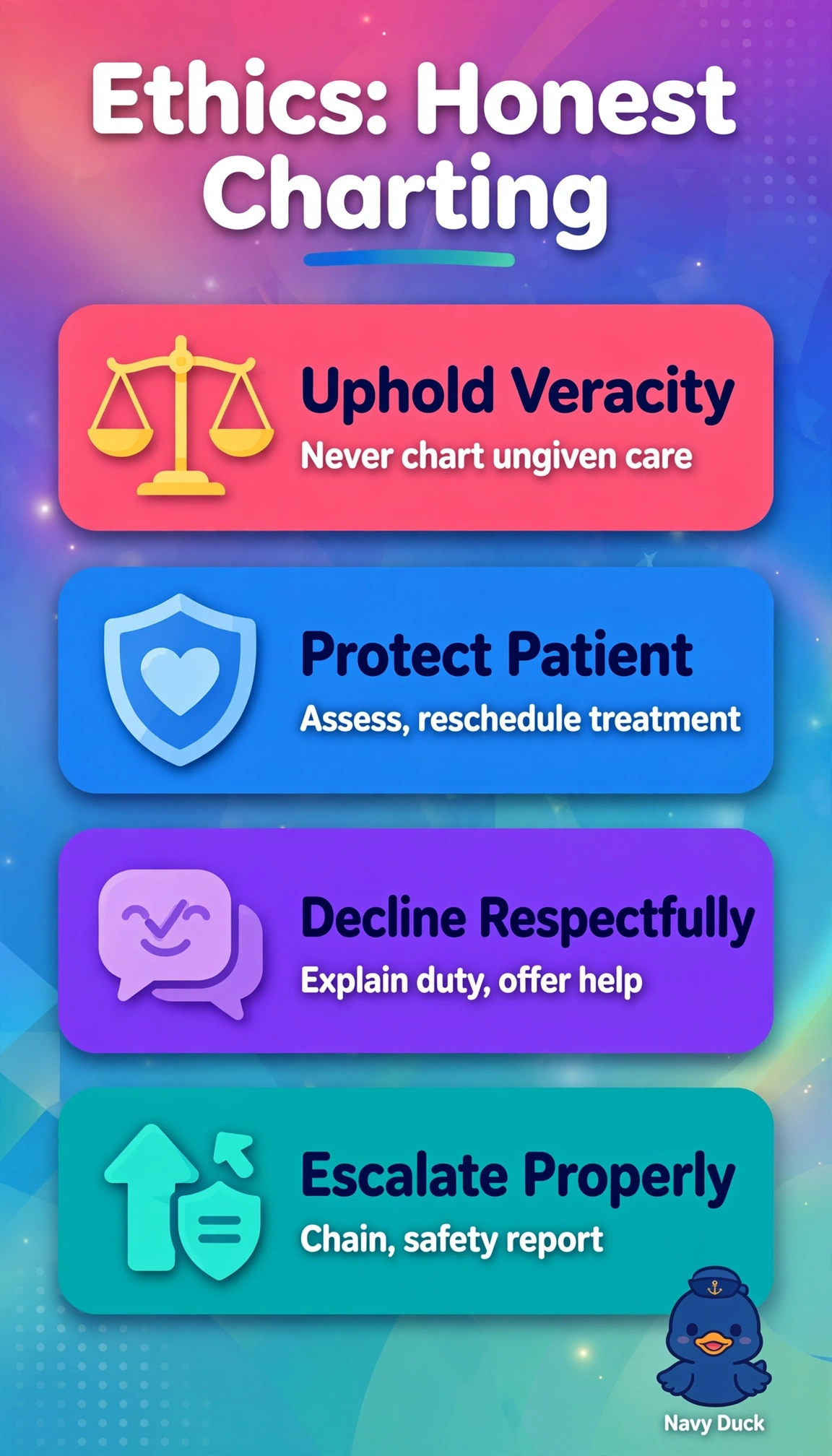
Short Explanation
You held the line where honesty protects patients first. Accurate charting is your compass, and veracity keeps trust, safety, and your license intact under pressure.
Full Explanation
The correct reasoning protects veracity and patient-centered accountability because the medical record grounds safe handoffs, clinical decisions, and trust, especially when a capacitated patient expects honesty, so refusing to chart the missed bronchodilator as given, reporting the staffing-related omission through the chain, and ensuring the respiratory care is delivered or rescheduled addresses both safety and system cause without trading integrity for quality scores. The private-resolution approach declines falsification and provides the treatment after only speaking privately with the supervisor, showing beneficence and loyalty but failing stewardship and transparency by bypassing formal reporting needed to track staffing failures and prevent recurrence. The document-and-report-only approach refuses falsification and files properly yet returns to duties without arranging makeup care, satisfying honesty and accountability but failing continuity and nonabandonment because charting plus reporting does not treat the underlying need. The accurate-charting-with-nondisclosure approach documents and reports upward while withholding discussion to avoid worrying the stable patient, respecting record-keeping but failing autonomy and informed partnership because stability does not remove a capable patient's right to know and participate in next steps. As an exam caveat, lack of apparent harm and pressure to protect metrics never justify inaccurate charting, and items often tempt informal or paternalistic shortcuts that appear kind or efficient but violate duty. As a practical check, verify what was actually done, chart only that, notify the chain, inform the patient plainly, and confirm rescheduled care is ordered and completed.