
A 55-year-old on volume control ventilation with PEEP 10 and FiO2 0.60 needs CT across the hospital for suspected pulmonary embolism with only one respiratory therapist and one nurse available. Which intra-hospital transport preparation best maintains safe ventilation and monitoring en route?
Select an answer to reveal the explanation.
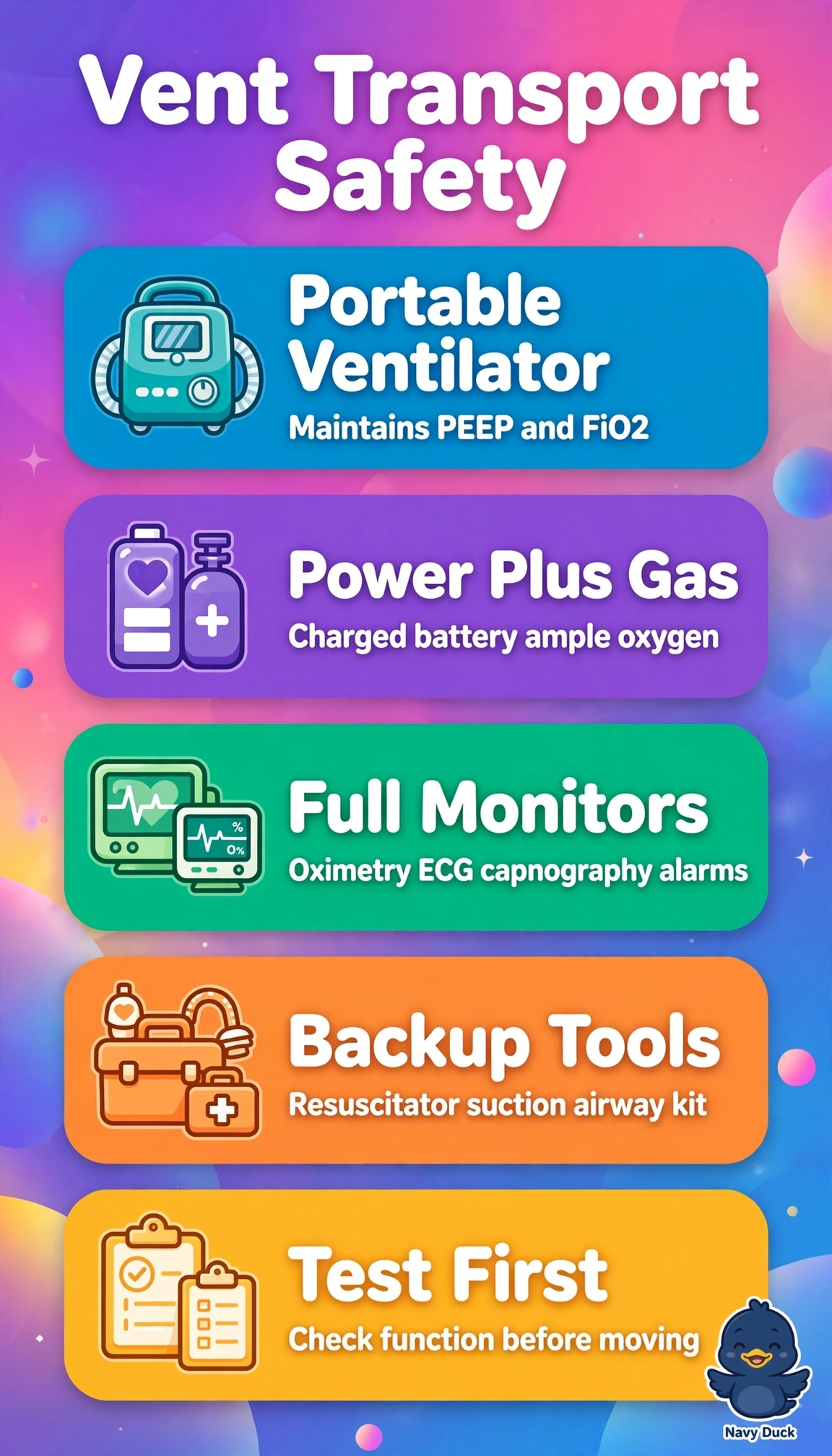
Short Explanation
Hallways hide surprises, so you bring the ICU with you. Transport readiness means tested power, gas, alarms, and backup tools before any wheels roll.
Full Explanation
Safe intra-hospital transport on volume control with PEEP 10 and FiO2 0.60 requires replicating ICU support portably, which is why the fully prepared transport ventilator setup is correct because a charged battery-powered ventilator preserves recruitment and consistent tidal volume delivery, calculated portable oxygen prevents desaturation during transit and CT delays, continuous pulse oximetry, capnography, ECG and blood pressure monitoring detect deterioration from suspected pulmonary embolism, and a tested resuscitator and portable suction provide immediate rescue for disconnection, plugging, or vomiting. The ventilator setup relying on destination suction fails by en route rescue readiness, since obstruction or aspiration can occur in hallways or elevators where wall suction is unavailable and suction must travel tested with the patient. The ventilator setup with low oxygen reserve fails by oxygen logistics for high demand, since FiO2 0.60 with PEEP-dependent shunt consumes cylinders rapidly and transit plus scanner waiting commonly exceeds estimates, risking profound hypoxemia mid-transport. The manual ventilation with PEEP valve approach fails by ventilation consistency and staffing safety, since hand bagging cannot reliably deliver set volume, rate, PEEP and FiO2 and occupies the single therapist, reducing monitor surveillance and response. Exam caveat is that stable appearance on high PEEP and FiO2 remains high risk and short distance never waives full preparation, and practical check is to match transport to ICU settings, calculate oxygen for twice expected time, confirm battery and alarms, verify monitors, and test suction and resuscitator before leaving bedspace.