
A skilled nursing facility reports several concentrators alarming low purity, one liquid oxygen base venting vapor, and flowmeters that drift between settings on a busy evening with limited backup cylinders. You are asked to troubleshoot the bulk gas supply chain. Which troubleshooting sequence best restores safe concentrators, liquid, flowmeters, and analyzers?
Select an answer to reveal the explanation.
Short Explanation
You're hunting upstream causes before trusting any dial or alarm. Gas systems behave like plumbing — pressure and filters first, then fixtures, and your verification proves the fix is real.
Full Explanation
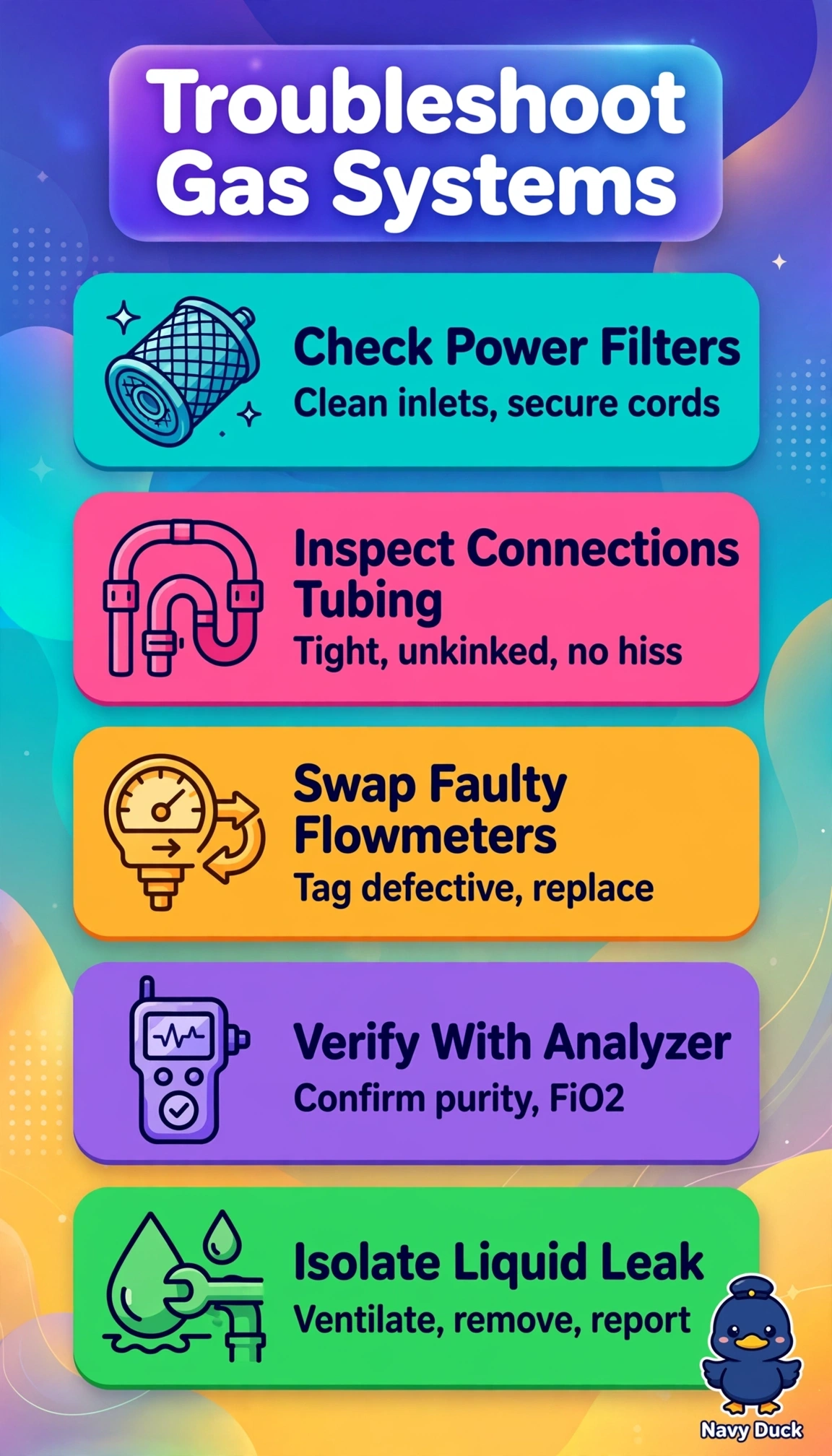
The correct sequence restores safety across all domains because low purity alarms on multiple concentrators most often reflect shared correctable causes such as power interruption, clogged intake filters, or loose connections that impair sieve bed performance and inlet flow, systematic correction of which restores output, while drifting flowmeters indicate worn valves or damaged floats that cannot be trusted and must be swapped to ensure accurate delivery, independent verification with a calibrated analyzer then confirms purity has returned to therapeutic range rather than assuming recovery, and isolation of the venting liquid base removes cryogenic and oxygen-enrichment hazard while preserving limited cylinders. The approach relying on indicator lights alone fails on measurement validity because built-in lights are qualitative alarms subject to drift and do not quantify concentration, allowing subtherapeutic purity to persist undetected. The approach recalibrating drifting meters in place fails on device integrity because adjustment cannot correct mechanical wear, cracked floats, or internal leaks, leaving flow unpredictable under changing back pressure. The approach keeping the venting base online until after peak demand fails on hazard control because continued venting wastes supply and risks freeze injury and fire enrichment. An exam caveat is that deferral options look attractive under staffing pressure, yet leaking liquid oxygen and unverified purity are never deferrable. A practical check is to confirm analyzer calibration, tag removed meters, document sustained purity per specification, verify venting stopped with frost check, and log reserve.