
A 59-year-old suddenly becomes dyspneic with pleuritic pain, tachycardia, tachypnea, hypoxemia unresponsive to oxygen, hypotension, and jugular distension after knee surgery. ECG shows sinus tachycardia and bedside echo suggests right strain. Which cardiopulmonary support approach best manages suspected massive pulmonary embolism with obstructive shock?
Select an answer to reveal the explanation.
Short Explanation
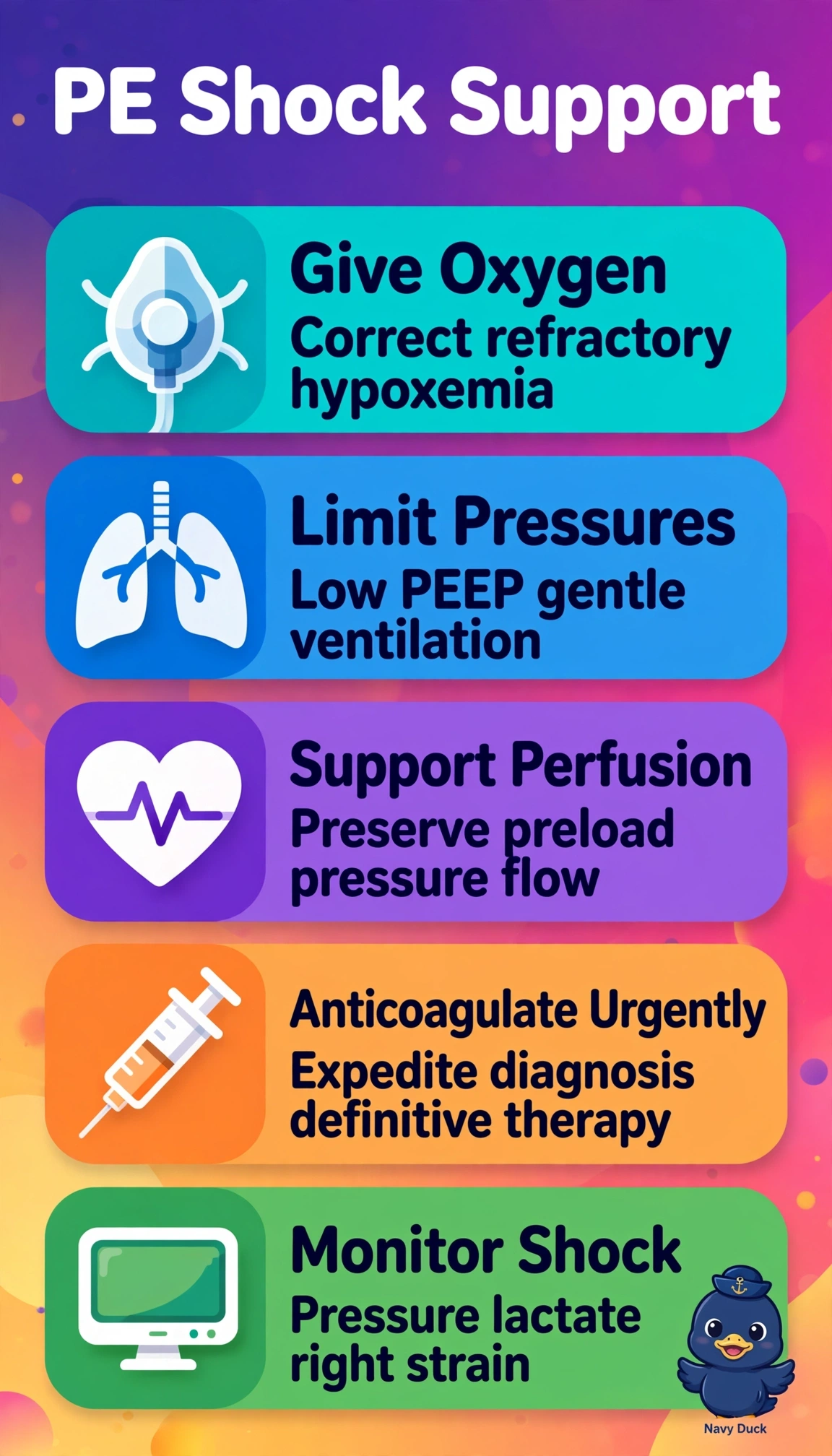
A big clot is blocking flow out of the right heart. You need oxygen with gentle pressures and perfusion support fast — not drowning lungs or cranking pressures that squash return.
Full Explanation
The abrupt postoperative dyspnea, pleuritic pain, refractory hypoxemia, hypotension, jugular distension, sinus tachycardia and right strain indicate obstructive shock from suspected massive pulmonary embolism with high pulmonary vascular resistance, right ventricular overload and reduced left preload, so oxygen to reduce hypoxic vasoconstriction, low intrathoracic pressure strategy with low volumes and low PEEP, cautious perfusion support with small fluid assessments plus early norepinephrine, and immediate heparin with urgent imaging and reperfusion planning is coherent. Deferring heparin until D-dimer and duplex return fails on timing because unstable high-probability embolism requires empiric anticoagulation and D-dimer cannot exclude massive disease. Raising PEEP to force oxygen correction fails on afterload because higher intrathoracic pressure reduces venous return, raises pulmonary resistance and can collapse output. Giving rapid large-volume fluids to normalize pressure fails on ventricular interdependence because overfilling distends the failing right ventricle, shifts the septum, lowers left filling and delays needed vasopressors. An exam caveat is that hypotension with distended veins, clear lungs and isolated right strain favors obstruction over left failure, where aggressive fluids, high PEEP or delayed heparin look tempting but worsen outcome. A practical check is mean pressure, lactate, urine output and right size after oxygen, low-pressure ventilation, norepinephrine readiness, weight-based heparin and expedited angiography.