
A 64-year-old with severe COPD is ready for discharge after a hypercapnic exacerbation treated with steroids, now stable on home oxygen with continued smoking and poor inhaler technique. Which outpatient discharge and rehabilitation plan best reduces readmission and improves function?
Select an answer to reveal the explanation.
Short Explanation
Recovery really happens after you leave the hospital doors. Pulmonary rehabilitation plus coaching and prevention rebuilds strength and keeps the next flare from flooring you.
Full Explanation
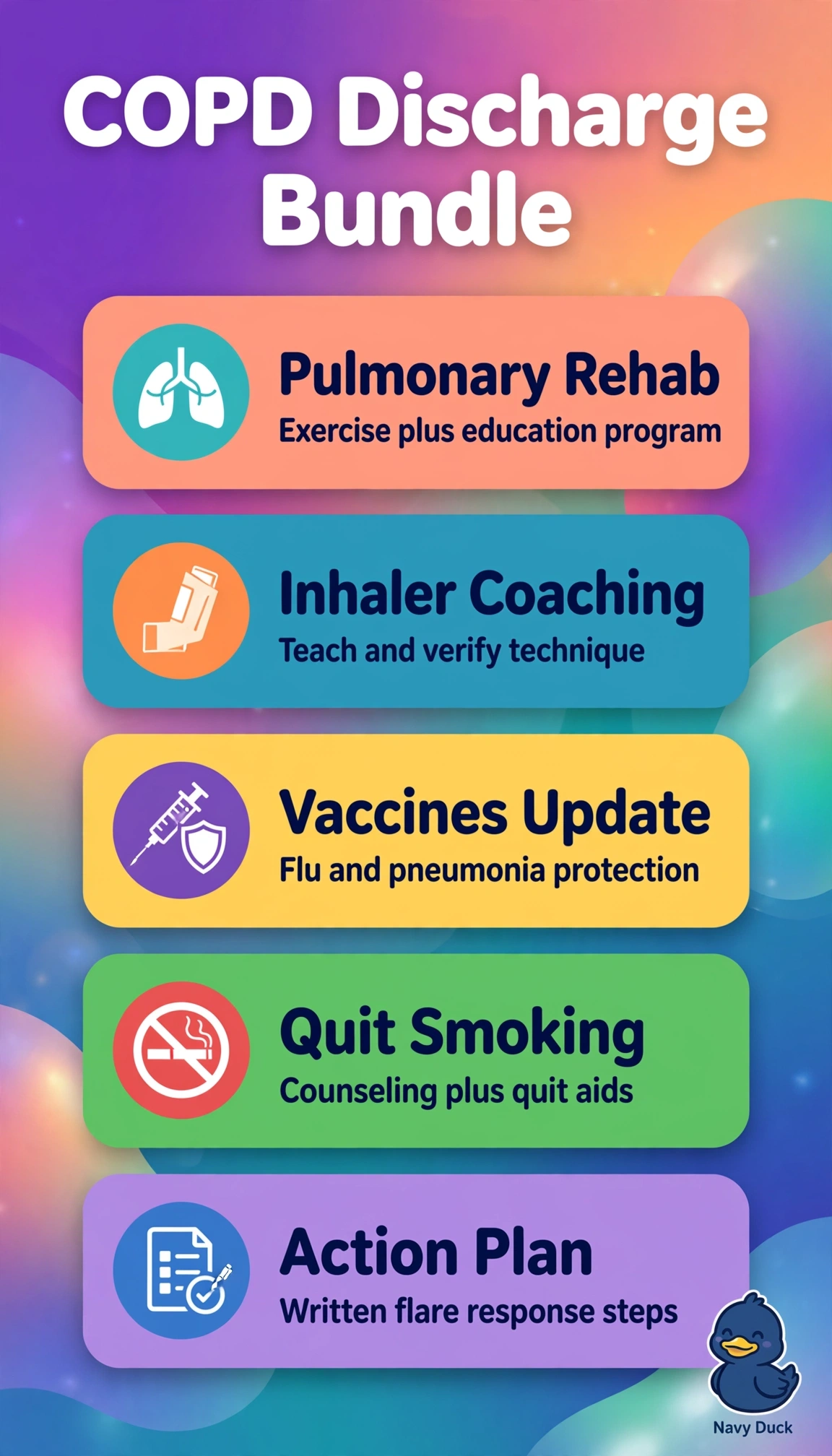
The comprehensive discharge bundle is correct because severe COPD after a hypercapnic exacerbation has high readmission and functional decline risk that is best reduced by combining supervised pulmonary rehabilitation for exercise capacity and dyspnea, hands-on inhaler training with teach-back for poor technique, influenza, pneumococcal, RSV and updated COVID vaccines to prevent triggers, structured smoking cessation with behavioral support plus pharmacotherapy for continued smoking, and a written action plan with early follow-up while continuing prescribed home oxygen with later reassessment. The unsupervised walking with routine follow-up plan fails by rehabilitation concept because general activity advice is commonly used and helpful in mild stable disease but does not provide the supervised exercise, education, nutritional, psychological and self-management components proven to improve function and reduce hospitalizations after severe exacerbations. Deferring vaccines until full recovery fails by prevention timing concept because delaying immunization after acute illness and short-course steroids is a familiar primary-care practice for live vaccines, yet inactivated respiratory vaccines are safe, recommended at discharge, and critical here since infection is the leading trigger for relapse and delay leaves a vulnerable window. Relying on brief smoking advice without pharmacotherapy and structured support fails by addiction-treatment intensity concept because brief counseling is widely used and appropriate for opportunistic settings, but persistent smoking in severe oxygen-dependent COPD requires intensive combined behavioral intervention and drug therapy to achieve abstinence and slow decline. An exam caveat is that recent systemic steroids and acute illness do not contraindicate inactivated vaccines but do affect live vaccines and oxygen prescribing, and persistent hypercapnia after recovery should prompt evaluation for home noninvasive ventilation rather than oxygen alone. A practical check is to confirm resting and exertional oximetry on prescribed oxygen, observe inhaler plus spacer technique with teach-back, document vaccine administration, refer to pulmonary rehabilitation within four weeks and to intensive cessation services, and provide a written action plan with rescue criteria and 72-hour and 30-day follow-up arranged.