
A 78-year-old with end-stage COPD in a 200-bed community hospital refuses intubation despite hypercapnic failure, is alert and understands risks after discussion, while family urges intubation and the team believes ventilation could prolong life briefly. Which medical ethics reasoning best guides respect for autonomy with beneficence and nonmaleficence?
Select an answer to reveal the explanation.
Short Explanation
You've heard a clear no from someone who gets the stakes. Honoring autonomy is like respecting a signed detour — you reroute care toward comfort, not force the highway.
Full Explanation
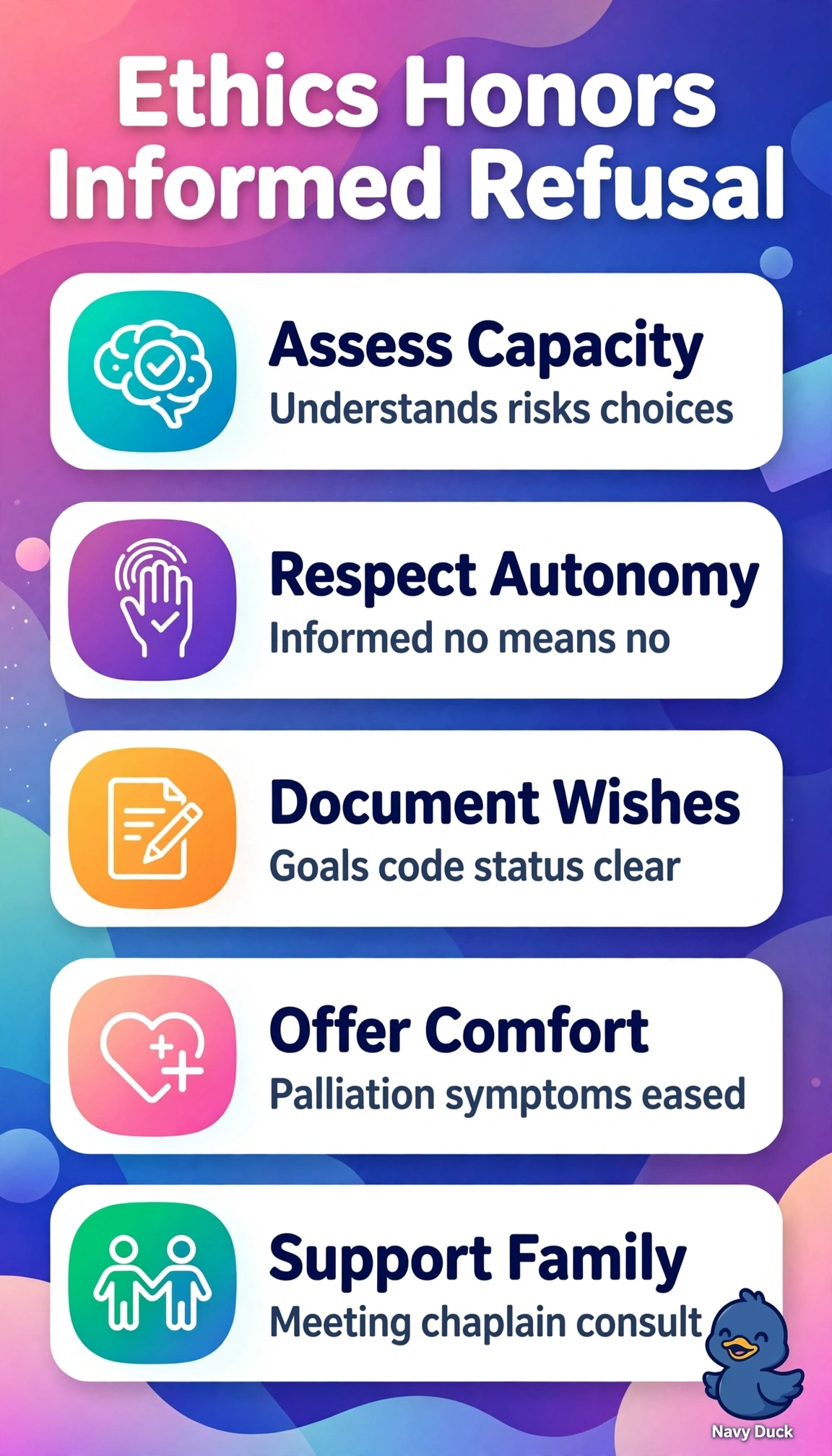
The correct reasoning upholds autonomy because alertness with understanding of risks after discussion establishes capacity for informed refusal, so beneficence and nonmaleficence support forgoing burdensome intubation that offers only brief prolongation in end-stage COPD with hypercapnic failure in favor of comfort-focused noninvasive and palliative measures to relieve dyspnea and suffering. A family-authorized time-limited trial of intubation is a standard beneficence-based strategy but fails here on autonomy because surrogate hope and potential brief survival cannot override capacitated refusal. Continued maximal noninvasive curative therapy while awaiting family acceptance is commonly used to avoid conflict but fails here on patient-centered goals because it defers the requested comfort transition and prolongs burdensome care to satisfy surrogates rather than the patient, violating autonomy and nonmaleficence. Routine formal psychiatry review of capacity is reasonable when doubt exists but fails here on clinical facts because capacity is already demonstrated at bedside without confusion, psychosis, or fluctuating understanding requiring further adjudication. Exam caveat: brief prolongation of life does not create an exception to informed refusal, and family urgency often distracts from hierarchy placing capacitated patient first. Practical check: document understanding, appreciation, reasoning, and consistent choice, clarify comfort preferences, initiate palliation, and provide structured empathetic family counseling with palliative care involvement.