
A 67-year-old with known COPD presents with increased dyspnea, wheeze, pH 7.31, PaCO2 62, and persistent accessory muscle use after albuterol-ipratropium, steroids, and antibiotics. He is alert, handling secretions, and hemodynamically stable. Which combined noninvasive ventilation and medical treatment plan best manages this hypercapnic exacerbation?
Select an answer to reveal the explanation.
Short Explanation
You’re giving your breathing muscles a rest while the medicines calm the flare. BiPAP support helps you move more air and clear CO₂ as bronchodilators and steroids treat the airway narrowing and inflammation.
Full Explanation
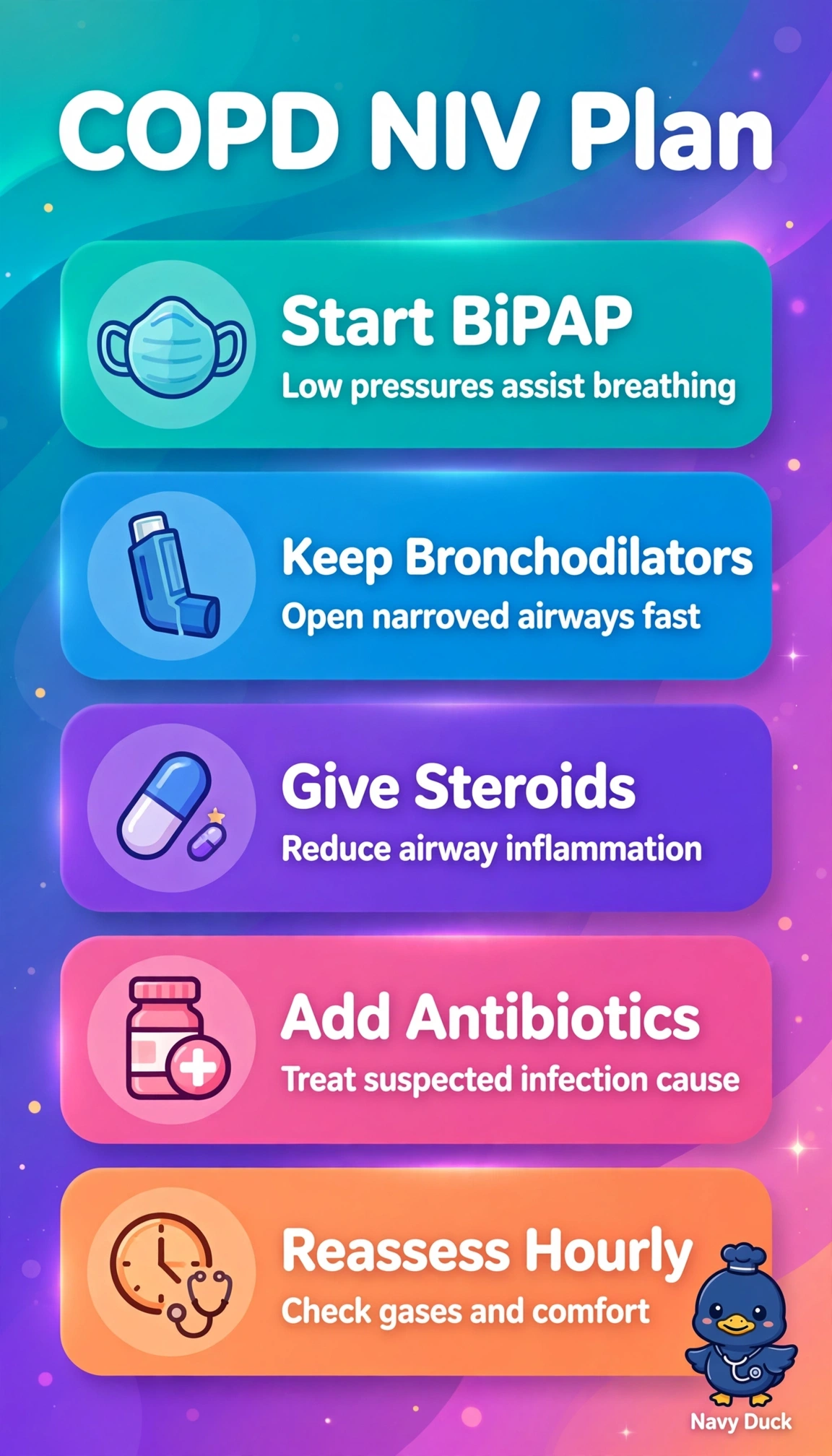
The best plan is BiPAP with low IPAP-EPAP plus bronchodilators, steroids, and antibiotics. A pH of 7.31, PaCO₂ of 62, and persistent accessory muscle use despite initial treatment indicate hypercapnic ventilatory failure requiring support. Because he is alert, can handle secretions, and is stable, bilevel pressure can unload inspiratory muscles, increase tidal volume, lower PaCO₂, and improve pH while the medicines treat bronchospasm, inflammation, and infection. CPAP with oxygen and the same medicines may help hypoxemia or pulmonary edema, but constant pressure without pressure support does not adequately augment ventilation or clear CO₂. BiPAP with bronchodilators and steroids while holding antibiotics may reflect stewardship when bacterial infection is unlikely, but here antibiotics were already indicated and started; stopping them risks leaving the precipitant untreated. Immediate intubation with the medicines is appropriate for impaired consciousness, inability to protect the airway or clear secretions, instability, or worsening acidosis despite noninvasive ventilation. It is not the best initial step for this stable, cooperative patient without a contraindication, and exposes him to avoidable invasive complications. Exam caveat: hypercapnia with acidosis and increased work of breathing favors bilevel ventilation over CPAP or high-flow oxygen alone. Practically, check mask seal and patient-ventilator synchrony, then reassess clinical status and blood gases within one to two hours; escalate promptly if he fails to improve.