
A 45-year-old after a motor vehicle crash has right-sided rib fractures with paradoxical chest motion, severe pleuritic pain, tachypnea, and hypoxemia on 2 L. Chest radiograph shows contusion without large pneumothorax. Which respiratory management strategy best supports ventilation for flail chest with paradoxical motion?
Select an answer to reveal the explanation.
Short Explanation
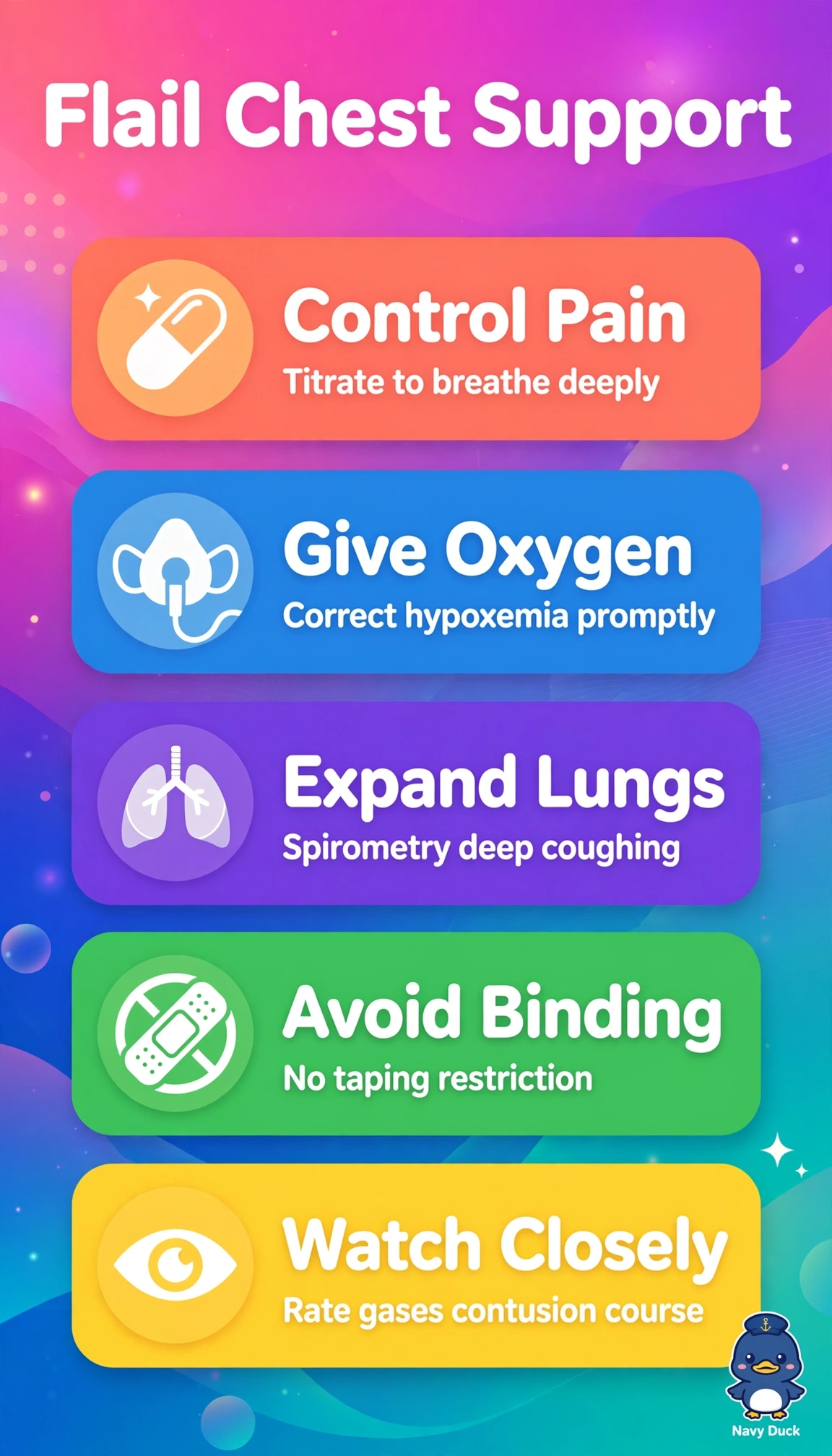
You’re addressing pain-driven splinting as well as the flail chest. Titrated pain relief, oxygen, and lung expansion therapy help you breathe deeply and cough, while close monitoring can catch worsening breathing early.
Full Explanation
Titrated analgesia, supplemental oxygen, lung expansion therapy, and close monitoring best support ventilation because paradoxical motion, lung contusion, severe pleuritic pain, tachypnea, and hypoxemia impair chest excursion, cough, and alveolar recruitment. Titrating analgesia to functional effect reduces splinting so you can breathe deeply and clear secretions; oxygen treats hypoxemia, while lung expansion therapy, including incentive spirometry and mobilization, helps prevent atelectasis. Close monitoring allows early detection of worsening contusion or fatigue. Supplemental oxygen and lung expansion with scheduled oral acetaminophen as the only analgesic fails because severe pain usually requires multimodal analgesia titrated to function; one mild agent may not enable adequate ventilation or secretion clearance, increasing atelectasis and pneumonia risk. Titrated analgesia, oxygen, and lung expansion followed by brief observation and discharge fails because hypoxemia, tachypnea, flail physiology, and contusion call for inpatient monitoring and serial reassessment, unlike a minor isolated fracture. Adding routine immediate chest tube drainage fails because contusion without a large pneumothorax or hemothorax is not an indication for pleural drainage, which does not stabilize paradoxical motion and may cause harm. Exam caveat: flail chest alone does not make routine chest tube drainage appropriate without pleural air or blood. Practical check: reassess pain, respiratory rate and effort, oxygen saturation, spirometry volumes, and lung exam to confirm analgesia enables expansion without oversedation.