
In the ICU a 62-year-old with severe COPD exacerbation on BiPAP is obtunded with paradoxical abdominal motion, ABG shows pH 7.18 with PaCO2 92 mm Hg, and copious secretions prevent NIV seal despite bronchodilators and steroids. Which invasive ventilation strategy best manages this COPD exacerbation requiring intubation?
Select an answer to reveal the explanation.
Short Explanation
You are protecting emptying time when air is trapped behind tight airways. Slower, smaller breaths act like letting a crowded hallway clear — exhalation matters more than forcing air in.
Full Explanation
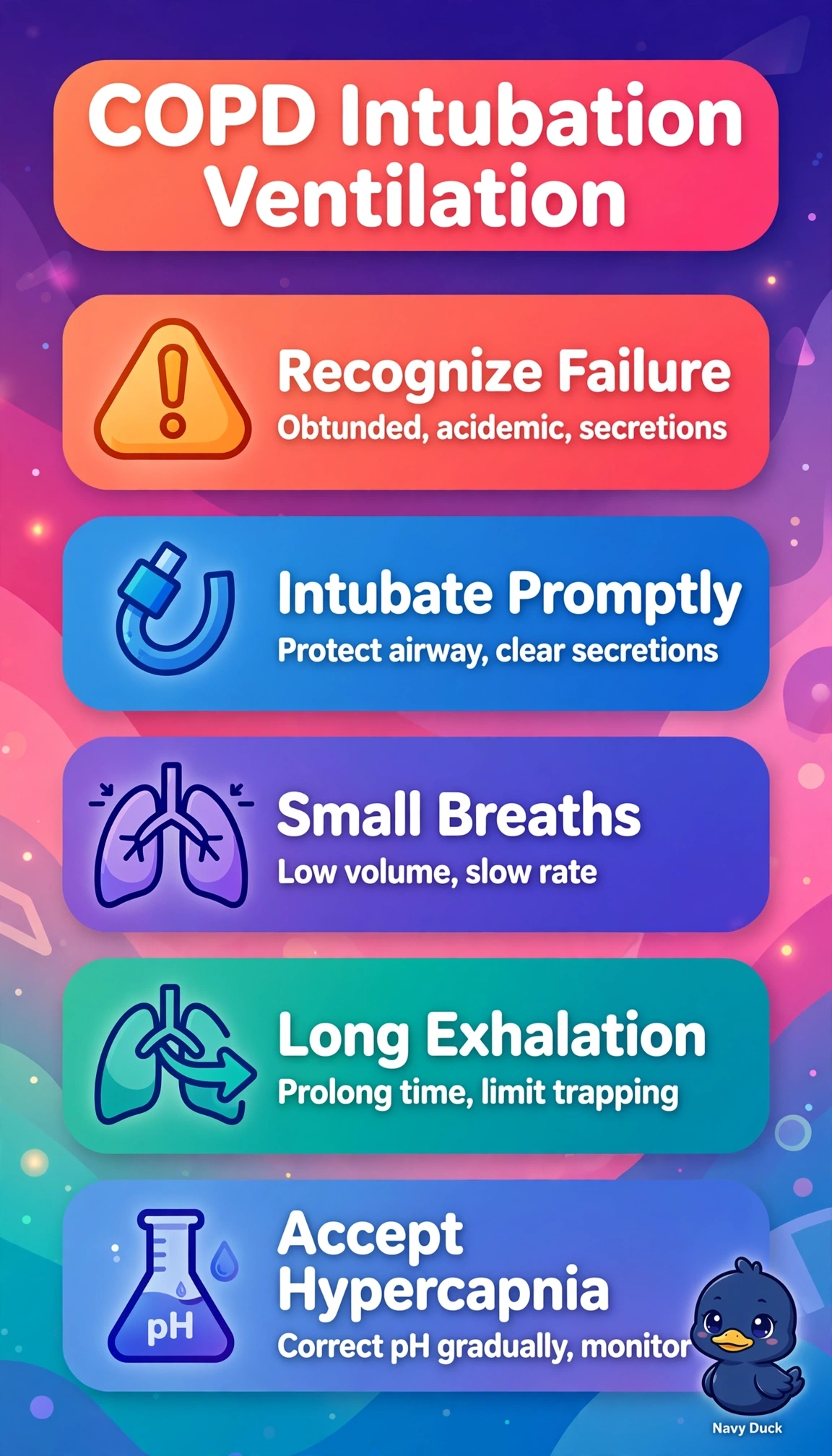
Severe obstructive exacerbation with obtundation, refractory acidemia near pH 7.18, and inability to maintain NIV due to secretions meets criteria for intubation, and subsequent ventilation must limit dynamic hyperinflation by using low tidal volumes, low to moderate rate, and prolonged expiratory time so trapped gas can escape, auto-PEEP falls, venous return improves, and barotrauma risk decreases while permissive hypercapnia is accepted during medical therapy. High tidal volume with rapid rate worsens breath stacking, raises intrathoracic pressure, precipitates hypotension and pneumothorax, and chasing normal PaCO2 acutely is harmful in COPD. Continuing BiPAP with higher pressures plus sedation ignores failure criteria including depressed consciousness, inability to clear secretions, and worsening acidosis, and sedation further blunts drive and aspiration protection. High PEEP with short expiratory time suits hypoxemic ARDS recruitment but in obstructive disease adds to intrinsic PEEP, impairs exhalation, and increases air trapping. Exam caveat: NBRC tests recognition of NIV failure and selection of obstructive rather than ARDS settings, and practical check is to watch flow graphics return to zero before next breath and monitor plateau pressure, blood pressure, and exhaled volume trends.