
After a morning rapid-response call where a ward asthma patient required emergency BiPAP and ICU transfer, the mixed nurse-physician-therapist team feels shaken, accounts of delays differ, and family concerns arise. The event ended safely an hour ago. Which debriefing leadership approach should the respiratory therapist initiate first to strengthen safety culture?
Select an answer to reveal the explanation.
Short Explanation
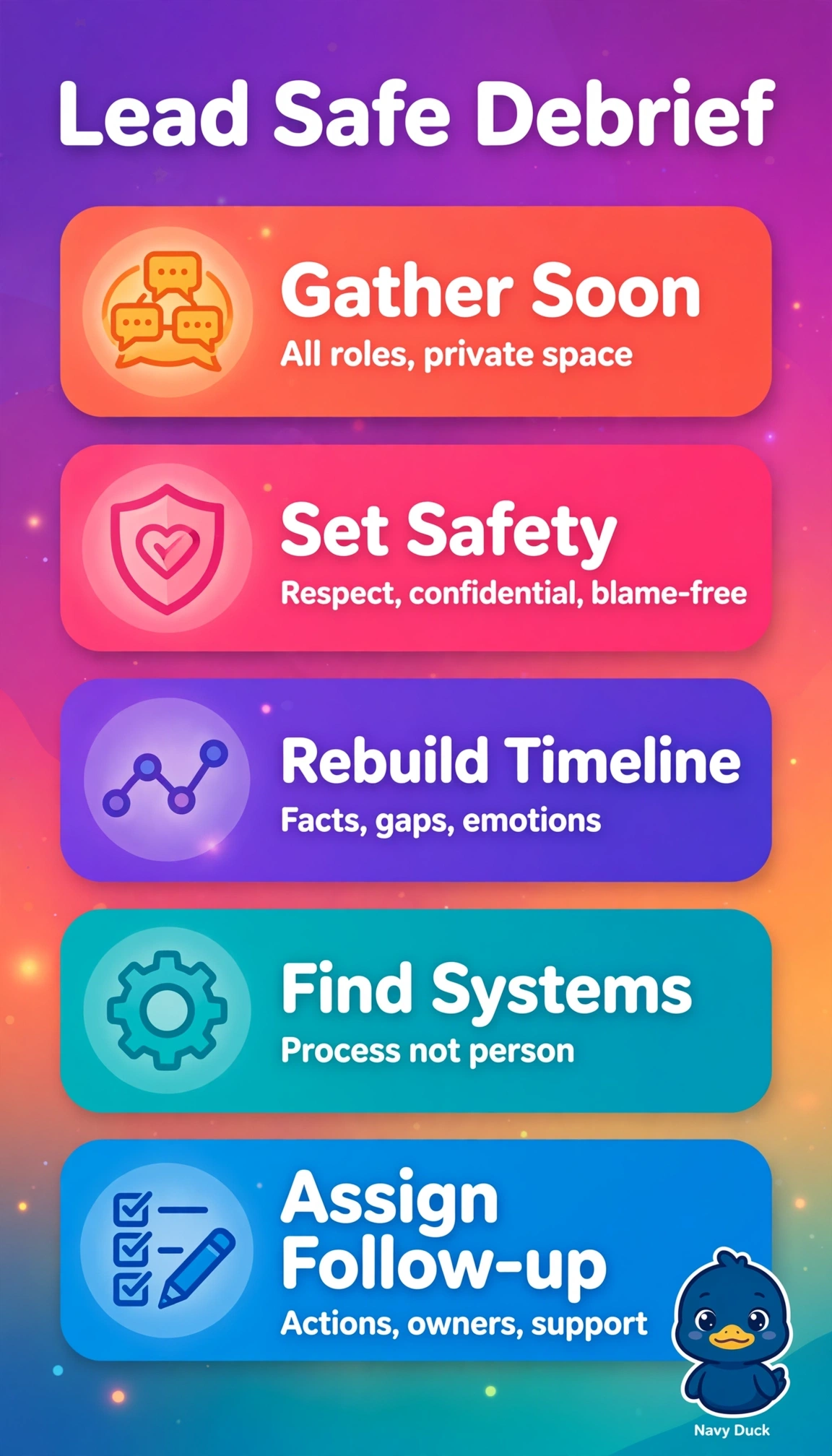
You’re still buzzing from that tough call, and your mixed team needs a pit stop, not a blame game. When you bring the team together soon for a structured check of facts, feelings, and fixes, you strengthen psychological safety and turn stress into safer care.
Full Explanation
A timely structured team debrief is right because, after a high-stress rapid response with differing accounts, shaken staff, and family concerns, the team needs to reconstruct facts, acknowledge emotions, examine systems rather than assign blame, and turn learning into improvement actions while the event is fresh. This supports memory accuracy, psychological safety, and follow-through. Scheduling a comprehensive interprofessional systems review next week fails on timing: delay can bring memory decay, narrative drift, and prolonged distress. A later review informed by chart audits may help, but it cannot replace a prompt debrief. Limiting a timely debrief to respiratory staff fails on inclusivity: safety depends on a shared understanding across nursing, medicine, and therapy, and a siloed discussion can leave communication delays and family concerns unaddressed. A timely interprofessional huddle focused on clarifying the timeline, orders, and clinical decisions fails to provide the broader learning needed; facts alone do not address systems factors, emotional impact, or improvement actions. Exam caveat: distinguish the immediate structured hot debrief from a delayed comprehensive review. Practical check: use a brief structured guide, invite all involved roles, establish a systems-focused, respectful discussion, validate emotions, compare what happened with what was expected, and assign two or three actions with follow-up.