
You join a rapid response for a deteriorating patient with stridor where the team leader orders epinephrine, airway equipment, and a room change amid loud overlapping talk. Which closed-loop communication technique best ensures emergency team orders are completed safely during resuscitation?
Select an answer to reveal the explanation.
Short Explanation
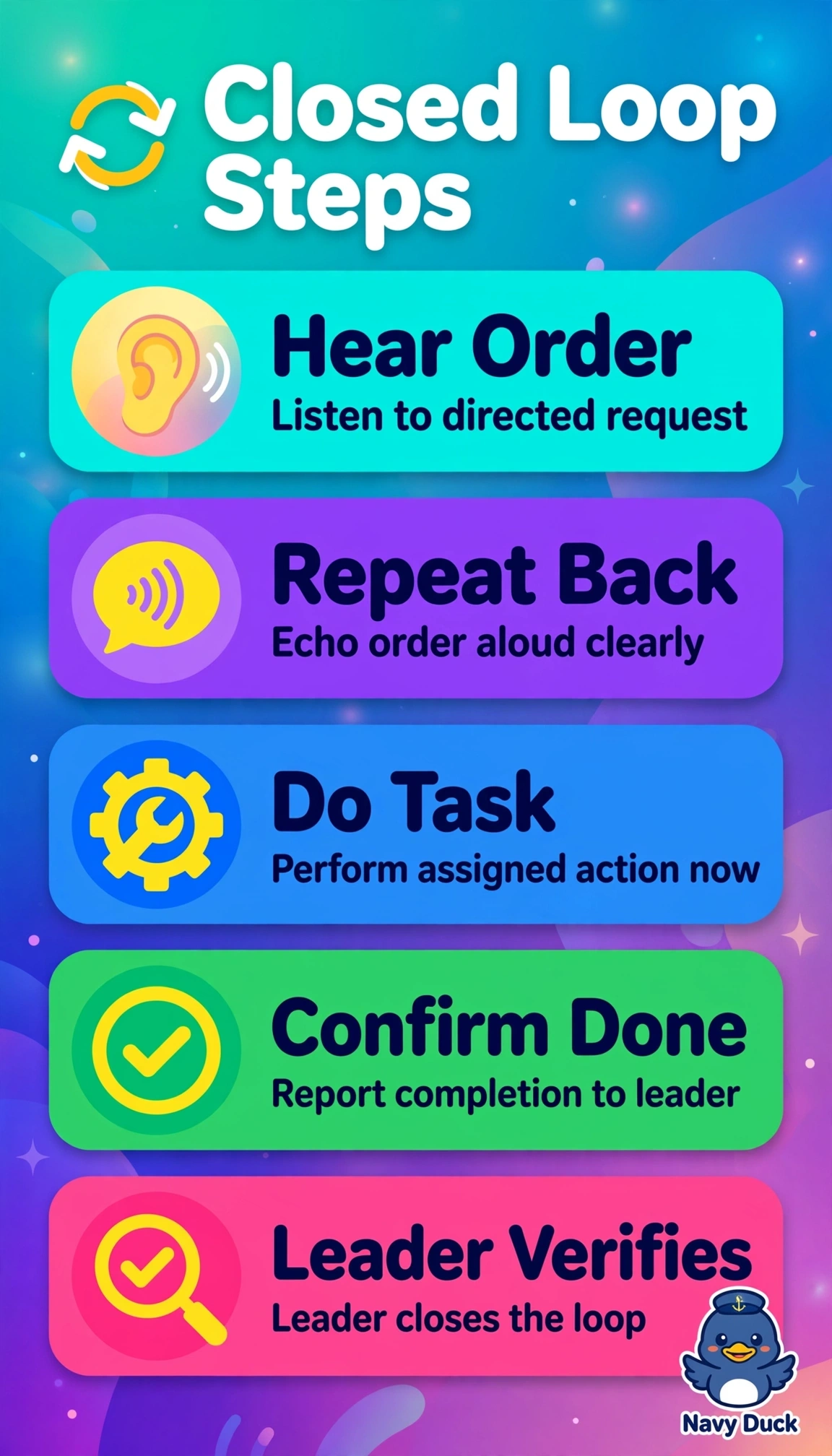
You've got to cut through the noise like you're confirming a drive-thru order, so you'll repeat it back and hand it over right. When you echo the order, do it, then tell your leader it's done, and that closed-loop keeps nothing lost in the shuffle.
Full Explanation
Stridor signals imminent airway loss and this response combines high-risk orders for epinephrine, equipment, and transfer amid loud overlapping talk, so the correct technique succeeds because audible repeat lets the leader catch mishearing immediately, personal completion preserves clear ownership, and final confirmation updates the shared model and triggers next steps. Acknowledging by name and finishing promptly without repeating aloud shows accountability but fails verification because the leader never hears what was understood, allowing a wrong dose or destination to proceed unchecked in noise. Repeating clearly then assigning to the nearest member shows good broadcast but breaks ownership and closure because responsibility diffuses and no guaranteed completion message returns to the leader to guide resuscitation. Hearing then completing and confirming closes the final step but skips initial verification, so execution begins from an unconfirmed perception, violating the repeat-do-confirm sequence required for emergency orders. An exam caveat is not to confuse closed-loop with SBAR, documentation, or general teamwork, which support safety but do not replace immediate repeat and confirmation during active orders. A practical check is to use name, repeat drug dose and task verbatim, execute, then announce done with effect to maintain real-time control.