
In the ED a term newborn is apneic with poor tone, and the team uses a T-piece resuscitator with a tight mask seal. The manometer shows no pressure rise, the chest does not move, and the gas supply and flowmeter are on with audible flow. Which T-piece resuscitator troubleshooting step should be completed first to restore effective ventilation?
Select an answer to reveal the explanation.
Short Explanation
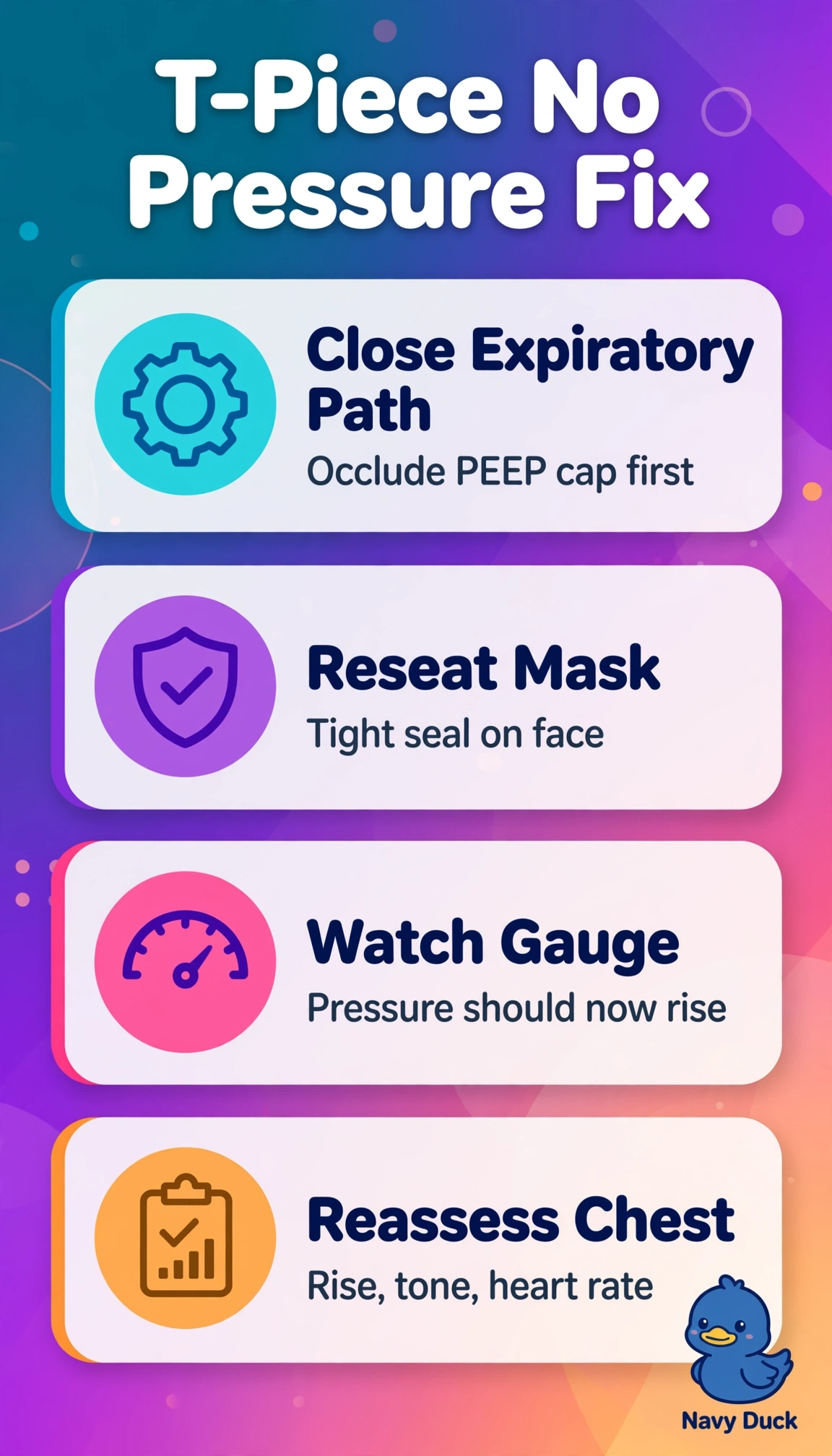
You nailed the leak hunt, since pressure cannot build when gas escapes. A T-piece needs a sealed circuit like a beach ball with the plug in — occlusion comes before more flow.
Full Explanation
Effective T-piece ventilation requires continuous bias flow, an occluded expiratory pathway with a seated PEEP cap, and a tight mask-to-face seal to generate PIP and PEEP, so audible flow with supply on but zero manometer pressure and no chest movement despite a reported tight seal indicates gas escaping at the PEEP cap or open expiratory opening rather than inadequate settings or patient factors, making checking and occluding the PEEP cap and expiratory opening while reseating the mask the immediate first fix. Inspecting the entire circuit for disconnections and correcting kinks is sound practice for major disruption, but fails by sequencing because audible distal flow makes complete disconnection unlikely and a full sweep delays targeted leak closure indicated by absent pressure. Repositioning into sniffing position with jaw thrust is standard for poor tone and obstruction, but fails by airway-versus-equipment logic because obstruction would still allow pressure to rise while chest fails to move, whereas zero pressure proves escape before gas reaches the infant. Adjusting the PIP dial upward for chest movement is appropriate only after seal is confirmed, but fails by pressure-leak principle because higher pressure cannot compensate for an open leak and risks barotrauma without restoring PEEP. An exam caveat is that stems include true-but-later steps to test sequencing, so restore seal and pressure before changing settings, and a practical check is to occlude the mask with the PEEP cap on, block the expiratory opening, and confirm the manometer reaches set PIP while listening at mask edge, neck, and PEEP assembly before resuming ventilation.