
A 58-year-old in the ED is obtunded from overdose, breathing spontaneously with snoring respirations, clenched teeth, and an intact gag and cough. Pulse oximetry is 89% on room air and repositioning alone does not open the airway. Which artificial airway selection best maintains patency with an intact gag reflex?
Select an answer to reveal the explanation.
Short Explanation
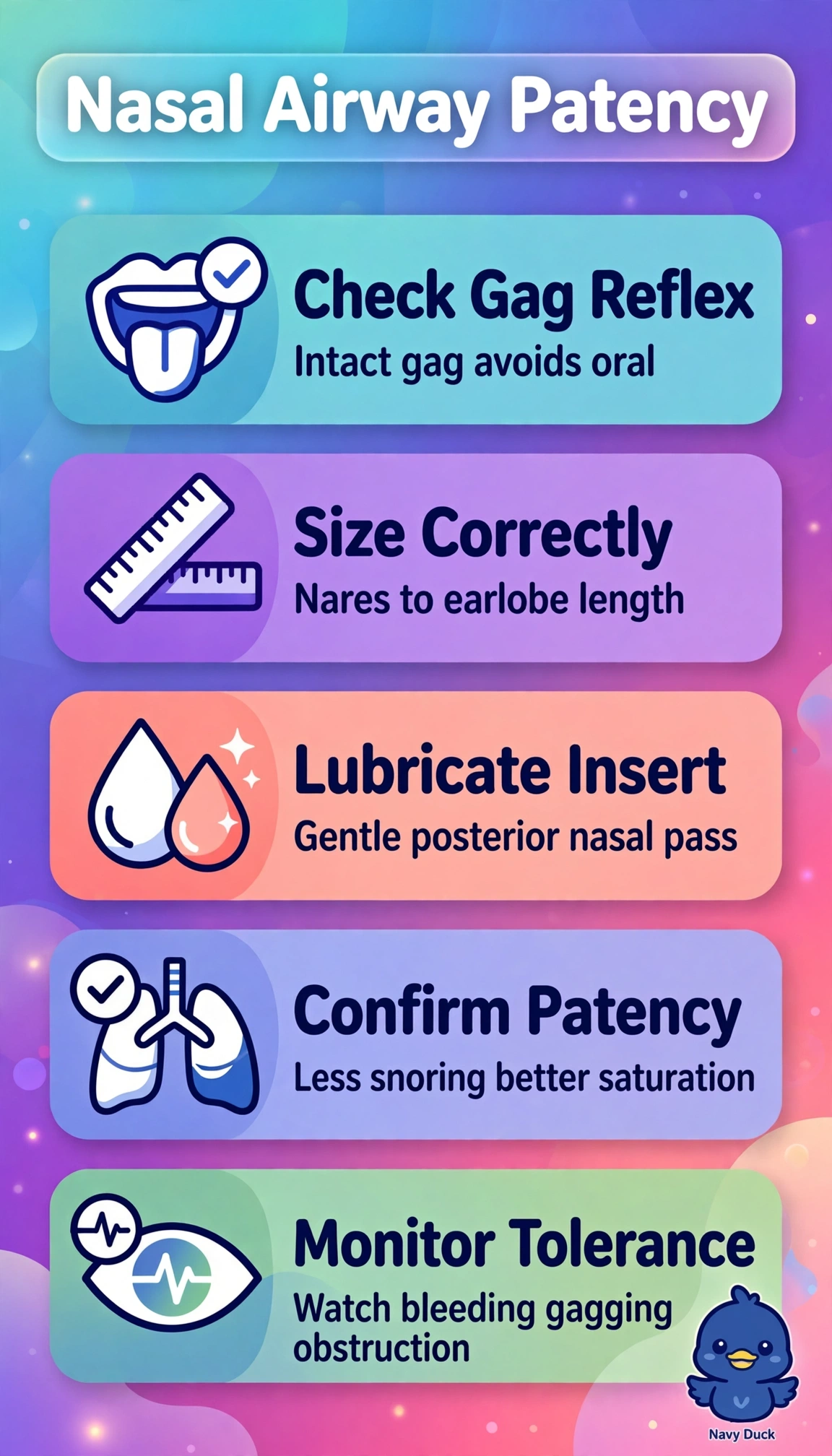
You’re seeing snoring from soft-tissue obstruction, while the clenched teeth and intact gag favor a nasal adjunct. A lubricated, properly sized nasopharyngeal airway can stent the airway without suppressing spontaneous breathing or provoking the gag reflex.
Full Explanation
Snoring in an obtunded patient who is still breathing spontaneously suggests soft-tissue obstruction at the tongue base. A lubricated nasopharyngeal airway sized from nares to earlobe stents the obstruction, can be tolerated with an intact gag and cough, and avoids the clenched teeth that preclude oral insertion. It can restore patency and improve hypoxemia without abolishing protective reflexes or respiratory drive. High-flow nasal oxygen with repositioning alone fails because supplemental oxygen raises FiO₂ but does not mechanically stent an obstructed airway; repositioning has already failed, so obstruction and hypoventilation may persist. Rapid-sequence oral intubation is excessive as the initial choice when basic patency can be maintained in a patient with spontaneous ventilation, intact reflexes, and a potentially reversible overdose; sedation and paralysis abolish breathing and protective reflexes. A laryngeal mask sits in the hypopharynx and requires mouth opening; with clenched teeth and an intact gag and cough, it may provoke gagging, vomiting, aspiration, or laryngospasm rather than being tolerated like a nasal adjunct. Exam caveat: distinguish basic airway patency with intact reflexes and spontaneous breathing from definitive tracheal control when reflexes are absent, apnea occurs, or aspiration risk demands it. Practical check: confirm a patent naris, adequate lubrication and length, reduced snoring and improved oximetry, and continued spontaneous breathing without epistaxis or gagging; reassess for reversal or escalation if obtundation persists.