
A 72-year-old on home oxygen reports increased dyspnea, the concentrator shows low-output alarm, the flowmeter ball bounces, tubing is 50 feet long and coiled under furniture, and the inlet filter looks gray with dust. Which troubleshooting step best restores concentrator and flowmeter delivery?
Select an answer to reveal the explanation.
Short Explanation
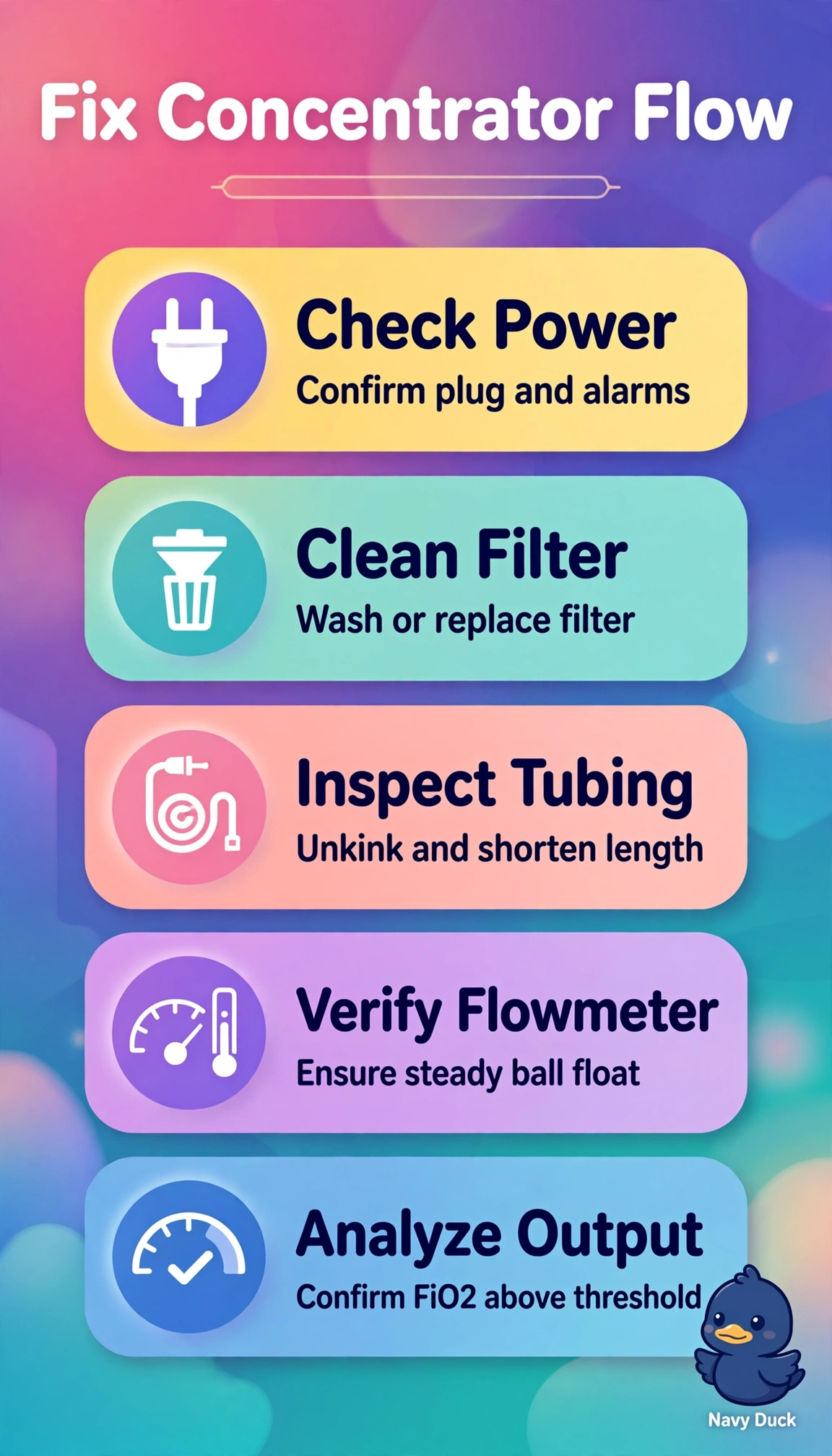
You’re seeing two classic flow killers at once. A dusty filter starves the sieve beds, while coiled tubing chokes delivery downstream. Cleaning or replacing the filter and straightening the tubing clears that airflow obstruction and helps steady delivery.
Full Explanation
Cleaning or replacing the clogged inlet filter and straightening the long, kinked delivery tubing addresses both faults described. Dust restricts intake air, reduces sieve-bed pressure and can trigger the low-output alarm; tubing coiled and trapped under furniture adds resistance and pressure fluctuation, making the flowmeter ball bounce and worsening dyspnea. Switching to a backup oxygen cylinder and freeing the trapped tubing may support immediate patient safety, but it does not restore the concentrator or clear its restricted inlet. Cleaning the filter and increasing the flow setting leaves the coiled tubing obstruction in place; raising flow through an unstable circuit does not fix the cause of the bouncing ball and may worsen turbulent flow. Straightening the tubing and checking the power connection addresses a possible delivery-path or electrical issue but leaves the dusty inlet filter restricting intake, so low output may persist. An exam caveat is to correct combined inlet and delivery faults rather than simply turn up flow when an alarm and unstable flow indicator occur together. A practical check is to inspect the filter, confirm the ball remains centered and steady, verify the alarm clears, and reassess dyspnea and oxygen saturation after rerouting the tubing.