
A respiratory therapist obtains an arterial sample with visible air bubbles, excess liquid heparin, delayed icing, and a result that conflicts with pulse oximetry and clinical status on high FiO2. Which troubleshooting action best resolves suspected preanalytic blood gas and CO-oximetry analyzer error?
Select an answer to reveal the explanation.
Short Explanation
You're holding a sample that lied before it reached the machine. A clean recollect restores integrity far better than math tricks or chilling a ruined specimen.
Full Explanation
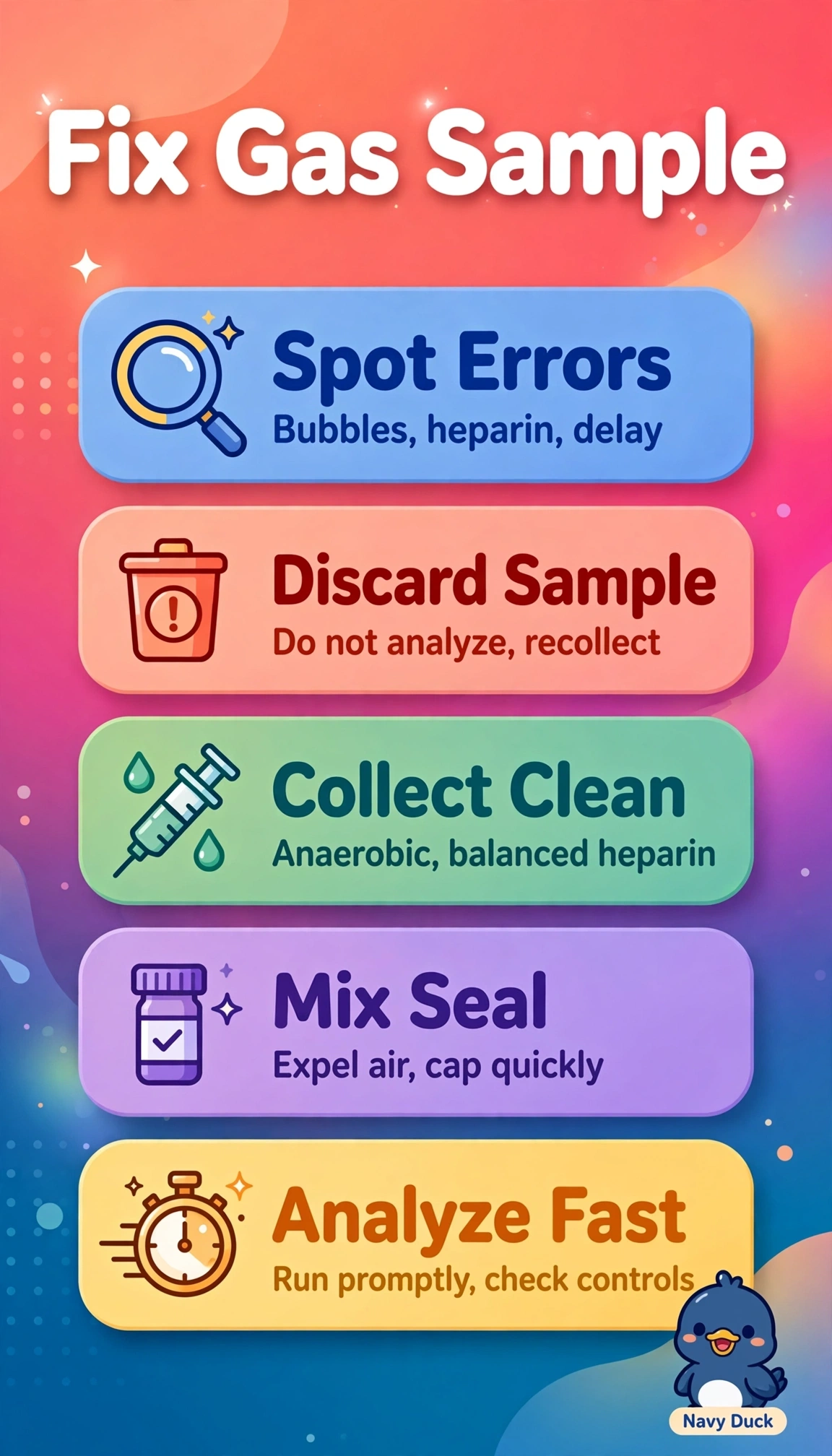
Preanalytic factors dominate blood gas error, and air bubbles raise PaO2 and lower PaCO2 toward room air, excess liquid heparin dilutes gases and electrolytes, and delay permits metabolism, so the corrective action is anaerobic recollection with dried balanced heparin, expulsion of air, gentle mixing, leak-proof capping, and prompt analysis with quality checks on the point-of-care or CO-oximetry system. Running the bubbled sample with arithmetic correction pursues speed but fails by concept because equilibration with room air is unpredictable and no validated correction restores true arterial values. Icing a dilute sample for an hour pursues stabilization but fails by concept because prolonged storage alters gases and icing does not reverse heparin dilution while delaying needed decisions. Accepting mismatch as analyzer failure and treating on oximetry alone pursues workaround but fails by concept because it skips verification, calibration, and recollection and oximetry cannot assess ventilation, acid-base, or dyshemoglobins. Exam caveat: bubbles plus liquid heparin plus delay is a classic recollect cue, and practically check Allen test, syringe type, fill volume, air removal, mixing, and analyzer controls before reporting.