
A 64-year-old intubated for pneumonia is on pressure support 5 cm H2O with PEEP 5 cm H2O for 30 minutes, with RSBI 78, SpO2 95%, hemodynamically stable, strong cough, and minimal secretions. Arterial blood gas is near baseline. Which spontaneous breathing trial interpretation should the therapist document to recognize pass/fail criteria?
Select an answer to reveal the explanation.
Short Explanation
You just watched a solid audition — steady breathing, good oxygen, strong cough. Time to move toward the main stage. Readiness means acting on a pass, not parking the patient.
Full Explanation
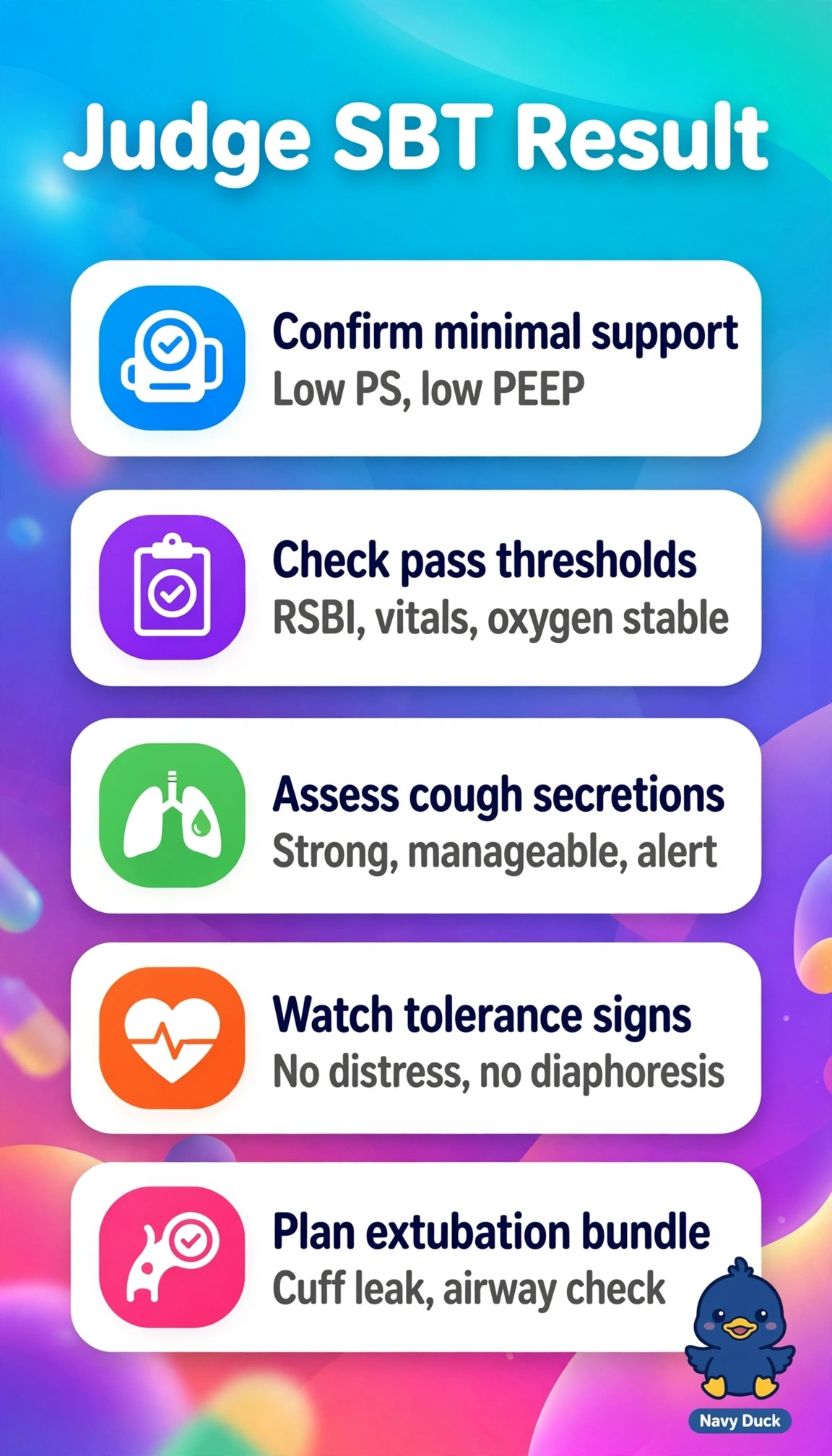
The 30-minute pressure support 5 with PEEP 5 trial meets validated spontaneous breathing trial conditions and all pass thresholds described, including RSBI 78 well below 105, SpO2 95% on modest support, hemodynamic stability, strong cough with minimal secretions, and arterial blood gas near baseline indicating adequate ventilation without new instability, so documenting a pass with continued weaning readiness and planning cuff leak and extubation assessment correctly links physiologic tolerance to the separate airway patency decision. One incorrect approach delays airway assessment until gases fully normalize, which misapplies acid-base interpretation by demanding normalization when return to baseline is the accepted pass criterion and risks unnecessary prolongation of intubation. Another incorrect approach extends support another 90 minutes to prove endurance, which misapplies trial duration evidence because a monitored 30-minute trial is sufficient when vitals, saturation, RSBI and tolerance are satisfactory and longer trials add fatigue and delay without improving prediction. A third incorrect approach maintains support and defers assessment because of pneumonia history, which misapplies liberation logic by letting a resolving diagnostic label override demonstrated readiness, strong cough and low secretion burden that favor extubation consideration. An exam caveat is to distinguish passing the breathing trial from being ready for extubation, since extubation also requires airway protection, mentation, secretion management and cuff leak patency rather than RSBI alone. A practical bedside check is to reconfirm sustained stability, repeat RSBI trend, review blood gas against baseline, quantify cuff leak volume, and assess secretion volume and cough strength before finalizing the plan.