
A night-shift therapist must dispose of suction canisters with bloody secretions, used suction catheters and a leaking specimen bag on a medical unit with limited housekeeping. Which safe handling of biohazardous materials should the therapist perform to protect staff and patients?
Select an answer to reveal the explanation.
Short Explanation
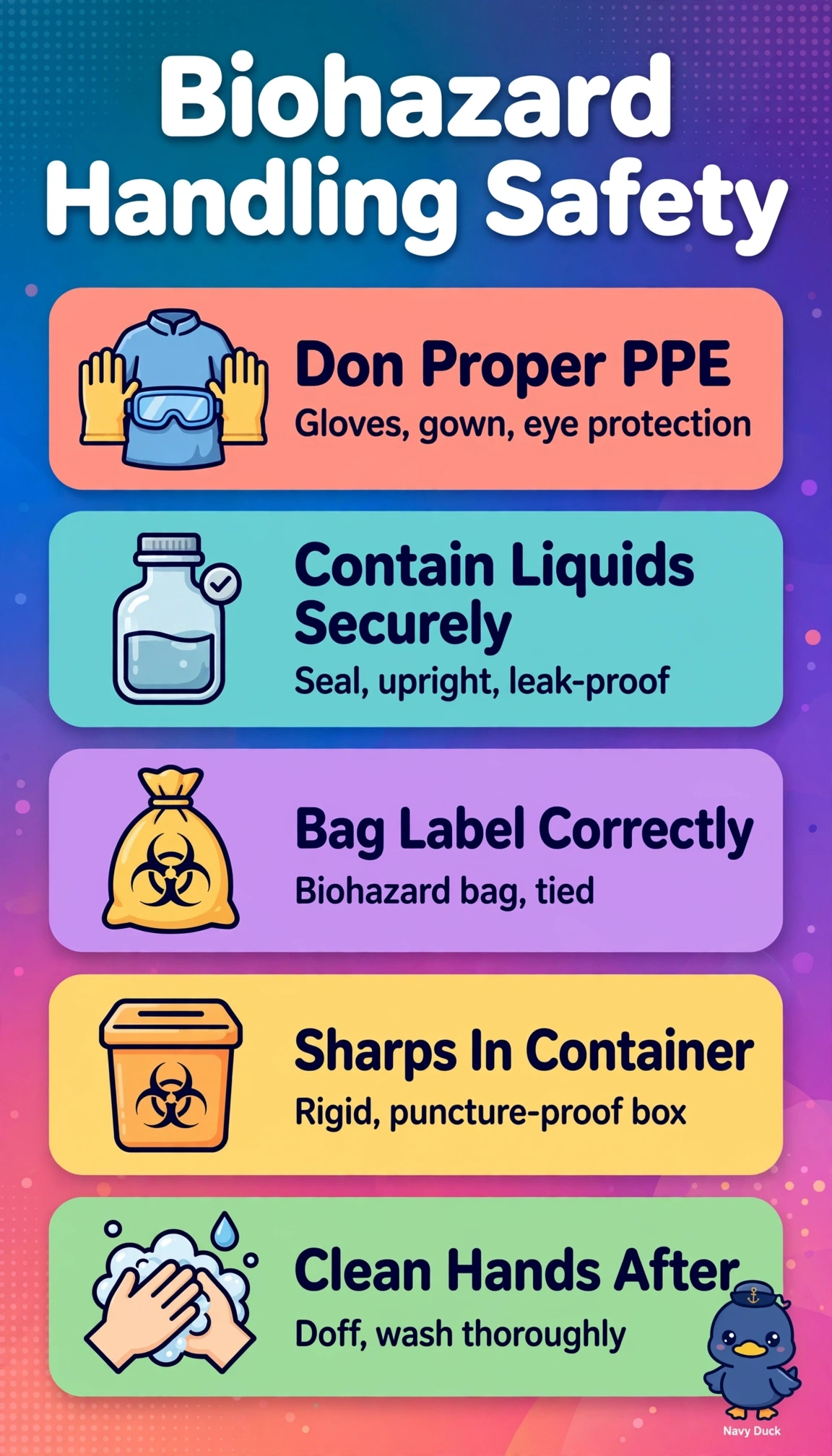
You're staring at a leaky mess nobody wants to touch, but safe habits protect everyone. Bagging and labeling creates a clear seal between germs and people.
Full Explanation
The correct response combines full PPE with immediate sealing in labeled biohazard bags and sharps segregation in puncture-proof containers because bloody suction canisters, used catheters, and a leaking specimen bag present simultaneous splash, contact, and puncture risks that the night therapist must contain at point of care when housekeeping is limited. Leaving bags open for housekeeping to seal preserves correct bag choice but fails containment, allowing leakage, surface contamination, and staff exposure while inappropriately delegating urgent containment. Placing catheters and sharps directly in the bags preserves PPE and labeling but fails sharps safety, as flexible bags are easily punctured and create needlestick and bloodborne pathogen risk despite proper labeling. Using only gloves preserves bagging and sharps steps but fails barrier protection, as handling liquids and a leaking bag risks eye, face, and clothing splashes requiring gown, gloves, and eye protection. An exam caveat is that stems specifying bloody, leaking, and sharps hazards require an answer addressing all three plus labeling and immediacy, so partial precautions that omit one barrier remain incorrect. A practical check is confirming PPE before contact, bags tightly sealed, labeled, and leak-free, sharps containers rigid and closed, and hand hygiene with transfer to designated biohazard storage.